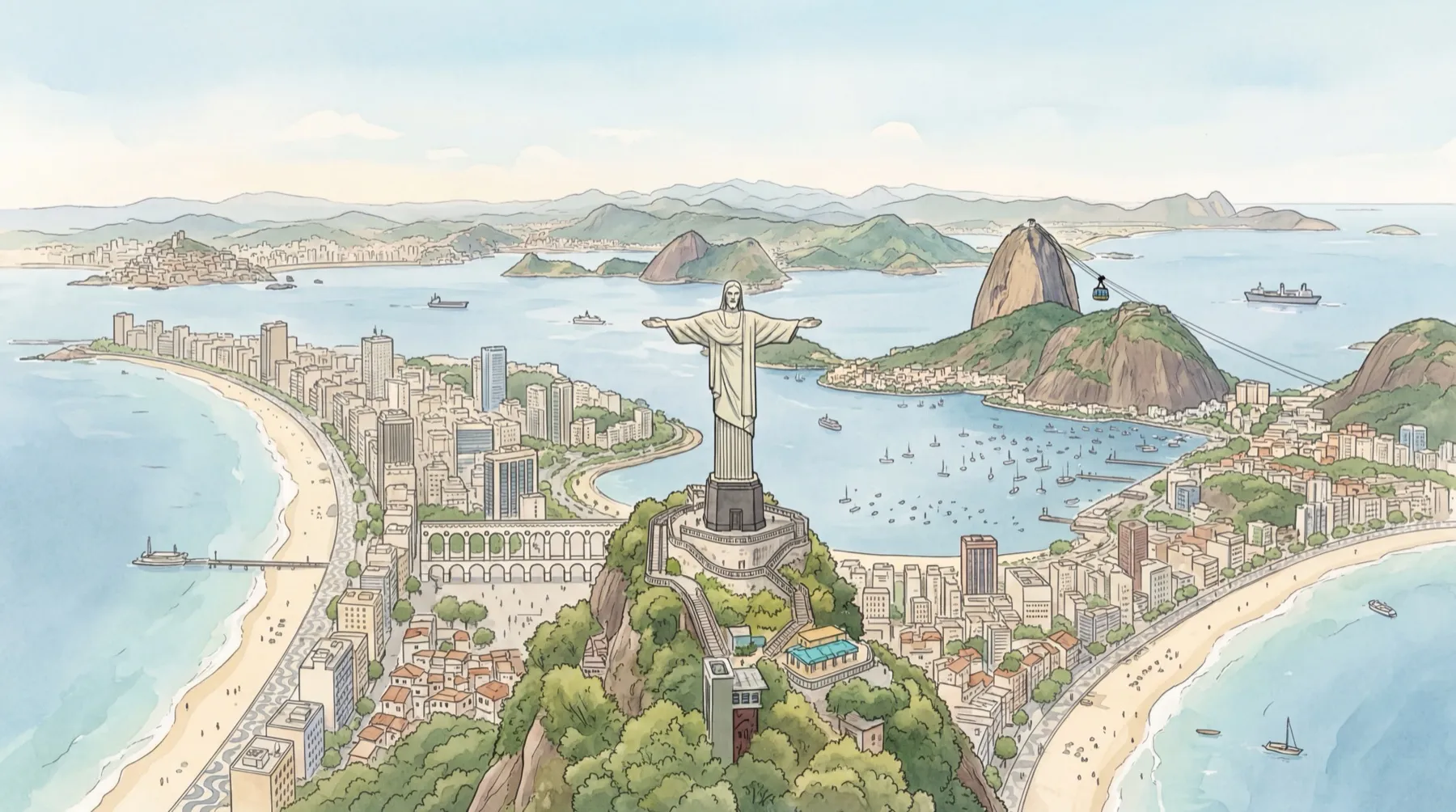
Rio de Janeiro
🇧🇷 Brazil
Travel tips for Rio de Janeiro
26 tips from 19 contributors
Let me clear up the biggest confusion first — The cable car everyone talks about is for Sugarloaf Mountain, not Christ the Redeemer. Totally different attractions. For the Christ statue, you've got three main options: the scenic cog train from Cosme Velho, official vans from Paineiras, or hiking if you're feeling ambitious.
The cog train costs R$75 round trip (yes, it's steep), but honestly saves you hours of confusion and stress. The 20-minute ride goes through Tijuca National Forest — Way prettier than staring at apartment blocks from the van route. Book online at tremdocorcovado.rio to skip the 2+ hour queues, especially December through March when Rio goes into full tourist madness mode.
Timing is everything here. Catch the 8am first train or go after 4pm for the best experience. Between 10am-2pm, it's selfie stick hell and you literally can't move around the statue. Pro tip I learned the expensive way — If it's cloudy at street level, don't bother going up. The statue will be completely fogged in and you'll see nothing but white mist.
The official vans from Paineiras (R$45) are cheaper but the winding road can be brutal if you get carsick. Plus you miss the forest scenery. Hiking takes about 2-3 hours up the Trilha do Corcovado trail — It's safe during daylight but bring water and tell someone your plans.
Forget those Copacabana beach vendors charging tourist prices — The real Rio street food happens in the suburbs and local neighborhoods where people actually live and eat. You want authentic Brazilian flavors? You need to venture beyond the postcard zones.
Start with pastéis at any boteco (neighborhood bar) — These crispy fried pastries stuffed with cheese, meat, or shrimp cost R$8-12 and blow away anything you'll find on the beach. My go-to spot is Bar do Luiz Fernandes in Botafogo (Rua Visconde de Caravelas 184) — Their shrimp pastéis are legendary among locals.
For the full experience, hit Feira de São Cristóvão (northeastern food market in São Cristóvão neighborhood) on weekends. This is where you'll find authentic regional food — Acarajé (black-eyed pea fritters) for R$15-20, tapioca crepes for R$8-15, and coconut water that doesn't cost R$10 like at the beach. Open Friday 6pm-Sunday 6pm, metro to São Cristóvão then a short walk.
But honestly, my favorite discovery is the food trucks around Maracanã Stadium after football matches. The energy is absolutely insane and the food is what locals actually eat — Grilled picanha, farofa, ice-cold Brahma beer. Just follow the crowds streaming out of the stadium and you can't go wrong. It's pure Rio culture in action.
Rio Card Setup & Pricing
Purchase at any metro station for R$3 base cost, minimum R$5 credit required for activation. The integrated metro+bus fare is R$4.50 — Exceptional value considering it covers the entire metropolitan transport network. Load credit at orange machines (accept cards and cash) or station counters.
Essential Metro Lines
Linha 1 (Orange): Core tourist route connecting Ipanema/Copacabana to Centro. Key stations: Cardeal Arcoverde (Copacabana beach access via exit A), General Osório (Ipanema beach, posto 9-10 area), Cinelândia (downtown, walking distance to Lapa).
Linha 2 (Green): Maracanã Stadium, Tijuca Forest connections, extends to northern zones.
Linha 4 (Yellow): Barra da Tijuca, Olympic Park, premium shopping areas. Transfer at General Osório.
Metro na Superfície Integration
The "Surface Metro" bus system extends metro coverage using the same Rio Card. Seamless transfers to Santa Teresa (via Gloria metro + Surface Line), Lapa nightlife district, and Sugarloaf cable car base station. This integration is superior to navigating regular bus routes independently — Same fare, guaranteed connections.
Operational Details
Service runs 5am-midnight Monday-Saturday, 7am-11pm Sunday. Peak hours (7-9am, 5-7pm) see significant crowding. Platform announcements in Portuguese only, but digital displays show next station clearly. Air conditioning is excellent — A relief during Rio's humid summers.
 metromarc
Everyone hits copacabana first because it's famous but honestly ipanema is where you actually want to spend your beach time if you're not into the whole tourist circus thing. Copa feels like a theme park these days with the aggressive vendors and overpriced everything.
Copacabana is touristy as hell — Someone trying to sell you a caipirinha every five minutes, vendors with knockoff sunglasses, that commercial vibe that makes you forget you're supposed to be relaxing. Ipanema has this chill energy that copa lost years ago. The crowd is more local, food quality at the beach kiosks (postos) is actually better, and you can lie on your towel without constant interruption.
If you want to see copa, walk the promenade around 7am when it's empty and beautiful (yes i actually got up early for once — Shocking i know). The art deco buildings look incredible in morning light and you'll have those iconic black and white wave patterns mostly to yourself. But for actually enjoying beach time, ipanema wins hands down.
The walk between them along the coast is gorgeous too if you're up for a longer beach day. Posto 9 in ipanema is where the cool locals hang out — You'll recognize it by the rainbow flag and general trendy vibe. Way better people watching than copa's chaos, plus the açaí is cheaper and actually good.
Completely Free Every Sunday
Museu Nacional de Belas Artes (Rua Araújo Porto Alegre 60, Cinelândia): Brazil's premier art collection in a stunning 1908 neoclassical building. Wheelchair accessible entrance on side street, though some upper galleries require elevator. Centro Cultural Banco do Brasil (Rua Primeiro de Março 66): Contemporary exhibitions in former bank headquarters. Excellent accessibility with ramps and wide doorways throughout.
Half-Price Opportunities
Museu do Amanhã (Praça Mauá 1, Porto Maravilha): Tuesdays only R$10 instead of R$20. This Santiago Calatrava-designed science museum is worth full price honestly — Wheelchair accessible throughout with tactile exhibits. International student ID gets 50% off at most locations.
Hidden Accessibility Champions
Casa Rui Barbosa (Rua São Clemente 134, Botafogo): R$6 entry, beautiful gardens accessible via main path, though some historical rooms have steps. Instituto Moreira Salles (Rua Marquês de São Vicente 476, Gávea): Free photography exhibitions in 1951 modernist mansion. Ground floor completely accessible, upper level requires assistance.
Accessibility Reality Check
Most historic downtown museums have challenging cobblestone approaches — Uber directly to entrances rather than attempting street navigation. Many offer free wheelchairs, but bring cushions for comfort during longer visits.
 wheelsfirst
Everyone knows Lapa's famous arches and street parties. Here's what they don't mention — Lapa gets messy on weekends. Drunk tourists everywhere. Feels unsafe late. You'll spend more time dodging pickpockets than enjoying music.
Santa Teresa is where locals go for good drinks without the chaos. Bar do Mineiro (Rua Paschoal Carlos Magno 99) for traditional Brazilian appetizers and live samba. Aprazível for dinner with killer city views. Maze bar for craft cocktails that actually know what they're doing. Whole neighborhood has this bohemian artsy vibe without the tourist madness.
Want the authentic Lapa experience? Go Thursday nights. Still energetic but manageable crowds. Start at Carioca da Gema for proper samba music, then walk the streets. Don't flash expensive phones or wear flashy jewelry. Keep cash separate.
Pro tip: Start in Santa Teresa for dinner and cocktails, then uber down to Lapa around 11pm when it's hitting peak energy. Best of both worlds — Good food and drinks, then the raw street party atmosphere. Just have your exit strategy planned.
 jessnight
Skip the R$120 Sugar Loaf cable car — Trilha da Pedra Bonita (São Conrado) delivers identical postcard views for R$0. 40-minute moderate hike starts behind Fashion Mall, marked trail to 696m summit overlooking Barra da Tijuca coastline. Bring 2L water minimum, trail has zero shade after 9am.
Feira de São Cristóvão = Northeast Brazil in Rio
Friday-Sunday pavilion (Campo de São Cristóvão, Zona Norte) transforms into massive nordestino cultural fair. Free forró dancing lessons 7pm-10pm, live repente poetry battles, artisan hammock weaving demos. Food stalls charge R$8-15 for authentic carne de sol but entertainment is completely free. Metro São Cristóvão station, 5-minute walk.
Domingo na Zona Sul Street Closures
Every Sunday 7am-6pm: entire Lagoa Rodrigo de Freitas loop (7.8km) closes to cars, becomes free cycling/jogging paradise. Bike rental R$15/hour but walking costs nothing. Simultaneously, Avenida Atlântica (Copacabana beachfront) transforms into street market with free capoeira demonstrations, samba circles near Posto 6.
Free Museum Strategy
Instituto Moreira Salles (Gávea): free contemporary photography exhibitions year-round. Museu do Amanhã: free entry Tuesdays for Rio residents (bring hostel address confirmation). Casa da Moeda: completely free coin/currency museum, Centro. Weekly savings: R$180+ if you hit all paid attractions normally.
 cheapcharlie
Look, I got robbed in Santa Teresa (the hillside arts district) walking from Largo do Guimarães back to my hostel at 10pm. Two guys on Ladeira de Santa Teresa, phones and wallet gone in 30 seconds. Here's what nobody tells you about Rio's geography of danger.
Here's the thing about Rio's specific risks:
Don't take the Santa Teresa tram (bondinho) after 5pm — It passes through Lapa tunnel where robberies spike after dark. Don't walk up any of the ladeiras (hillside streets) connecting Santa Teresa to Centro after sunset, period. The R$25 Uber from Santa Teresa to Zona Sul beats becoming another gringo crime statistic tourists never hear about.
Favela Tourism Reality Check
Skip the Rocinha favela tours — It's poverty tourism that benefits tour companies, not residents. If you're determined to see favela life, visit Museu da Maré (R$10 entry) for honest education about favela history without gawking. Located in Complexo da Maré, accessible via Linha Vermelha bus with security.
Neighborhood-Specific Street Smarts
Stay in Zona Sul (Ipanema/Leblon/Copacabana) where UPP police units patrol regularly. Avoid Centro after 7pm — Financial district empties completely, becomes robbery central. Never flash electronics near any of the tunnel entrances (Túnel Rebouças, Túnel Santa Bárbara) where criminals wait for targets transitioning between neighborhoods.
 mikeNYC
Getting There Solo-Friendly
Bus from Novo Rio terminal (Avenida Rodrigues Alves 1, Santo Cristo): R$25 each way, departures every 30 minutes during peak season. The 1.5-hour mountain journey is genuinely scenic and beats sitting in Rio traffic. Purchase tickets from Única Fácil booth — Drivers speak Portuguese only, so buy in advance. I highly recommend window seats on the right side for waterfall views.
Imperial Attractions Worth Your Time
Imperial Museum (Rua da Imperatriz 220): R$15 entry, former Emperor Pedro II summer palace with original 19th-century furniture and Brazilian crown jewels. Female solo travelers feel completely safe here. Crystal Palace (Rua Alfredo Pachá): Glass greenhouse built in France, assembled 1884 — Stunning for photos. Casa Santos Dumont (Rua do Encanto 22): Aviation pioneer's quirky house with his inventions, including the shower he designed.
Why Solo Female Travelers Love It
Temperature drops 10-15°C from Rio levels — Essential escape during December-March heat waves. The city feels remarkably safe for solo exploration, with locals who still stop to give directions. Streets are walkable and well-lit, unlike some Rio neighborhoods. Pack layers though — Mountain weather changes quickly.
Local Insider Tip
Visit Casa Suíça (Rua Paulo Barbosa 124) for traditional German-influenced pastries that date back to imperial immigration. It's where locals actually go, not tourist restaurants near the palace.
 lauren_abroad
So you're in lapa (rio's bohemian heart), the samba stopped around 3am, and you're starving. Welcome to the reality: most restaurants close early but rio's night economy just shifts gears.
Arcos da lapa transforms into street food central after midnight. The pastel vendors set up under the iconic aqueduct arches, serving those crispy fried pastries stuffed with queijo or carne for R$8-12. Galeto sat's (rua barata ribeiro, copacabana) stays open 24/7 serving rotisserie chicken and rice — Unglamorous but feeds half of hungover zona sul at 4am.
Steps of selarón becomes an unofficial midnight gathering spot where street musicians jam until sunrise. No food vendors here but it's a 5-minute stumble to confeitaria colombo's centro location (rua gonçalves dias 32) which serves coffee and pastéis de belém all night. The belle époque interior hits different when you're the only sober person there.
For proper late-night carioca culture: bar luiz (closed 2022, rip) got replaced by dozens of botequins in santa teresa that close whenever the last person leaves. Boteco belmonte (multiple locations) stays open until 2-3am serving chopp gelado and bolinho de bacalhau. Gas stations along avenida atlântica surprisingly serve decent açaí bowls 24/7 because cariocas don't compromise on açaí quality, ever.
Premium Tourist Experience
Plataforma Barra da Tijuca (Rua Adalberto Ferreira 32): R$180-220 per person dinner, R$120-150 lunch. Meat quality exceptional with 20+ cuts including premium wagyu-style beef. Servers fluent in English, know every cut they're serving. Reservation essential via plataforma.com.br — Tourist groups book this solid.
Local Churrascaria Champion
Churrascaria Palace Copacabana (Rua Rodolfo Dantas 16): R$85-120 per person. Less flashy but picanha and linguiça outstanding quality. Salad bar includes traditional Brazilian sides like farofa, vinagrete, couve that tourists miss at fancier places. This is where Rio middle-class families celebrate birthdays.
Churrascaria Etiquette 101
Green disk side up = bring meat, red side = pause service. Always hit salad bar first to pace yourself — Rookie mistake is filling up on bread. Essential cuts to try: picanha (top sirloin cap), fraldinha (bottom sirloin), maminha (tri-tip), linguiça artesanal (house sausage). Price includes unlimited everything — Meat, salad bar, desserts, drinks cost extra.
Insider Strategy
Lunch typically 30-40% cheaper than dinner for identical menu. Sunday lunch at Palace draws three generations of carioca families — That's your quality indicator right there. Skip weekend dinners unless you enjoy tourist bus crowds.
Here's the crime: 99% of tourists skip Tijuca National Park entirely, missing out on the world's largest urban forest BY AREA - 32 square kilometers of Atlantic rainforest in the heart of Rio. Meanwhile they're fighting crowds at Christ the Redeemer when they could have 360-degree city views with zero tour groups.
Pico da Tijuca trail is the crown jewel: 1.5 hours each way, moderate difficulty with some steep rocky sections near the summit. Start from Bom Retiro entrance (Alto da Boa Vista area, take bus 221 from Copacabana). The payoff is spectacular - panoramic views of the entire city, Guanabara Bay, and on clear days you can see all the way to Niterói. Bring 2 liters of water minimum, proper hiking boots, and never hike alone. Local guides cost R$100-150 through park headquarters and they're worth every real for safety plus wildlife spotting - you'll likely see toucans, monkeys, and countless bird species.
For families or easier hiking: Cascatinha Taunay waterfall trail is a gentle 45-minute walk through dense forest. The 30-meter waterfall is swimmable year-round, crystal clear mountain water that feels incredible after the humid hike. Trail starts from same Bom Retiro entrance, well-marked and suitable for kids 8+.
Pro timing: Start early (7-8am) to avoid afternoon heat and the notorious sudden rainstorms. Park closes at 6pm sharp. This is reforested land - the entire forest was replanted starting in the 1860s, making it one of the world's most successful urban reforestation projects. Respect the trails, pack out trash, and prepare to see Rio from angles that will make you question why anyone bothers with crowded tourist viewpoints.
 coastalhike
Skip the overpriced tourist SIM cards at Galeão Airport — The real connectivity strategy combines Brazilian prepaid data with Rio's integrated transport system. Head straight to any metro station (Uruguaiana, Botafogo, Ipanema/General Osório) and buy a RioCard for R$3, then load it with R$50+ for integrated metro-bus-BRT travel at R$4.30 per journey.
The Metro Rio system connects all major tourist zones: Linha 1 (orange) runs Ipanema-Centro-Tijuca, Linha 2 (green) connects Botafogo-Pavuna through Zona Norte. Most critically, the metro integrates with 'Metro na Superfície' buses reaching Barra da Tijuca and SuperVia trains to sugar loaf cable car station (Estação Urca). Download the 'Moovit Rio' app — Works offline and shows real-time BRT TransCarioca delays.
For data connectivity, buy prepaid SIMs at Shopping Leblon carrier stores (Claro/Vivo/TIM) rather than airport kiosks — Saves R$20+ for identical 15GB tourist plans. Essential for ride-hailing safety: 99Taxi dominates Rio over Uber, especially for favela-adjacent pickups where drivers know safer routes through Complexo do Alemão or Cidade de Deus.
Trem do Corcovado booking hack: purchase tickets online via official website, then use metro integration to reach Estação Cosme Velho (Linha 1 + connecting bus). The scenic cogwheel train through Tijuca National Park requires advance booking during peak season — One-way tickets frequently sell out, stranding tourists at Christ the Redeemer summit without return transport options.
 trainbrain_
Ok so literally everyone does sugarloaf wrong and ends up paying full price in massive crowds during the worst lighting... The secret is timing - go either first thing at 8am when it opens or after 4pm for golden hour. The views are actually way better because harsh midday sun washes out everything, while morning/evening light makes the city and ocean pop in photos.
Buy tickets online through the official website because they absolutely sell out during high season (dec-feb) and weekends. Current price is around r$120 for adults including both cable car segments - most people don't realize there are two rides, first to morro da urca (the middle station) then up to the actual sugarloaf summit.
Here's the money hack nobody mentions: you can hike up to morro da urca (first station) for free then buy just the second cable car ticket at the top. Saves about r$40 per person and the hike is only 30 minutes if you're reasonably fit. Trail starts from praia vermelha beach - take uber to "praia vermelha urca" then look for the hiking trail signs. Just make sure they're selling single segment tickets that day because during peak times they sometimes force you to buy the full package.
Timing pro tip: if you're doing sunset, stay for blue hour too - around 20 minutes after sunset when the city lights come on but there's still color in the sky. Most tourists leave right after sunset but that's when you get the most magical photos with rio all lit up below you.
Arpoador Rock at sunset is the classic shot everyone gets, but you'll be shoulder-to-shoulder with 200 other photographers. For golden hour magic with breathing room, try Parque Lage's upper viewpoint around 5-6pm. The light filtering through trees and hitting Christ the Redeemer in the distance creates this ethereal glow that feels almost mystical - plus the mansion ruins in the foreground add incredible depth to compositions.
Sunrise shooters, this is your secret weapon: Copacabana Fort opens at 6am sharp (entrance R$6) and you'll have the entire length of Copacabana beach spread below you in perfect morning light. The fort sits at the southern end of the beach, accessible via Rua Francisco Otaviano. Arrive by 5:45am to catch the first light hitting the sand - you'll literally be the only photographer there.
For cityscape shots that make people stop scrolling: Sugarloaf's middle station (Morro da Urca) during blue hour beats the main summit every time. Everyone crowds the top platform, but the middle station offers cleaner angles of the city lights reflecting on Guanabara Bay. Position yourself on the northwestern side around 7:30pm - the composition includes both Copacabana's curve and downtown's skyscrapers.
Advanced tip for architecture photographers: Vista Chinesa viewpoint (Chinese View) offers the most dramatic Christ the Redeemer shots with the entire city sprawling below. It's a 20-minute drive from Tijuca, but during golden hour the statue appears to float above a sea of urban lights. Best access via taxi or rental car - buses don't run frequently enough to catch perfect timing.
 emmashots
Start Praça XV work through colonial and imperial architecture. Area looks sketchy but safe during daylight hours with foot traffic around.
Key stops: Theatro Municipal gorgeous eclectic architecture inspired by Paris Opéra, Biblioteca Nacional one of world's largest libraries, Confeitaria Colombo traditional afternoon tea in stunning 1894 café interior.
Free walking tours most mornings from Carioca Metro station. 2 hours, tips expected but not required. Guides usually history students with real knowledge.
Everyone goes Copacabana and Ipanema but they're tourist circuses now. Want to see where cariocas actually spend weekends? Take metro to Barra da Tijuca.
45 minutes from Centro on linha 4 yellow line but beach is massive and way less crowded. Better waves for surfing too. Vibe more relaxed - families playing football, proper barbecues, people actually swimming instead of posing.
Recreio dos Bandeirantes even quieter. Both have better value beach bars than Zona Sul. Beer R$10-18 instead of R$15-20.
Skip rooftop bars in Ipanema... Head to SubAstor Santa Teresa. Basement spot, cash only, best caipirinhas in the city. Bartender Carlos worked fancy places before opening this.
Academia da Cachaça multiple locations but original Leblon knows their stuff. Maze Santa Teresa has great views... Muddles fresh fruit properly instead of dumping sugar syrup.
Beach bars fine for beer but anything beyond basic caipirinhas is overpriced tourist trap quality.
Lapa is loud. Crowded. Drinks cost double. Real Rio nightlife is elsewhere.
Bar do Mineiro in Santa Teresa. Simple setup. Plastic chairs. Best caipirinhas in the city. R$20-26 for a proper drink that costs R$25-40 in Ipanema.
Want craft beer? Comuna in Botafogo. Decent cocktails without tourist markup.
Urca has quieter spots. Bar Urca overlooks the bay. Perfect for sunset drinks before things get messy.
Dive bar territory: Pavão Azul in Botafogo. Looks sketchy. Incredible atmosphere. Dirt cheap drinks. You'll either love it or hate it.
Look, Cristo Redentor is gonna be packed, train takes forever, you'll spend more time in lines than looking at views.
You want views? Sugarloaf is ten times better. Cable car runs every 20 minutes, not some ancient cog railway. Plus you get two stops — Urca Hill first, then summit. Most tourists blow through Urca but the bar there has same views without chaos.
If you're dead set on the statue, go at sunset. Costs more but light is incredible and half the tour groups are gone. Or don't go at all — Statue looks better FROM other places anyway.
About Rio de Janeiro
Brazil's former capital spreads between Tijuca mountains and Atlantic Ocean beaches including world-famous Copacabana and Ipanema. Christ the Redeemer statue and Sugarloaf Mountain define this UNESCO World Heritage cultural landscape.
Destination Stats
Know something locals know? Share your insider tip.
+ Share a Tip