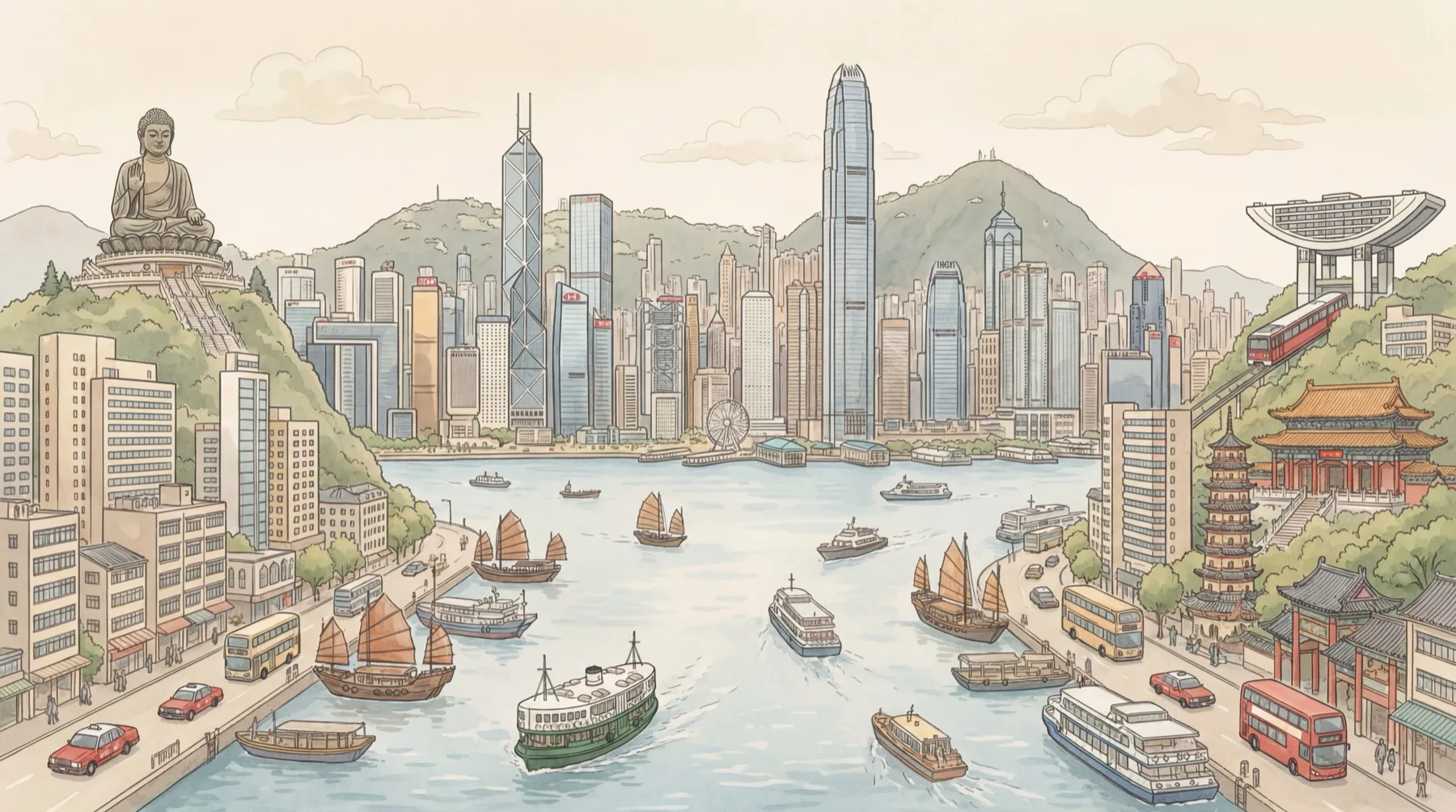
Hong Kong
🇨🇳 China
Food Tips for Hong Kong
Restaurants, street food, cafes, and local dishes to try
Forget those polished dim sum palaces in Central that charge HK$80 for three har gow. Real Hong Kongers hit neighborhood tea houses where old uncles unfold newspapers over jasmine tea and argue about horse racing. Look for places packed with locals who clearly aren't tourists — Bonus points if there's a queue of grannies outside.
Essential orders that separate tourists from locals: har gow (shrimp dumplings with translucent skin that shouldn't tear), siu mai (pork and shrimp dumplings topped with crab roe), char siu bao (BBQ pork buns that should be fluffy, not dense), cheung fun (silky rice noodle rolls), and those perfect egg tarts for dessert. Order jasmine tea — It's not optional, it's how you digest all this.
Where locals actually go: Lin Heung Ku on Wellington Street (chaotic trolley service, prepare to elbow for dumplings), One Dim Sum on Nathan Road (Michelin-rated but still HK$40 per basket), or any Maxim's Palace location if you want the full trolley theater. Weekend mornings are mayhem but most authentic — That's when three generations show up together.
Budget HK$180-280 per person for a proper feast, and yes, you're supposed to share tables with strangers. Pointing at what you want is perfectly acceptable dim sum etiquette.
 notjeff
I'll be honest — The actual market stalls at Temple Street are pretty uninspiring. Knockoff designer watches, questionable electronics, and t-shirts that'll fall apart after one wash. But here's what tourists miss: Temple Street transforms into something magical after dark, when the dai pai dong street food stalls fire up their woks and the fortune tellers set up their folding tables.
The real draw is the incredible street food scene that emerges around 8pm. Hunt down the claypot rice stalls where they cook individual portions in small clay pots over charcoal — The rice gets this incredible crispy bottom layer called 'fan jiu.' Try the curry fish balls (spicier than you'd expect), stinky tofu that somehow smells awful but tastes amazing, and those perfect egg waffles filled with ice cream.
But what keeps me coming back are the fortune tellers and street performers who appear after 9pm. Old aunties reading palms for HK$50, Cantonese opera singers belting out classics with portable karaoke setups, musicians covering Leslie Cheung and Teresa Teng under the neon lights. It's this beautiful slice of old Hong Kong culture that somehow survives between the tourist stalls.
Best experience is 9pm-midnight near the Tin Hau Temple end in Yau Ma Tei — That's where locals congregate. While nearby Jordan has some hidden late-night stalls for pure noodle focus, Temple Street offers the full package of street food plus cultural entertainment with the fortune tellers and performers. Come hungry and bring cash, most stalls don't take Octopus cards yet.
 lauraexpat
Hong Kong's Buddhist vegetarian scene operates at a level that puts most Western plant-based restaurants to shame. These aren't your typical grain bowls and sad salads — We're talking about mock char siu made from seasoned wheat gluten that genuinely fools meat-eaters, and 'fish' crafted from layered tofu with textures so convincing you'll double-check the menu.
Traditional Temple-Style: Kung Tak Lam (10/F, Silvercord Tower 2, 30 Canton Road, Tsim Sha Tsui) serves elaborate Buddhist cuisine where mock abalone and 'roasted duck' made from bean curd skin look identical to their animal counterparts. Expect to pay HK$150-250 per person for a proper meal. They close at 9pm sharp, so this is lunch or early dinner territory.
Casual Dim Sum: LockCha Tea House locations (several branches, try the one at 9/F K.S. Lo Gallery, Hong Kong Space Museum) specialize in vegetarian dim sum. Their mock char siu bao is genuinely indistinguishable from pork versions — The 'meat' has that sweet, savory glaze and firm texture down perfectly. Around HK$100-150 per person.
Even regular Cantonese restaurants often have extensive vegetarian sections — Look for the Buddhist swastika symbol (⊕) on menus indicating plant-based dishes. The techniques behind these mock meats represent centuries of Buddhist culinary innovation, turning simple ingredients like soy protein and mushrooms into complex, satisfying comfort food that happens to be completely plant-based.
These humble tea restaurants represent Hong Kong's culinary soul — East-meets-West comfort food served in no-frills settings with plastic stools and fluorescent lighting. Cha chaan tengs emerged in the 1950s when Chinese cooks adapted Western dishes with local ingredients, creating a uniquely Hong Kong cuisine that remains largely unchanged today.
Essential dishes to order: Hong Kong-style milk tea ('lai cha' in Cantonese) — A smooth, strong brew that's practically a cultural institution. Pineapple buns with a thick slab of butter. Macaroni soup with ham (surprisingly satisfying). French toast stuffed with peanut butter and dripping with syrup. Egg and beef instant noodles elevated beyond recognition.
Practical dining guide: Breakfast sets run HK$25-45 and provide excellent value. Peak hours are 7-9am and 12-2pm when office workers flood in. Most chains like Café de Coral or Fairwood have English picture menus, but neighborhood joints offer more authentic experiences.
Milk tea mastery: The perfect cup should be strong enough to stand a spoon in, smooth from evaporated milk, and served steaming hot in a thick ceramic cup. Watch for the 'tea master's' technique — Some shops still hand-pull tea through silk stockings for the smoothest texture. This beverage transcends refreshment; it's a daily ritual connecting millions of Hong Kongers to their city's identity.
Kung tak lam in the basement of world trade centre central serves the most convincing mock meat ive ever tasted their sweet and sour pork made from king oyster mushrooms has this incredible chewy texture that actually resembles real pork and the char siu bao uses wheat gluten so perfectly seasoned with dark soy and sugar that carnivore friends were genuinely fooled
The crispy duck made from bean curd skin layers and mushroom paste flakes apart like real roast duck and they serve it with traditional hoisin pancakes Try the fish with black bean sauce made from pressed tofu and winter melon that actually has that flaky fish texture down perfectly
Prices run hk$120-180 for dishes that easily serve two people so its affordable for proper buddhist temple cooking not just western vegan substitutes Focus is on traditional umami flavors using fermented bean pastes mushroom broths and complex spice combinations rather than trying to be healthy or light
 kimchiquest
Found the real deal Korean food by following actual Korean expats to Myeongdong Tofu House (2/F, 26-30 Chatham Road South, Tsim Sha Tsui) where the kimchi jjigae tastes exactly like what homesick Koreans order — Proper fermented funk, not the tourist-friendly mild versions. 🍲
The galbi tang here uses the same cuts and marrow bones you'd get in Seoul's Hongdae district. Staff speaks better Korean than English and most customers are Korean expats or exchange students. Meals run HK$120-160 for portions that easily serve two people, though the premium hanwoo beef hotpot can hit HK$300+.
Tsim Sha Tsui East has this unofficial Korea Town cluster around Chatham Road South and Middle Road — Look for shops with Korean signage and Hyundai card decals in the windows. If you hear more Korean than Cantonese inside, you've found the authentic spots.
While the general rule is to avoid touristy Central spots for authentic experiences, Luk Yu Teahouse is actually an exception when it comes to traditional tea service. While everyone talks about dim sum at Luk Yu, they actually do exceptional traditional tea service that locals still appreciate.
Order a pot of aged pu-erh or high mountain oolong and they'll bring the proper tiny cups and brewing technique. It's becoming rare in Hong Kong as cafes take over. About HK$80-120 for a pot that serves 4-6 people. The waiters in white jackets know their teas and will recommend based on what you like.
Sit upstairs for the vintage atmosphere. Yes, it's in Central, but the tea service here maintains standards that neighborhood tea houses often can't match anymore.
 teahunter
Hong Kong's Korean community means genuinely good Korean food at reasonable prices. Eight Korean BBQ on Nathan Road does all-you-can-eat Korean BBQ for HK$268 per person including unlimited banchan and proper Korean beer.
Quality is actually better than most tourist Korean BBQ places in Seoul and about half the price. They import the meat from Korea and the kimchi is properly fermented. Book ahead on weekends.
Green Common locations across Hong Kong serve plant-based versions of local favorites like char siu bao and fish balls that actually taste convincing. The mock fish is made with konjac and tastes closer to real fish than most vegetarian attempts.
Multiple locations including IFC Mall and Times Square. Prices are higher than regular cha chaan tengs, typically HK$100-200+ for a meal, but quality is excellent. Perfect for vegetarians who want to try Hong Kong flavors without compromising dietary needs.
Hong Kong has incredible Sichuan restaurants that are way better than what you'll find in most Western cities. Look for places that advertise 'authentic Sichuan' or 'Chongqing style' rather than generic 'Chinese food.'
Must-try dishes: mapo tofu (silky tofu in spicy bean sauce), dan dan noodles (sesame and chili oil noodles), and kung pao chicken (the real version with Sichuan peppercorns that make your mouth tingle). The numbness is called 'ma' and it's supposed to happen.
Red Chili Sichuan Restaurant in Causeway Bay and Chili Club in Tsim Sha Tsui are solid. Expect HK$200-300 per person for several dishes to share.
 siennna
Sichuan gets all the attention but Hunan cuisine is genuinely spicier and more interesting. There's this place called Xiang La Hui on Jaffe Road in Wan Chai that does proper Hunan dishes - the mao xie crab is insanely good and will destroy your mouth in the best way.
Order the fish head with chopped chilies if you really want to test your limits. About HK$200-300 for two people. No English menu but point at other tables - everything is good.
Everyone goes to see the Big Buddha but most people miss the monastery's vegetarian buffet which is honestly incredible value. It's only HK$30 for a full meal with like 8-10 dishes including mock meat that tastes better than the real thing.
The buffet runs from 11:30am-5pm daily and it's right next to the Buddha statue so you can combine both. Way better than the overpriced tourist restaurants in Ngong Ping Village. Just follow the signs inside Po Lin Monastery itself.
Found amazing tiny shops that do Sichuan noodles exactly like they should be — Numbingly spicy with proper mala heat. The dan dan mein at authentic places is no joke, locals sweat through it and tourists usually can't finish.
Order the 'extra spicy' if you think you can handle it. I've eaten ghost peppers and proper Sichuan noodles still make me cry. Around HK$45 for a bowl that'll clear your sinuses for a week. Many places open late too, until 2am most nights.
Found this hole-in-the-wall on Nathan Road that makes proper Sichuan dan dan mein that'll wreck most tourists. The numbing spice level is no joke - even locals order it mild. HK$45 for a bowl that's basically a challenge. The numb-spicy sensation hits different than Thai or Indian heat. Ask for extra peanuts if you can handle it. Jordan MTR exit A, walk 2 minutes toward Temple Street. Look for the red sign in Chinese only.
Yau ma tei after 1am — when locals come out for real late night food beyond Jordan's limited options
While Jordan itself has limited late-night options beyond McDonald's and convenience stores, neighboring Yau Ma Tei comes alive after midnight. Check out the late-night congee spots on temple street (past the fortune tellers) and the cart noodle vendors near yau ma tei mtr that serve until 3am.
Best time is 1-3am when the night shift workers grab their meals. Way more authentic than the daytime tourist traps and prices drop by 30%. Just follow the locals and broken cantonese will get you far.
Honestly perfect for people like me who hate early morning attractions anyway. Why fight crowds at 8am when you can eat amazing noodles at 2am with zero tourists around? It's a short walk from Jordan if you know where to look.
Temple Street night market plays up the tourist theater, but locals head to Sham Shui Po's Pei Ho Street for authentic late-night food that feeds shift workers and insomniacs. Cart noodle stalls operate until 2-3am serving instant noodles with luncheon meat, fish balls, and whatever toppings you point at for under HK$40.
The curry fish ball stands along Pei Ho Street and nearby Nam Cheong Street serve the real deal — Proper fish paste balls in curry sauce that's been simmering for hours, not the watered-down versions near tourist areas. Look for the stalls with the longest queues of locals around midnight.
Sham Shui Po Station (Tsuen Wan Line exit A2 or B2) puts you right in the action. The neighborhood has this authentic working-class energy where vendors know their regulars and prices haven't inflated for Instagram tourists. Plus you're surrounded by the electronics markets and vintage shops that make the area worth exploring during day hours too.
 nightowl_k
Jordan and Temple Street areas offer Hong Kong's most extensive late-night food scene beyond the usual 7-Eleven survival meals. Mido Cafe (63 Temple Street) operates until 2am serving Hong Kong-style milk tea and pineapple buns to shift workers and night owls, while the cart noodle stalls along Temple Street run until 3am.
For proper sit-down late dining, Australia Dairy Company (47-49 Parkes Street) serves their famous scrambled eggs and toast until 2:30am — Expect to share tables and order quickly in their famously brusque style. The wet market area around Saigon Street has several 24-hour congee shops serving late-shift workers from nearby hotels.
Jordan MTR Station (Tsuen Wan Line exit A) puts you directly into this after-hours ecosystem where locals actually eat late, not just tourists hunting for Instagram-worthy night shots. Much better value and authenticity than Central's hotel bars charging HK$200+ for cocktails after midnight.
This place does asian-fusion sliders with bao buns instead of regular burger buns. The pork belly bao is incredible and the truffle mushroom one surprised me. About hk$60-80 per bao, so not cheap but worth it. Located in central near the escalators. Gets busy during lunch rush but turnover is fast. Honestly much better than the tourist burger joints in tsim sha tsui trust me
Their roast goose rice costs hk$85 and its worth every dollar honestly. The skin is crispy meat is tender and the plum sauce is perfect. Much better than the tourist traps in central trust me. Go before 7pm or they sell out. The char siu is also excellent if goose isnt your thing
 skibumtom
Found this tiny malatang place on Sharp Street East called Xiao La Jia. The owner is from Chengdu and makes it properly spicy — Not the watered-down Hong Kong version.
You pick your ingredients from the fridge (vegetables HK$8 per 100g, meat HK$15-25), they weigh it and cook it in the numbing spicy broth. Get the extra spicy level if you can handle real heat. Most Hong Kong people can't finish it.
Open until 11pm, cash only. Fair warning — You will sweat.
 jessnight
About Hong Kong
Special Administrative Region of China, a global financial center on the South China Sea. Victoria Harbour's skyline and the Star Ferry create one of the world's most recognizable urban landscapes.
Destination Stats
Know something locals know? Share your insider tip.
+ Share a Tip