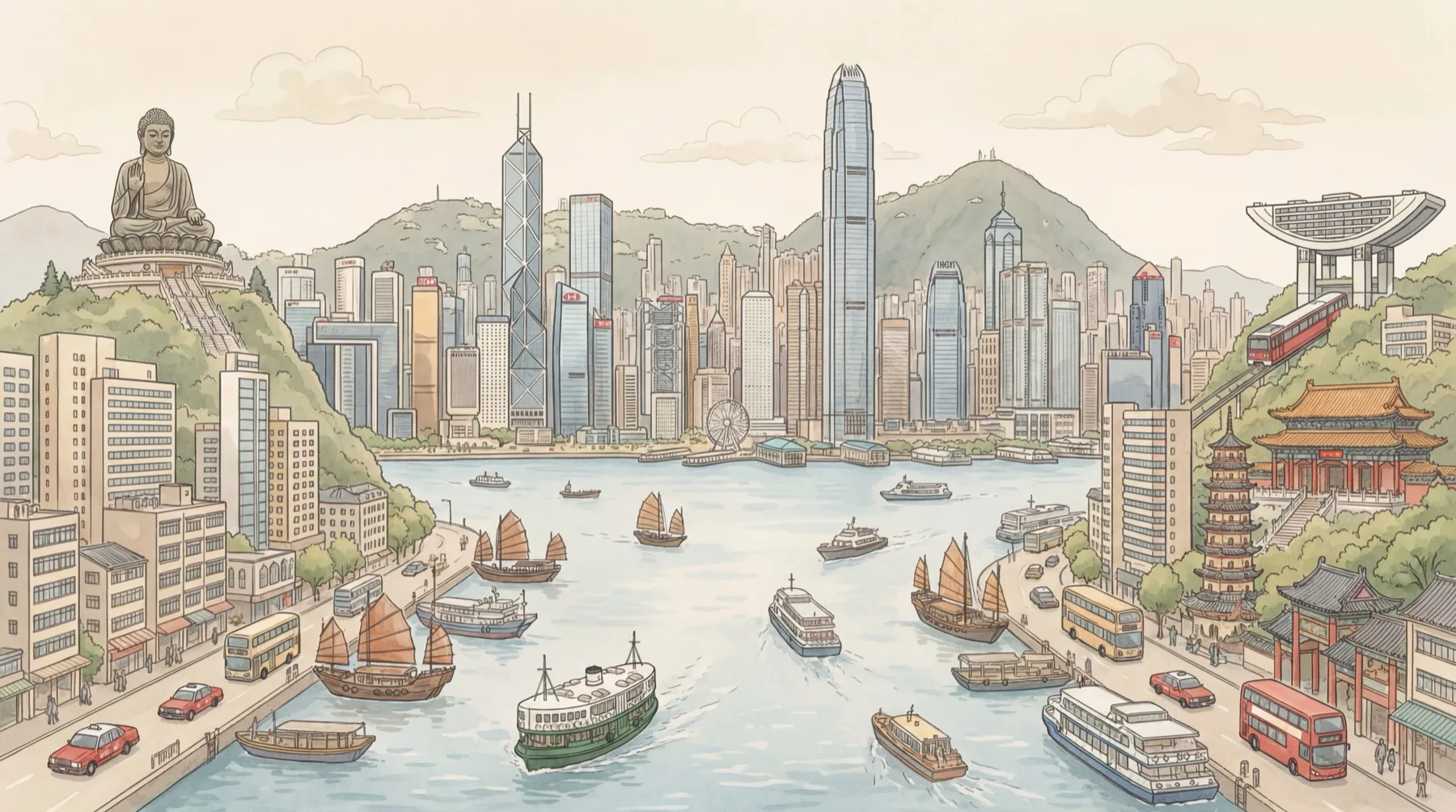
Hong Kong
🇨🇳 China
Travel tips for Hong Kong
121 tips from 37 contributors
The moment you clear customs at Hong Kong International, make a beeline for any 7-Eleven or MTR station counter and buy an Octopus Card. This little plastic miracle is how you pay for absolutely everything that moves in Hong Kong — MTR trains, buses, trams, ferries, minibuses, and even street vendors who've been using it longer than most Western cities had contactless payment.
Load HK$300-500 to start (trust me, it disappears fast). The card itself costs HK$50 deposit which you get back when leaving, plus whatever credit you load. You can top up at any MTR station, 7-Eleven, Circle K, or those orange machines scattered everywhere. Way better than juggling coins on a swaying minibus or trying to pay exact change at a dai pai dong noodle stall.
Pro transport hack: works immediately on the Airport Express train (HK$115 to Central), so you skip the tourist ticket confusion and those painful queues at the machines. Also covers the Star Ferry (HK$4.80), Peak Tram (HK$99), all outlying island ferries, and even some McDonald's locations. Basically, if it moves people or food in Hong Kong, Octopus handles it.
Ultimate lazy traveler bonus: link it to Apple Pay if you've got an iPhone, so you can tap your phone instead of fishing for the card every time.
 tuk2go
Forget those polished dim sum palaces in Central that charge HK$80 for three har gow. Real Hong Kongers hit neighborhood tea houses where old uncles unfold newspapers over jasmine tea and argue about horse racing. Look for places packed with locals who clearly aren't tourists — Bonus points if there's a queue of grannies outside.
Essential orders that separate tourists from locals: har gow (shrimp dumplings with translucent skin that shouldn't tear), siu mai (pork and shrimp dumplings topped with crab roe), char siu bao (BBQ pork buns that should be fluffy, not dense), cheung fun (silky rice noodle rolls), and those perfect egg tarts for dessert. Order jasmine tea — It's not optional, it's how you digest all this.
Where locals actually go: Lin Heung Ku on Wellington Street (chaotic trolley service, prepare to elbow for dumplings), One Dim Sum on Nathan Road (Michelin-rated but still HK$40 per basket), or any Maxim's Palace location if you want the full trolley theater. Weekend mornings are mayhem but most authentic — That's when three generations show up together.
Budget HK$180-280 per person for a proper feast, and yes, you're supposed to share tables with strangers. Pointing at what you want is perfectly acceptable dim sum etiquette.
 notjeff
Everyone takes the MTR tunnel under victoria harbour because it's fast and efficient, but honestly, where's the romance in that? The star ferry is peak lazy tourism — HK$4.80 for upper deck (better views), HK$4.50 for lower deck if you're budget-conscious, and you get the full hong kong money shot that's on every postcard.
Board at tsim sha tsui pier (right next to that colonial clock tower you'll photograph anyway) or central pier 7. The ride takes maybe 8 minutes, which is perfect because it's just long enough to get the skyline photos but short enough that you don't get bored. These green and white ferries have been chugging across since 1888, so you're basically time-traveling while avoiding the subway.
Best time is late afternoon when you're too tired for more walking anyway — Around 5-6pm when the office buildings start lighting up but it's not dark yet. Skip those expensive harbour cruise tours that cost HK$200-400. This IS the harbour cruise, just without the tourist markup and cheesy commentary. Sit on the right side going from tsim sha tsui to central for the best skyline angle, or just pick any seat because honestly, it's all good.
This 8.5km trail consistently ranks as one of Asia's best urban hikes, and for good reason — You get dramatic ridge views, South China Sea vistas, and finish at Big Wave Bay Beach where you can wash off the sweat. Total hiking time is 3-4 hours depending on your fitness and photo stops, with moderate difficulty that doesn't require technical skills.
Getting there: MTR to Shau Kei Wan Station (Exit A3), then bus #9 to To Tei Wan terminus — That's your trailhead. Start early (7-8am) to beat Hong Kong's brutal humidity and the Instagram crowds. The trail is well-marked with occasional shade, but pack 2+ liters of water per person. Seriously, Hong Kong heat will destroy unprepared hikers.
The route highlights: The famous dragon spine ridge section offers panoramic views of Tai Long Wan beaches and offshore islands. You'll hit several peaks including Shek O Peak (284m), with the trail eventually descending to Big Wave Bay. There are proper beach facilities here — Showers, toilets, and a few restaurants for post-hike korean fried chicken and cold beer.
Essential prep: Wear actual hiking shoes (not sneakers), bring electrolytes not just water, and check weather conditions. The exposed rock sections become dangerously slippery after rain. Also pack sunscreen — You'll be on ridges with zero shade for long stretches. The beach finish makes all the suffering worth it though!
 kimchiquest
I'll be honest — The actual market stalls at Temple Street are pretty uninspiring. Knockoff designer watches, questionable electronics, and t-shirts that'll fall apart after one wash. But here's what tourists miss: Temple Street transforms into something magical after dark, when the dai pai dong street food stalls fire up their woks and the fortune tellers set up their folding tables.
The real draw is the incredible street food scene that emerges around 8pm. Hunt down the claypot rice stalls where they cook individual portions in small clay pots over charcoal — The rice gets this incredible crispy bottom layer called 'fan jiu.' Try the curry fish balls (spicier than you'd expect), stinky tofu that somehow smells awful but tastes amazing, and those perfect egg waffles filled with ice cream.
But what keeps me coming back are the fortune tellers and street performers who appear after 9pm. Old aunties reading palms for HK$50, Cantonese opera singers belting out classics with portable karaoke setups, musicians covering Leslie Cheung and Teresa Teng under the neon lights. It's this beautiful slice of old Hong Kong culture that somehow survives between the tourist stalls.
Best experience is 9pm-midnight near the Tin Hau Temple end in Yau Ma Tei — That's where locals congregate. While nearby Jordan has some hidden late-night stalls for pure noodle focus, Temple Street offers the full package of street food plus cultural entertainment with the fortune tellers and performers. Come hungry and bring cash, most stalls don't take Octopus cards yet.
 lauraexpat
Hong Kong's relentless pace hits differently when you're socially drained. Between the construction noise echoing off glass towers in Central and the aggressive foot traffic through Nathan Road, I've mapped out specific escape routes that actually work.
The IFC Rooftop (above IFC Mall, Central Station exit A) is my secret weapon. Take the mall elevator to the top level — Completely free cushioned sofas and tables with proper harbour views. It's basically an outdoor living room that tourists never discover. I pack convenience store snacks and just decompress while watching the Star Ferry cross below. Open during mall hours, zero cost, and you can spread out without guilt.
When I need deeper spiritual quiet, I take the Ngong Ping 360 cable car (HK$235 round-trip from Tung Chung) to Po Lin Monastery behind the Big Buddha. Everyone photographs the giant statue, but the actual monastery courtyards are where locals go to pray quietly. The incense is thick enough to muffle all city noise, and there's something about those 1,000-year-old chanting rhythms that genuinely resets my nervous system. Free entry to monastery grounds.
I always pre-plan these refuge points on Google Maps before any Hong Kong trip. Having clear escape routes mapped out prevents that awful trapped feeling when the city energy becomes overwhelming.
 kiki_adventures
The Ngong Ping Cable Car up to Big Buddha offers stunning views over Lantau Island's mountains and coastline — Worth every penny of the HK$245 round-trip fare for that ascent. But here's a literary traveler's secret: take bus #23 back down to Tung Chung for just HK$17, saving yourself HK$100+ while experiencing a completely different perspective of the island.
The bus descent winds through Lantau's interior on narrow mountain roads, past villages and forested hills that the cable car passengers never see. It's reminiscent of those winding bus journeys through Welsh valleys that Chatwin wrote about — Slow, contemplative, revealing the landscape's true character rather than just its postcard views. The 45-minute ride gives you time to digest the spiritual experience of the Big Buddha while watching rural Hong Kong unfold outside your window.
Practically speaking, the bus deposits you directly at Tung Chung MTR Station (just a 2-minute walk), while the cable car station requires a longer trek with your potentially tired legs. Use that saved money for a proper meal instead of the overpriced tourist fare in Ngong Ping Village. Bus #23 runs every 15-20 minutes from the Big Buddha area, and accepts Octopus cards.
I've done this descent while reading Ackroyd's writings on London's hidden paths — There's something beautifully fitting about taking the road less traveled, even when leaving one of Hong Kong's most visited attractions.
Hong Kong's Central-Mid-Levels escalator gets hyped as the 'world's longest outdoor covered escalator system' — Which sounds impressive until you realize it's literally just a practical commuter tool that helps office workers climb Hong Kong Island's steep terrain. It runs uphill 6am-10am for morning commuters, then downhill 10:10am-midnight.
The photo opportunities are mediocre at best — You're essentially riding past generic apartment blocks and a few overpriced SoHo bars. But here's what makes it interesting from a photography perspective: the constant motion creates beautiful motion blur with film cameras, especially shooting through the gaps between escalator segments. The interplay of moving people, static architecture, and filtered light through the covering creates layered compositions you can't get with digital's instant feedback.
If you're determined to ride it, go mid-morning or mid-afternoon when you're not blocking frustrated locals rushing to work. The full journey from bottom (Central MTR exit C) to top (Conduit Road) takes about 25 minutes if you just stand. But honestly, treat it as transportation to reach SoHo's dining scene rather than a destination itself.
The real fascination is the urban design solution — How they threaded this system between existing buildings without demolishing anything. It's a feat of practical engineering, not a tourist spectacle.
 cammie_k
Hong Kong's Buddhist vegetarian scene operates at a level that puts most Western plant-based restaurants to shame. These aren't your typical grain bowls and sad salads — We're talking about mock char siu made from seasoned wheat gluten that genuinely fools meat-eaters, and 'fish' crafted from layered tofu with textures so convincing you'll double-check the menu.
Traditional Temple-Style: Kung Tak Lam (10/F, Silvercord Tower 2, 30 Canton Road, Tsim Sha Tsui) serves elaborate Buddhist cuisine where mock abalone and 'roasted duck' made from bean curd skin look identical to their animal counterparts. Expect to pay HK$150-250 per person for a proper meal. They close at 9pm sharp, so this is lunch or early dinner territory.
Casual Dim Sum: LockCha Tea House locations (several branches, try the one at 9/F K.S. Lo Gallery, Hong Kong Space Museum) specialize in vegetarian dim sum. Their mock char siu bao is genuinely indistinguishable from pork versions — The 'meat' has that sweet, savory glaze and firm texture down perfectly. Around HK$100-150 per person.
Even regular Cantonese restaurants often have extensive vegetarian sections — Look for the Buddhist swastika symbol (⊕) on menus indicating plant-based dishes. The techniques behind these mock meats represent centuries of Buddhist culinary innovation, turning simple ingredients like soy protein and mushrooms into complex, satisfying comfort food that happens to be completely plant-based.
Forget the unreliable Airport Express shuttle buses — The real hack is the MTR's Early Bird Discount that nobody talks about. Travel before 7:15am and get 25% off your first Octopus card journey of the day. So Airport Express to Central (normally HK$115) becomes HK$86.25 if you land early enough to catch the first train.
The Better Reality: Even without early bird pricing, Airport Express + MTR combo beats taxis every time. HK$115 Airport Express to Hong Kong Station + HK$5-12 for onward MTR connections = maximum HK$127 total. Compare that to HK$500+ taxi fares from HKG, and you're saving enough for two days of proper dim sum instead of overpriced airport sandwiches.
Off-Peak Bonus: If you're staying longer, load up your Octopus card and use the off-peak discounts on buses. Routes like 219X express (Laguna City to Tsim Sha Tsui) and A21 airport bus offer 10-15% discounts during non-rush hours — Just wave your Octopus twice quickly to check your balance and see the discounted fare applied.
Back in my broke uni days, I'd time my airport arrivals for maximum discount combinations. Every HK$20-30 saved meant another bowl of wonton mein instead of instant noodles in the hostel!
Hong Kong runs three completely separate taxi fleets by color, and they're territorial as hell. Red taxis own Hong Kong Island and Kowloon — That's Central, Tsim Sha Tsui, all the tourist hotspots. Green taxis stick to New Territories (outer suburbs). Blue taxis only work Lantau Island where the airport sits.
The system breakdown: Red taxis start at HK$27 (first 2km), green at HK$23.50, blue at HK$22. Sounds simple until you're stranded in Sha Tin with a red taxi that legally can't take you back to Central. Rush hour surcharge is HK$5 (7-9am, 5:30-7:30pm), plus HK$6 for each piece of luggage.
Most drivers speak zero English, so get your destination written in Chinese characters before leaving your hotel. The HKTaxi app saves major headaches — Lets you input destinations in English and shows drivers exactly where to go. Download it before you need it, trust me.
Pro tip from getting stuck in the boonies: If you're hiking or exploring New Territories, always check if green taxis can actually get you back to civilization. Some hiking trails are taxi dead zones.
 skibumtom
These humble tea restaurants represent Hong Kong's culinary soul — East-meets-West comfort food served in no-frills settings with plastic stools and fluorescent lighting. Cha chaan tengs emerged in the 1950s when Chinese cooks adapted Western dishes with local ingredients, creating a uniquely Hong Kong cuisine that remains largely unchanged today.
Essential dishes to order: Hong Kong-style milk tea ('lai cha' in Cantonese) — A smooth, strong brew that's practically a cultural institution. Pineapple buns with a thick slab of butter. Macaroni soup with ham (surprisingly satisfying). French toast stuffed with peanut butter and dripping with syrup. Egg and beef instant noodles elevated beyond recognition.
Practical dining guide: Breakfast sets run HK$25-45 and provide excellent value. Peak hours are 7-9am and 12-2pm when office workers flood in. Most chains like Café de Coral or Fairwood have English picture menus, but neighborhood joints offer more authentic experiences.
Milk tea mastery: The perfect cup should be strong enough to stand a spoon in, smooth from evaporated milk, and served steaming hot in a thick ceramic cup. Watch for the 'tea master's' technique — Some shops still hand-pull tea through silk stockings for the smoothest texture. This beverage transcends refreshment; it's a daily ritual connecting millions of Hong Kongers to their city's identity.
Nan Lian Garden (Diamond Hill) — free Tang dynasty garden with golden pagoda and peaceful courtyards
This meticulously recreated Tang dynasty garden offers an extraordinary juxtaposition — Ancient Chinese design principles manifested in modern Hong Kong's urban jungle. Located directly above Diamond Hill MTR station (Exit C2), Nan Lian Garden provides free admission to perfectly manicured landscapes, wooden pavilions, and geometric koi ponds that follow classical feng shui principles.
Architectural highlights: The golden pagoda serves as the garden's centerpiece, its traditional timber construction contrasting sharply with surrounding residential towers. Wooden walkways connect various themed areas including the Pine Garden, Lotus Pond, and Rock Garden — Each designed according to Tang dynasty aesthetic principles emphasizing harmony between built and natural elements.
Visiting guidelines: Open daily 7am-9pm with free admission. Weekday mornings (8-11am) offer the most serene experience before tour groups arrive. The adjacent Chi Lin Nunnery (built entirely without nails using traditional techniques) operates as an active Buddhist temple with morning prayer sessions at 6:30am that visitors may observe respectfully.
Contemplative experience: The garden's acoustic design uses water features and strategic plant placement to create natural sound barriers against urban noise. Spend time in the Tea Pavilion area where carefully positioned stones and flowing water create an almost meditative atmosphere. The on-site vegetarian restaurant Dragon Gate serves Buddhist cuisine if you wish to extend your visit in keeping with the garden's spiritual heritage.
Ladies market on tung choi street in mong kok is pure visual candy for film photography — Multiple layers of vintage neon signs casting this incredible magenta-green light pollution that bounces off wet pavement and creates these dreamy double exposures naturally
Kodak portra 400 handles the mixed tungsten-neon lighting surprisingly well, keeping skin tones decent while letting the signs pop. Cinestill 800t is obvious choice but honestly overrated here — The halation gets muddy with so many competing light sources. Ilford delta 3200 pushed one stop gives you that gritty street photography feel that matches the energy perfectly
Best hunting happens weekday late afternoons around 4-6pm when the neon starts buzzing but theres still enough natural light for detail in the shadows. Weekend evenings turn into complete tourist madness that kills the authentic street mood. Shoot from fa yuen street intersection looking down tung choi for those classic layered sign compositions
Honestly even if you dont buy anything the visual texture is incredible — Weathered vendor faces lit by colored neon, steam rising from street cart dim sum, that distinctly hong kong vertical density where signs stack up four stories high creating natural light tunnels
PMQ on Aberdeen Street (former Police Married Quarters turned creative hub) showcases genuine Hong Kong design talent across two converted heritage buildings. Local artists sell handcrafted jewelry, leather goods, ceramics, and art prints — Actual made-in-Hong Kong pieces, not mass-produced tourist fodder. Prices reflect the quality: expect HK$200-800 for unique accessories, but you're supporting local craftspeople.
Cat Street (Upper Lascar Row) in Sheung Wan delivers proper vintage hunting across outdoor stalls and established antique shops. Serious dealers peddle jade, vintage watches, Cultural Revolution memorabilia, and old Hong Kong photographs alongside casual vendors flogging vintage clothing and retro electronics. The street earned its name from feral cats that once roamed the area — Now it's treasure cats you're stalking.
Saturday mornings (9-11am) offer the best selection when dealers put out fresh stock and prices stay negotiable. PMQ operates Tuesday-Sunday 10am-8pm with air conditioning and clean toilets. Cat Street runs daily but weekend mornings bring the most interesting pieces. Both locations sit within walking distance of Central MTR — PMQ via Hollywood Road, Cat Street near Sheung Wan station Exit A2.
Hunting strategy: At PMQ, chat with artists about their process — Many offer customization. On Cat Street, examine vintage cameras and watches carefully; Cat Street Gallery specializes in authenticated pieces. Real treasures hide among the tourist trinkets: pre-war Hong Kong postcards, vintage Rolex pieces, and genuine antique jade that dealers can authenticate on the spot.
Everyone hits the main LKF strip. Big mistake. Real action is in the narrow alleys branching off. D'Aguilar Street and Wing Wah Lane have better bars with cheaper drinks and more locals.
Main Lan Kwai Fong street? Overpriced tourist bars packed with expats. Go after 10pm when office crowd clears out. While most of Central does shut down hard after 11pm, LKF's side alleys stay lively until 2-3am — It's one of the few exceptions to Central's early bedtime.
Ce La Vie on D'Aguilar has solid cocktails. Bartenders actually know their craft. Main strip just pours heavy vodka sodas. Happy hour is 5-8pm but atmosphere is dead until later.
 jessnight
The gallery triangle bounded by Hollywood Road, Queen's Road Central, and Des Voeux Road West contains Hong Kong's most serious contemporary art scene. Galerie Ora-Ora (202 Hollywood Road), Tang Contemporary Art (Shop G-H, 10/F, Pedder Building), and Blindspot Gallery (15/F, Po Chai Industrial Building) rotate exhibitions that are genuinely museum-caliber.
Entry is completely free versus HK$30 at Hong Kong Museum of History or HK$20 at Hong Kong Heritage Museum. Quality is often superior — I've seen works by established Asian artists that would cost HK$200+ to view at major international museums. Most galleries operate Tuesday-Saturday 10am-7pm, so you can gallery-hop 4-5 spaces in a afternoon.
Take MTR to Sheung Wan Station (Island Line, exit A2) and walk up Hillier Street toward Hollywood Road. The concentration of galleries within a three-block radius means you can cover serious contemporary art, traditional Chinese painting, and experimental installations all within walking distance. Perfect rainy day culture fix that costs zero beyond MTR fare.
 artwalkamy
Sky terrace 428 charges hk$65 on top of the peak tram fare and packs tourists shoulder to shoulder for that instagram shot. Lugard road viewpoint is literally a 5 minute walk east from the peak tram terminus and costs absolutely nothing
The angle captures more of kowloon peninsula spread out below plus you get those foreground elements like old trees and stone barriers that add depth to compositions. Golden hour light hits the ifc towers and harbor perfectly about 90 minutes before sunset — Much better than the flat midday tourist shots everyone takes
Best part is you can actually set up properly without crowds pushing behind you demanding their turn. Bring a small tripod if youre shooting film and want those longer exposures as the city lights start switching on
Star Ferry gets all the love but the real ferry routes for surfers head south to the outer islands. The Cheung Chau ferry from Central Pier 5 cuts directly through the channel giving you perfect views of incoming swells hitting the southern beaches.
Ordinary ferry costs HK$15.90 weekdays, HK$24.80 weekends for the 55-minute ride. Fast ferry bumps up to HK$31.50/HK$47.40 but cuts transit to 35 minutes. Both give you clear sight lines to check surf conditions at Turtle Bay and Tung Wan Beach — You can literally see if there's rideable swell before committing to the full day trip.
Bonus is the ferry route passes right by some gnarly reef breaks around Po Toi and smaller islands that get decent size when typhoon swells wrap around from the South China Sea. Plus Cheung Chau itself has board rentals (around HK$200/day) and the ferry terminal is walking distance from the surf breaks. Way better than just crossing the harbour for photos.
Take the ferry from Central Pier 3 to Discovery Bay for a completely different side of Hong Kong. Fares are typically around HK$30-50 one way for ordinary ferries, and the journey takes about 25-35 minutes depending on the service you choose.
The ferry runs every 30-60 minutes (more frequent on weekends) and Discovery Bay has a massive beach, decent restaurants, and almost zero mainland tourists. Great escape from the city chaos and you can easily do it as a half-day trip.
About Hong Kong
Special Administrative Region of China, a global financial center on the South China Sea. Victoria Harbour's skyline and the Star Ferry create one of the world's most recognizable urban landscapes.
Destination Stats
Know something locals know? Share your insider tip.
+ Share a Tip