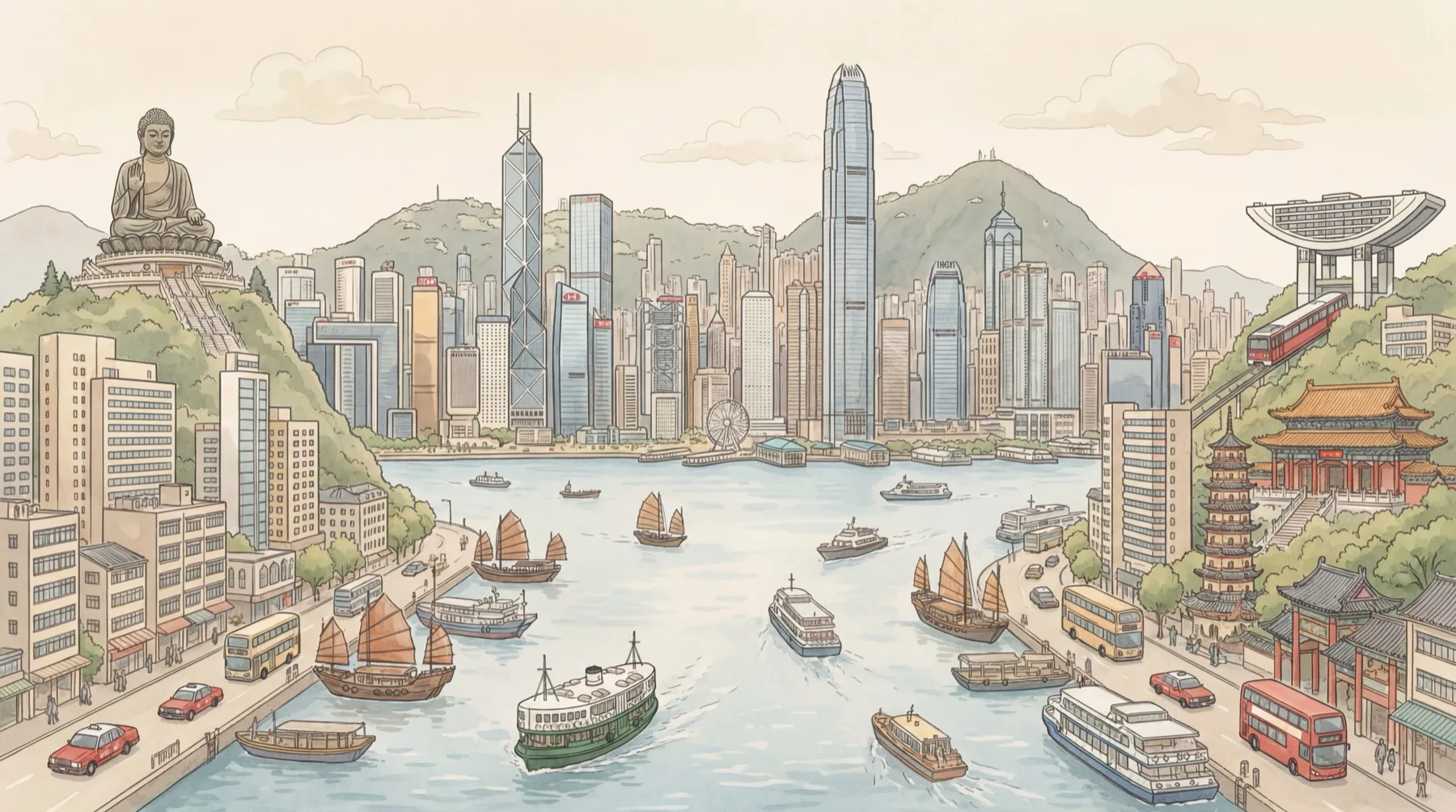
Hong Kong
🇨🇳 China
Things to see Tips for Hong Kong
Must-visit landmarks, hidden gems, and sightseeing
Everyone takes the MTR tunnel under victoria harbour because it's fast and efficient, but honestly, where's the romance in that? The star ferry is peak lazy tourism — HK$4.80 for upper deck (better views), HK$4.50 for lower deck if you're budget-conscious, and you get the full hong kong money shot that's on every postcard.
Board at tsim sha tsui pier (right next to that colonial clock tower you'll photograph anyway) or central pier 7. The ride takes maybe 8 minutes, which is perfect because it's just long enough to get the skyline photos but short enough that you don't get bored. These green and white ferries have been chugging across since 1888, so you're basically time-traveling while avoiding the subway.
Best time is late afternoon when you're too tired for more walking anyway — Around 5-6pm when the office buildings start lighting up but it's not dark yet. Skip those expensive harbour cruise tours that cost HK$200-400. This IS the harbour cruise, just without the tourist markup and cheesy commentary. Sit on the right side going from tsim sha tsui to central for the best skyline angle, or just pick any seat because honestly, it's all good.
This 8.5km trail consistently ranks as one of Asia's best urban hikes, and for good reason — You get dramatic ridge views, South China Sea vistas, and finish at Big Wave Bay Beach where you can wash off the sweat. Total hiking time is 3-4 hours depending on your fitness and photo stops, with moderate difficulty that doesn't require technical skills.
Getting there: MTR to Shau Kei Wan Station (Exit A3), then bus #9 to To Tei Wan terminus — That's your trailhead. Start early (7-8am) to beat Hong Kong's brutal humidity and the Instagram crowds. The trail is well-marked with occasional shade, but pack 2+ liters of water per person. Seriously, Hong Kong heat will destroy unprepared hikers.
The route highlights: The famous dragon spine ridge section offers panoramic views of Tai Long Wan beaches and offshore islands. You'll hit several peaks including Shek O Peak (284m), with the trail eventually descending to Big Wave Bay. There are proper beach facilities here — Showers, toilets, and a few restaurants for post-hike korean fried chicken and cold beer.
Essential prep: Wear actual hiking shoes (not sneakers), bring electrolytes not just water, and check weather conditions. The exposed rock sections become dangerously slippery after rain. Also pack sunscreen — You'll be on ridges with zero shade for long stretches. The beach finish makes all the suffering worth it though!
 kimchiquest
Hong Kong's relentless pace hits differently when you're socially drained. Between the construction noise echoing off glass towers in Central and the aggressive foot traffic through Nathan Road, I've mapped out specific escape routes that actually work.
The IFC Rooftop (above IFC Mall, Central Station exit A) is my secret weapon. Take the mall elevator to the top level — Completely free cushioned sofas and tables with proper harbour views. It's basically an outdoor living room that tourists never discover. I pack convenience store snacks and just decompress while watching the Star Ferry cross below. Open during mall hours, zero cost, and you can spread out without guilt.
When I need deeper spiritual quiet, I take the Ngong Ping 360 cable car (HK$235 round-trip from Tung Chung) to Po Lin Monastery behind the Big Buddha. Everyone photographs the giant statue, but the actual monastery courtyards are where locals go to pray quietly. The incense is thick enough to muffle all city noise, and there's something about those 1,000-year-old chanting rhythms that genuinely resets my nervous system. Free entry to monastery grounds.
I always pre-plan these refuge points on Google Maps before any Hong Kong trip. Having clear escape routes mapped out prevents that awful trapped feeling when the city energy becomes overwhelming.
 kiki_adventures
Hong Kong's Central-Mid-Levels escalator gets hyped as the 'world's longest outdoor covered escalator system' — Which sounds impressive until you realize it's literally just a practical commuter tool that helps office workers climb Hong Kong Island's steep terrain. It runs uphill 6am-10am for morning commuters, then downhill 10:10am-midnight.
The photo opportunities are mediocre at best — You're essentially riding past generic apartment blocks and a few overpriced SoHo bars. But here's what makes it interesting from a photography perspective: the constant motion creates beautiful motion blur with film cameras, especially shooting through the gaps between escalator segments. The interplay of moving people, static architecture, and filtered light through the covering creates layered compositions you can't get with digital's instant feedback.
If you're determined to ride it, go mid-morning or mid-afternoon when you're not blocking frustrated locals rushing to work. The full journey from bottom (Central MTR exit C) to top (Conduit Road) takes about 25 minutes if you just stand. But honestly, treat it as transportation to reach SoHo's dining scene rather than a destination itself.
The real fascination is the urban design solution — How they threaded this system between existing buildings without demolishing anything. It's a feat of practical engineering, not a tourist spectacle.
 cammie_k
Nan Lian Garden (Diamond Hill) — free Tang dynasty garden with golden pagoda and peaceful courtyards
This meticulously recreated Tang dynasty garden offers an extraordinary juxtaposition — Ancient Chinese design principles manifested in modern Hong Kong's urban jungle. Located directly above Diamond Hill MTR station (Exit C2), Nan Lian Garden provides free admission to perfectly manicured landscapes, wooden pavilions, and geometric koi ponds that follow classical feng shui principles.
Architectural highlights: The golden pagoda serves as the garden's centerpiece, its traditional timber construction contrasting sharply with surrounding residential towers. Wooden walkways connect various themed areas including the Pine Garden, Lotus Pond, and Rock Garden — Each designed according to Tang dynasty aesthetic principles emphasizing harmony between built and natural elements.
Visiting guidelines: Open daily 7am-9pm with free admission. Weekday mornings (8-11am) offer the most serene experience before tour groups arrive. The adjacent Chi Lin Nunnery (built entirely without nails using traditional techniques) operates as an active Buddhist temple with morning prayer sessions at 6:30am that visitors may observe respectfully.
Contemplative experience: The garden's acoustic design uses water features and strategic plant placement to create natural sound barriers against urban noise. Spend time in the Tea Pavilion area where carefully positioned stones and flowing water create an almost meditative atmosphere. The on-site vegetarian restaurant Dragon Gate serves Buddhist cuisine if you wish to extend your visit in keeping with the garden's spiritual heritage.
PMQ on Aberdeen Street (former Police Married Quarters turned creative hub) showcases genuine Hong Kong design talent across two converted heritage buildings. Local artists sell handcrafted jewelry, leather goods, ceramics, and art prints — Actual made-in-Hong Kong pieces, not mass-produced tourist fodder. Prices reflect the quality: expect HK$200-800 for unique accessories, but you're supporting local craftspeople.
Cat Street (Upper Lascar Row) in Sheung Wan delivers proper vintage hunting across outdoor stalls and established antique shops. Serious dealers peddle jade, vintage watches, Cultural Revolution memorabilia, and old Hong Kong photographs alongside casual vendors flogging vintage clothing and retro electronics. The street earned its name from feral cats that once roamed the area — Now it's treasure cats you're stalking.
Saturday mornings (9-11am) offer the best selection when dealers put out fresh stock and prices stay negotiable. PMQ operates Tuesday-Sunday 10am-8pm with air conditioning and clean toilets. Cat Street runs daily but weekend mornings bring the most interesting pieces. Both locations sit within walking distance of Central MTR — PMQ via Hollywood Road, Cat Street near Sheung Wan station Exit A2.
Hunting strategy: At PMQ, chat with artists about their process — Many offer customization. On Cat Street, examine vintage cameras and watches carefully; Cat Street Gallery specializes in authenticated pieces. Real treasures hide among the tourist trinkets: pre-war Hong Kong postcards, vintage Rolex pieces, and genuine antique jade that dealers can authenticate on the spot.
The gallery triangle bounded by Hollywood Road, Queen's Road Central, and Des Voeux Road West contains Hong Kong's most serious contemporary art scene. Galerie Ora-Ora (202 Hollywood Road), Tang Contemporary Art (Shop G-H, 10/F, Pedder Building), and Blindspot Gallery (15/F, Po Chai Industrial Building) rotate exhibitions that are genuinely museum-caliber.
Entry is completely free versus HK$30 at Hong Kong Museum of History or HK$20 at Hong Kong Heritage Museum. Quality is often superior — I've seen works by established Asian artists that would cost HK$200+ to view at major international museums. Most galleries operate Tuesday-Saturday 10am-7pm, so you can gallery-hop 4-5 spaces in a afternoon.
Take MTR to Sheung Wan Station (Island Line, exit A2) and walk up Hillier Street toward Hollywood Road. The concentration of galleries within a three-block radius means you can cover serious contemporary art, traditional Chinese painting, and experimental installations all within walking distance. Perfect rainy day culture fix that costs zero beyond MTR fare.
 artwalkamy
Sky terrace 428 charges hk$65 on top of the peak tram fare and packs tourists shoulder to shoulder for that instagram shot. Lugard road viewpoint is literally a 5 minute walk east from the peak tram terminus and costs absolutely nothing
The angle captures more of kowloon peninsula spread out below plus you get those foreground elements like old trees and stone barriers that add depth to compositions. Golden hour light hits the ifc towers and harbor perfectly about 90 minutes before sunset — Much better than the flat midday tourist shots everyone takes
Best part is you can actually set up properly without crowds pushing behind you demanding their turn. Bring a small tripod if youre shooting film and want those longer exposures as the city lights start switching on
The waterfront promenade from Tamar Park (near Admiralty MTR) eastbound to Causeway Bay Typhoon Shelter is Hong Kong's best urban running route. Completely flat 5km one-way with unobstructed harbour views and minimal foot traffic before 7am.
Start at Tamar Park (Admiralty Station exit B), run east past the Hong Kong Convention Centre's distinctive curved roof toward the Golden Bauhinia Square. The path continues through Wan Chai waterfront parks with water fountains every 800m and clean public toilets at major landmarks.
Early morning timing is crucial because after 8am it fills with tai chi groups, dog walkers, and tourists photographing the harbour. The route avoids Central's brutal hill system entirely — No steep climbs up toward Mid-Levels that destroy your pace.
If you want elevation training, branch off at Admiralty and tackle the Peak Tram route on foot — 2.5km of punishing switchbacks up Mount Austin Road that gain 300m elevation. But for consistent harbor-view distance running, stick to the flat waterfront promenade.
 runroutes
Rent a bike near Sha Tin or Tai Po and cycle the Tolo Harbour Cycling Track to Tai Mei Tuk. It's completely flat, follows the water, and gives you countryside views 30 minutes from downtown Hong Kong.
The full route is 20km but you can turn around anywhere. Bike rental is HK$50-80 per day and the path is well-marked. End at Tai Mei Tuk for seafood restaurants by the water. Take MTR East Rail Line to Sha Tin or get off at Tai Po Market (Exit B) for easier access to the cycling track sections.
Most people hit Cat Street (Upper Lascar Row) in Sheung Wan and just browse the ground floor stalls selling the same mass-produced "antiques" to tourists. The real finds are always on the second and third floors of these buildings. Head upstairs in any of the multi-story antique shops and you'll find genuine vintage Hong Kong movie posters, colonial-era ceramics, and actual antique furniture instead of factory reproductions. The vendors upstairs are more serious collectors and the prices reflect actual value rather than tourist markup. Best spots are the upper floors of buildings around the mid-section of the street. Go on weekdays when it's less crowded and the serious dealers are more willing to negotiate. Weekends are just tourists buying fake jade and reproduction signs.
Sky terrace 428 costs hk$65 and packs tourists into that same boring straight-on harbor shot everyone posts. Peak circle walk has multiple free viewpoints with way more interesting compositions — Lion pavilion gives you foreground elements with the city backdrop and mount austin road viewpoint captures both hong kong island and kowloon from an elevated angle
Walk east from the peak tram terminus following lugard road signs then branch onto the circle walk path. Youll hit 3-4 different vantage points each offering unique perspectives and zero crowds. Morning golden hour around 7-8am gives you that warm light hitting the ifc towers with clean air before the afternoon haze builds up
Bring a lightweight tripod if youre shooting longer exposures as the city lights switch on around sunset — The elevated position lets you capture light trails from traffic flowing along connaught road and des voeux road
Discovered this gem while killing time before a flight. Tsing Yi Nature Park is right next to the Airport Express line but feels like you're in a different world. Take the MTR to Tsing Yi station and walk 5 minutes to the entrance. The main trail loops are 3.3–6.4 km and take about 1.5-2 hours depending on which route you choose. Perfect if you want nature but don't have time for the outer islands.
Best cycling in Hong Kong that tourists never discover. Rent bikes at Sha Tin MTR station (about HK$50/day) and cycle along Shing Mun River. Completely flat, well-maintained, goes through different neighborhoods and parks.
8km one way from Sha Tin to Tsuen Wan. Takes about 45 minutes at a relaxed pace. Lots of spots to stop for local food and the river views are surprisingly nice. Way better than trying to cycle on Hong Kong Island's hills.
 skibumtom
This public housing estate with the colorful rainbow facade has become a huge Instagram destination, but please remember actual families live here. The basketball court on the roof gets packed with photographers, especially at sunset. Best time to visit is weekday mornings around 9-10am when it's quieter. Take MTR Kwun Tong Line to Choi Hung Station Exit C3, then follow the signs. The view is free and genuinely striking against Hong Kong's grey skyline. Just be respectful of residents and don't block walkways or make noise in the stairwells. The colors look best in natural light anyway.
Hong Kong Park has this massive walk-through aviary where you're surrounded by tropical birds flying free around you. It's surprisingly peaceful and barely any tourists know about it. Entry through the park is free, and the aviary feels like being in a rainforest canopy. Perfect quiet spot to recharge between exploring Central. The wooden walkways wind through different levels — Brings you right into the trees with the birds.
 renobird
Hidden gem combining an independent bookshop with art house cinema and cafe. Kubrick in Yau Ma Tei shows foreign films you won't find elsewhere and has an excellent English literature section. Perfect rainy day escape with film screenings, book browsing, and decent coffee. The crowd is local film buffs and students, not tourists. Check their screening schedule online as they show films in various languages with subtitles.
Cat Street (Upper Lascar Row) and Hollywood Road form Hong Kong's authentic antique corridor where serious dealers sell genuine Qing dynasty ceramics, Cultural Revolution propaganda posters, and colonial-era Hong Kong photographs. Skip the street-level vendors hawking fake jade and head to established shops like Arch Angel Antiques (53-55 Hollywood Road) or True Arts & Curios.
Real vintage dealers occupy the upper floors and back rooms — Look for shops displaying museum-quality Ming porcelain or vintage Shanghai advertising posters in their windows. Prices start around HK$800 for smaller authentic pieces and climb to HK$50,000+ for museum-worthy items. Everything's negotiable, especially if you demonstrate actual knowledge about Chinese ceramics or Hong Kong colonial history.
Take MTR to Sheung Wan (Island Line exit A2), walk up Hillier Street to Hollywood Road, then explore eastward toward Central. Much more rewarding than the manufactured antique stalls at Stanley Market that sell factory reproductions to tourists.
 marketsunday
Best 2.5km harbor run in Hong Kong. Start at Star Ferry Pier, run east along the waterfront to Avenue of Stars, loop back. Perfect flat route with constant harbor views. Go before 7am to avoid crowds and get the best light. Drinking fountains available, clean bathrooms at both ends. The Symphony of Lights setup makes good interval training markers. Much better than Victoria Park for tourists staying in TST area. About 45 minutes including stretching.
 somchai_e
If the city chaos gets overwhelming, Hong Kong Park opens at 6am and it's completely different before 8am. The tai chi groups practice by the pond and it's so quiet you can actually hear birds. The aviary is free and amazing in the morning when the birds are most active. Plus you can grab proper coffee from Pacific Coffee in the museum afterward. It's right above Admiralty MTR so super easy to reach.
About Hong Kong
Special Administrative Region of China, a global financial center on the South China Sea. Victoria Harbour's skyline and the Star Ferry create one of the world's most recognizable urban landscapes.
Destination Stats
Know something locals know? Share your insider tip.
+ Share a Tip