Hong Kong
🇨🇳 China
Culture Tips for Hong Kong
Local customs, traditions, museums, and art
The Kowloon Mosque on Nathan Road in Tsim Sha Tsui is one of Hong Kong's most prominent mosques and worth visiting for its beautiful white marble architecture. Non-Muslims are welcome outside prayer times, usually 9-11am and 2-4pm daily.
Remove shoes before entering, dress modestly (long sleeves and pants), and women should cover their hair. The interior features intricate Islamic calligraphy and geometric patterns. Staff are friendly and happy to explain the architecture and local Muslim community.
It's right on the main tourist strip but most people just walk past without noticing. Free to visit, just be respectful of worshippers and photography rules.
Wing Kee Tea Company (168 Queen's Road Central) has been conducting proper gong fu cha ceremonies since the 1960s using traditional Yixing clay teapots and aged teas that most Hong Kong tourists never discover. The owner, Mr. Lau, speaks excellent English and explains each step while brewing 20-year-old Da Hong Pao oolong or 40-year-old pu-erh using traditional timing and water temperature.
Sessions run HK$150-400 depending on tea grade and include multiple infusions where you taste how the flavor evolves through 6-8 brewings. This isn't a café or tourist attraction — It's a working tea shop where locals buy their daily tea and occasionally participate in proper ceremonies. Much more authentic than the fancy hotel tea services that cost HK$800+ for essentially the same experience.
Take MTR to Central Station (multiple lines, exit G) and walk up Queen's Road Central toward Sheung Wan. Look for the traditional Chinese signage and smell of aged tea leaves. Appointments recommended for formal ceremonies, but walk-ins welcome for casual tea tasting.
 teahunter
Masjid Ammar on Johnston Road is Hong Kong's oldest mosque with stunning Moorish architecture. The community welcomes respectful visitors and offers free meals during Iftar in Ramadan.
Proper dress code required (covered shoulders and legs) and remove shoes before entering. The prayer hall has beautiful geometric patterns and the imam speaks excellent English. Non-Muslims welcome outside prayer times.
Get to Wan Chai Market by 7am to see the real Hong Kong. Fish vendors setting up, aunties buying vegetables, the smell of fresh seafood. It's chaotic and authentic. Grab breakfast from the congee stalls inside for HK$25. Most tourists sleep through this.
 marketsunday
Hidden gem in Hong Kong Park that most tourists miss. The Flagstaff House Museum of Tea Ware offers free guided tea ceremonies on weekends at 3pm.
You'll learn proper gong fu cha technique and taste high-quality oolong and pu-erh teas. Much more authentic than the tourist tea houses in Central that charge HK$200 for the same experience.
Museum is free entry, ceremony is free, just show up 15 minutes early. Only runs in English on Saturdays.
 skibumtom
This beautiful mosque welcomes visitors for guided tours explaining Islamic architecture and Hong Kong's Muslim community history. Tours are usually Friday afternoons after prayers, but call ahead to confirm.
Dress modestly and remove shoes before entering. The geometric patterns and calligraphy inside are stunning. Located near Wan Chai MTR Station Exit A3.
Kowloon Masjid on Nathan Road welcomes non-Muslim visitors outside prayer times. They offer informal guided tours explaining Islamic architecture and Hong Kong's Muslim community history. Just ask at the entrance - dress modestly and remove shoes.
The building itself is beautiful with traditional geometric patterns. There's also a smaller mosque in Mid-Levels if you're exploring that area. Very peaceful spaces in busy Hong Kong.
The Kowloon Mosque and Islamic Centre on Nathan Road offers free guided tours showing beautiful Islamic calligraphy, geometric patterns, and architectural details. The mosque was rebuilt in the 1980s with traditional Middle Eastern design elements.
Tours are usually Friday afternoons after prayers, but call ahead to confirm. Dress modestly — Long pants and covered shoulders. The prayer hall has incredible carpet work and detailed mihrab decoration. Very welcoming community that's happy to explain Islamic culture and architecture.
Small mosque on Wan Chai Road that welcomes visitors for prayer and has community dining daily from 6pm-9pm after prayers. The imam speaks English and is happy to explain Islamic practices.
Beautiful modern Islamic architecture and very welcoming community. Remove shoes before entering and dress modestly. Women should cover hair during prayer times.
Stunning mosque tucked into the Mid-Levels that most visitors never see. The current building was completed in 1915-1916, though a mosque has stood on this site since 1849, featuring gorgeous Indo-Islamic architecture with detailed tilework and peaceful courtyard.
Visitors welcome outside prayer times - best around 2-4pm. Modest dress required, scarves available at entrance. The imam speaks excellent English and often gives informal tours.
Take the Mid-Levels escalator to Robinson Road level, walk 3 minutes east. Much quieter than the Kowloon Mosque but equally beautiful.
Flagstaff House Tea Gallery in Hong Kong Park (Admiralty MTR exit C1) houses Hong Kong's most comprehensive exhibition of traditional Chinese tea culture, including demonstrations of Song dynasty brewing methods using authentic Ming and Qing dynasty teaware. The museum-quality collection includes 600 teapots, some dating to the Tang dynasty, with detailed explanations of regional brewing traditions.
Free guided tours on weekends include proper gong fu cha ceremonies where you learn the historical significance behind each step — Water temperature for different oolong varieties, the spiritual aspects of tea meditation in Buddhist temples, and how British colonial influence changed Hong Kong's tea drinking patterns. Much more educational than tourist tea houses that skip the cultural context for quick tastings.
The gallery operates Tuesday-Sunday 10am-5pm with free admission. The setting inside a 1844 colonial building adds historical context about how British and Chinese tea cultures merged in Hong Kong. Perfect introduction before visiting traditional tea shops in Sheung Wan or Central.
Hidden above the busy streets in Sheung Wan, Lock Cha does traditional Chinese tea ceremonies the right way. It's in the Hong Kong Museum of Tea Ware building and most tourists walk right past it.
Try their aged pu-erh or oolong tasting sets for HK$80-120. They teach you the proper brewing technique and the tea quality is exceptional. Much more authentic than the tourist tea houses.
Take the Light Rail to Ping Shan Station (routes 705, 706) for this 1.6km heritage trail through authentic Hakka villages featuring the Tang Ancestral Hall complex dating to the Song dynasty (960-1279). The Kun Ting Study Hall, Sheung Cheung Wai village, and three-story Tsui Sing Lau Pagoda remain completely tourist-free despite being designated monuments.
The Tang Ancestral Hall preserves 700-year-old architecture with original wooden carvings, traditional Chinese roof tiles, and ancestral tablets still used by local Tang clan descendants for ceremonies. Usually completely empty except for elderly villagers who sometimes offer impromptu explanations of family history if you show genuine interest.
Perfect escape from crowded heritage sites like Man Mo Temple or Wong Tai Sin. The entire trail takes 2 hours walking slowly, costs only the Light Rail fare (HK$5-7 from Tin Shui Wai Station), and offers authentic glimpse into Hong Kong's pre-colonial village culture without fighting tour groups or vendors.
 kiki_adventures
Family-run tea shop that's been there for decades. They'll let you taste different oolongs and pu-erhs before buying. Prices are reasonable and the owner knows everything about tea cultivation.
Much more authentic than the tourist tea shops in Central. Take MTR Island Line to Sheung Wan Station Exit E2. Open Tuesday-Sunday, closed Mondays.
Wan Chai wet market around 7am is surprisingly peaceful and you can watch the city wake up. Vendors setting up, locals buying fresh ingredients, none of the tourist chaos from later in the day.
Graham Street nearby also has this calm morning energy before the office workers arrive. Perfect if you're dealing with jet lag anyway and want to see local Hong Kong life without feeling overwhelmed.
The nunnery opens at 9am but if you arrive at 8:45am you can hear the morning chanting from outside the gates. Very peaceful and spiritual way to start the day.
The gardens are completely empty at opening time. Perfect for quiet reflection before the tour groups arrive around 10:30am.
About Hong Kong
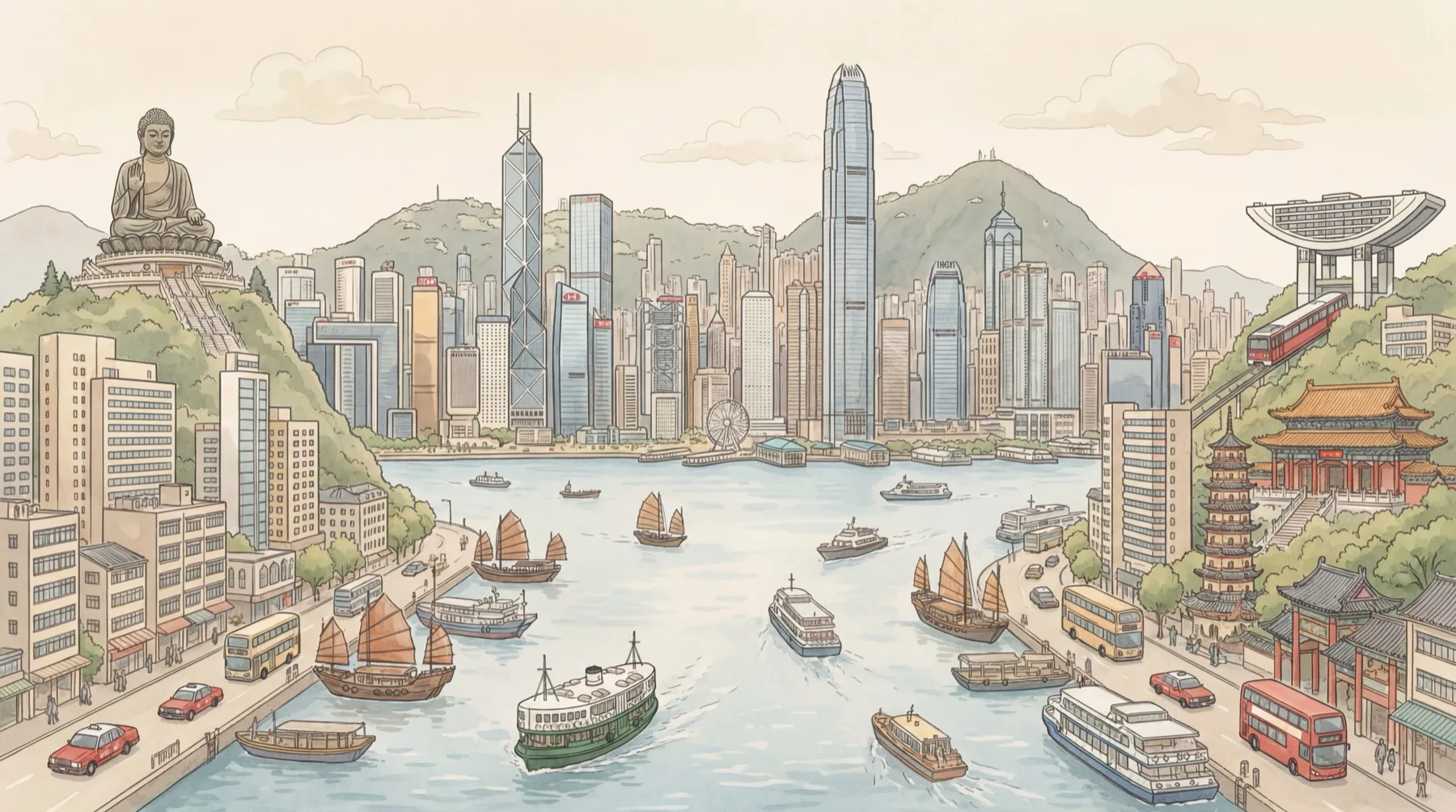
Special Administrative Region of China, a global financial center on the South China Sea. Victoria Harbour's skyline and the Star Ferry create one of the world's most recognizable urban landscapes.
Destination Stats
Know something locals know? Share your insider tip.
+ Share a Tip