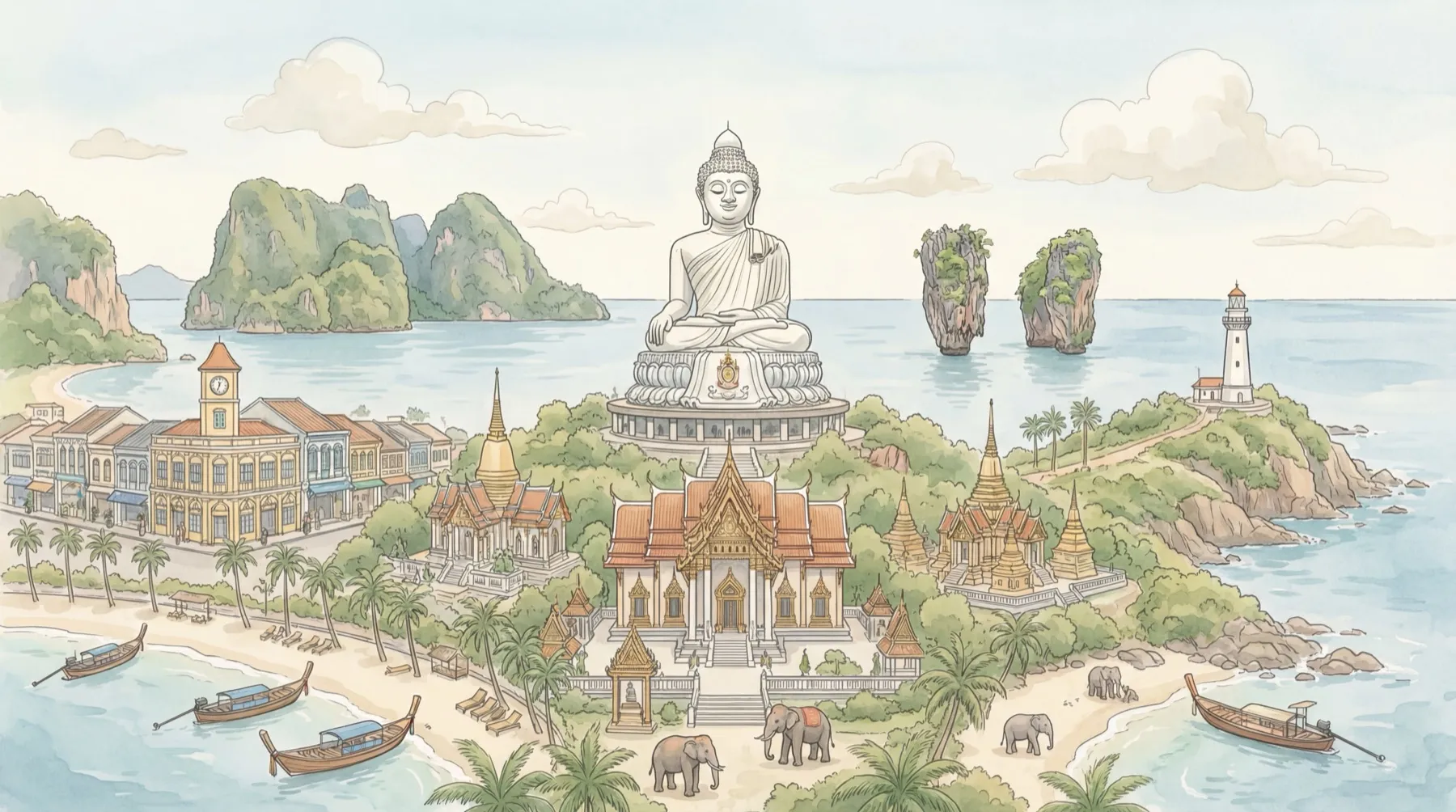
Phuket
🇹🇭 Thailand
Travel tips for Phuket
77 tips from 55 contributors
Been making the pilgrimage here every year since 2018, and after six trips through every season, here's the unvarnished truth about Phuket's timing that nobody tells you in those glossy travel guides.
Peak season (December-February): This is when Phuket transforms into paradise — Crystal blue skies, gentle Andaman breezes, and those Instagram-worthy sunsets that made you want to visit in the first place. But here's the catch: hotel rates triple overnight. That beachfront bungalow in Kata that costs 2,500 baht in July? Try 8,000 baht in December. Book three months ahead or prepare to pay premium for last-minute availability. The upside? Phi Phi and James Bond Island look exactly like those screensavers, and the sea conditions are perfect for everything from paddleboarding to serious diving.
Shoulder season (March-April): Still gorgeous weather but the tourist tsunami hasn't fully retreated yet. March cranks up the heat meter to a sweaty 34°C+, but the beaches start breathing again. April becomes a furnace — I'm talking 36°C with humidity that makes your shirt stick instantly — But it's the sweet spot for value hunters who can handle the heat. Pro tip: May kicks off the transition to wet season, so avoid unless you're chasing storm photography.
Monsoon season (June-October): Here's where everyone gets it completely wrong. Yes, it rains daily, but we're talking intense 90-minute afternoon downpours that clear into stunning evenings, not week-long drizzle. Hotels slash rates by 60-70%, beaches become your private kingdom, and the west coast surf breaks come alive. The trade-off? Underwater visibility drops for diving, but the dramatic storm light creates some of the most spectacular photography conditions you'll ever see.
Transition month (November): Used to be the insider secret — Improving weather but without the December crowds. Sadly, that secret's out and prices have climbed 30% in recent years. Still worth it if you can swing it.
Bottom line: December-February for guaranteed postcard weather, June-August for empty beaches and massive savings if afternoon storms don't bother you. The choice depends on whether you prioritize perfect conditions or authentic experiences without the crowds.
 nochebuena
The fascinating dichotomy of Phuket's culinary landscape reveals itself most clearly when you observe where the locals queue for their meals. After extensively documenting the island's food culture, I've discovered that the most exceptional experiences exist in spaces completely overlooked by conventional travel guides.
Weekend markets and authentic street food: Naka Weekend Market on Chalong Road (Friday-Sunday, 4pm-10pm) represents Phuket's most authentic food ecosystem. Here, Auntie Noi's khao man gai stall — Distinguished by her ancient aluminum pots and the constant queue of motorcycle taxi drivers — Serves what local food historians consider the island's finest version at just 60 baht. The historical significance of this market dates back to the 1960s when Chinese immigrant families established these generational food businesses. Navigate to GPS coordinates 7.8804° N, 98.3370° E, and expect to spend merely 20% of resort restaurant prices while accessing genuinely traditional recipes.
Phuket Old Town's hidden culinary heritage: The historically significant Old Quarter harbors extraordinary gems like Lock Tien Food Court on Yaowarat Road, a fascinating social hub where dozens of family-run stalls operate within a converted shophouse complex. Nothing exceeds 80 baht here, and observing the daily rhythm of local office workers reveals the authentic favorites. Kopitiam by Wilai, operating since 1957, serves proper Hokkien-style noodles and dim sum that reflect the Peranakan cultural influences — Arrive before 9am when the steam still rises from their bamboo baskets, or face disappointment.
Coastal authenticity beyond tourist zones: Skip Patong's theatrical seafood presentations entirely and venture to Rawai Fishing Village, where Sai Nam Yen restaurant allows you to select live fish from traditional wooden tanks. Their whole grilled snapper costs 200 baht — The same fish prepared with identical techniques their grandfathers used. Market-price crab typically runs 800 baht per kilogram, and the simple fact that local fishermen eat here after their morning catch tells you everything about authenticity.
Elevated dining with cultural context: For those seeking refinement, Mom Tri's Kitchen represents elevated Thai cuisine with profound ocean views, expecting 1,200-2,000 baht per dish. The sunset justifies the investment, and their interpretation of traditional Phuket-style curry showcases how historical spice trade routes influenced local cuisine. This overlooked restaurant deserves recognition for preserving authentic cooking techniques while presenting them with sophisticated finesse.
The transport situation at Phuket International Airport presents serious accessibility challenges that every traveler needs to understand before arrival. The notorious 'taxi mafia' system creates both financial and physical barriers, but with proper planning, you can navigate this safely and affordably.
App-based transport (most accessible option): Download Grab before landing — This is non-negotiable for accessibility. Grab drivers meet you at designated pickup points in the arrivals area (clearly marked with accessibility symbols), and the app shows exact vehicle details and driver photos. Costs run 700-1,000 baht to most destinations versus 800+ baht for airport taxis. Crucially, you can request wheelchair-accessible vehicles through the app if needed, though advance booking (2+ hours) is recommended during peak seasons.
Public transport alternatives: The A1 Airport Bus operates every 30 minutes until 8pm, costing just 100 baht to Phuket Town Terminal. However, accessibility is limited — Buses have high steps and no wheelchair lifts. The Smart Bus (blue and white) departs from Exit 3 of the domestic terminal, running until 11:30pm to Patong (50-170 baht depending on destination). These buses have designated priority seating and are more accessible than local songthaews, with lower floors and handrails.
What to absolutely avoid: Never engage with taxi touts who approach in the arrivals hall — They quote reasonable prices then add mysterious 'airport fees,' 'gas surcharges,' or 'late night fees' once you're in the vehicle. This practice particularly targets travelers with mobility aids who may feel trapped once committed. Official airport taxis use fixed-rate cards, but these rates are consistently higher than app-based options with no additional accessibility features.
Accessibility-specific tips: The airport has good wheelchair accessibility throughout, with lifts to all levels and accessible restrooms near all exits. If you need assistance, airport staff at the information counters (located post-immigration) speak English and can help coordinate accessible transport. For wheelchair users, the pickup areas for Grab are fully accessible, unlike the chaotic taxi queues which involve stairs and crowded walkways.
 accessible_jen
Phi Phi's done. Packed boats. Overpriced everything. Snorkel spots picked clean.
Coral Island (Koh He): Twenty-five minutes from Chalong Pier. Long Beach delivers proper hard coral formations that haven't been trampled by a million flippers. Water clarity's consistently better than Phi Phi — We're talking 15-20m visibility on good days. Day trips run 900 baht including lunch and gear, but skip the tour groups and catch the 9am direct ferry for 200 baht return.
Koh Maiton: This is where you go when you want that private island feeling without the private island prices. Pristine reefs, calm conditions perfect for first-timers. Most operators charge 1,200-1,500 baht including transfers and snorkel gear, but the coral gardens here are untouched compared to the tourist traps.
Racha Islands (the real deal): Racha Yai's decent but gets busy midday. Racha Noi is where serious snorkelers head — Deeper water, bigger marine life, occasional manta ray sightings if the diving gods smile on you. Advanced swimmers only due to currents that'll drag you to Malaysia if you're not careful.
Insider booking tricks: Use operators at Rassada Pier — Sea Star and Love Andaman consistently undercut the beach touts by 30-40%. Morning departures (8-9am) get you calmer seas and better visibility before the afternoon wind kicks up. During monsoon season, boats cancel frequently, so book flexible tours or prepare for disappointment.
Bottom line: Phi Phi's Instagram famous. These spots are actually good for snorkeling.
 jessnight
Three weeks solo in Phuket taught me some expensive lessons that every woman traveling alone needs to know upfront. The island's generally safe, but certain scams specifically target solo travelers, particularly women who might feel pressured to resolve situations quickly.
Jet ski scams (this will ruin your trip): Never, ever rent from beach operators in Patong. They deliberately damage the ski themselves — A small scratch you'll never notice — Then demand 15,000-20,000 baht for 'repairs' when you return. The moment this happens, call Tourist Police at 1155 immediately and refuse to pay anything until they arrive. I watched this happen to three different women during my stay. The operators count on tourists feeling intimidated and paying to avoid confrontation.
Motorbike rental passport scams: Many shops hold your passport as collateral, then mysteriously discover 'damage' when you return the bike, demanding thousands in repairs for scratches that were already there. I learned to rent only through my accommodation or find shops accepting cash deposits instead. Take detailed photos of the bike from every angle before riding away — This saved me 8,000 baht when they tried claiming I damaged the exhaust.
Safe neighborhoods for solo women: Kata and Karon beaches feel exponentially safer than Patong's chaos — Smaller scale, more families, easier to spot trouble. The guesthouses here are run by local families who genuinely look out for solo travelers. Phuket Old Town is perfectly fine during daylight hours, but avoid walking alone after 10pm when the streets empty out. Bangla Road in Patong becomes aggressive and handsy after midnight — I learned to leave before the drunk crowds arrived.
Transport and evening safety: Grab works excellently for night rides and shows driver details and route tracking. Songthaews (local shared taxis) stop running around 6pm, so plan your return journey accordingly. Beach taxis will absolutely try to overcharge solo women — Quote half their asking price and negotiate firmly before getting in. Trust your instincts always. If something feels wrong, it probably is, and removing yourself from uncomfortable situations is never an overreaction.
 nadia_m
While crowds flock to Karon Viewpoint, these three secluded spots offer equally stunning panoramas without the tour bus chaos. Perfect for those seeking Phuket's natural beauty in peaceful solitude.
Black Rock Viewpoint: Continue 2km past Karon Viewpoint toward Nai Harn Beach on Route 4233. Look for the unmarked dirt road on your left (motorbike essential - cars won't make it). A gentle 10-minute forest walk through frangipani trees leads to dramatic limestone cliffs overlooking the Andaman Sea. The golden hour here transforms the water into liquid amber - arguably the most photogenic sunset spot on the entire island.
Khao Rang Hill: Home to Wat Khao Rang temple complex, this 160-meter hill offers 360-degree views from Phuket Town to the surrounding islands. The golden Buddha statue marks the perfect meditation spot, especially at sunrise when mist hangs over the valleys below. Accessible by car via Khao Rang Road, completely free, and mysteriously overlooked by most visitors despite being one of Phuket's most accessible viewpoints.
Windmill Viewpoint: Located near Ya Nui Beach, this alternative to overcrowded Promthep Cape provides equally spectacular sunset views with virtually no crowds. The historic windmill structure creates unique silhouette opportunities for photography, and the elevated position captures both the Andaman Sea and inland mountains in a single frame.
These sanctuaries preserve the contemplative side of Phuket that existed before Instagram. Bring water, arrive early, and please respect the tranquil atmosphere that makes each location genuinely special.
After decades of travel, I've learned that understanding local transport opens doors to authentic experiences while keeping costs manageable. Phuket's public transport system, while limited, offers wonderful opportunities to see the island like locals do - with patience and proper timing.
Blue Songthaews (Local Share Taxis): These open-air trucks connect Phuket Town's central market area to major beaches. The Kathu route (serving Patong Beach area) operates 7:30am-4:30pm from Ranong Road near the fresh market, costing 25 THB for the scenic 30-minute journey through rubber plantations. Return service runs 6:20am-3pm from Patong's Jungceylon Shopping Center. The Chalong route (40 minutes, 30 THB) departs from the same location 8:30am-5pm, returning from Chalong Circle 7am-4pm - perfect for visiting the famous Wat Chalong temple complex.
Pink Songthaews: These circulate within Phuket Town only, running 6:30am-8pm every 20-30 minutes along a fixed route including the weekend night market area and Rassada Pier (essential for ferry connections to Phi Phi Islands). Fares run 10-15 THB - have exact change ready as drivers rarely break large notes.
Phuket Smart Bus: The island's modern air-conditioned service connects the airport to Rawai Beach, stopping at all major beaches including Kamala, Patong, Karon, and Kata. Track buses in real-time through Google Maps by searching "Phuket Smart Bus" - remarkably accurate and saves endless waiting. Fares range 50-170 THB depending on distance. The night service (9pm-2am) operates hourly during high season only.
Essential timing consideration: Most songthaews cease operations by 6pm sharp. Plan your return journey accordingly, or budget for private taxis after dark. This early cutoff actually encourages a more relaxed pace - perfect for enjoying those spectacular Andaman sunsets from your beach destination.
 renobird
Phuket Old Town represents a fascinating fusion of Chinese immigration and Portuguese colonial influence from the 19th-century tin mining boom - a perfect example of Straits Chinese (Peranakan) culture that you'll also find in Penang and Malacca. Start early morning around 8am for optimal photography lighting and minimal crowds, just like exploring Bukchon Hanok Village in Seoul!
Essential route: Begin at Thalang Road's iconic colorful shophouses - each pastel facade tells immigration stories through intricate stucco work and traditional wooden shutters. The must-visit Chinpracha House Museum (98/2 Krabi Road, 100 THB entry, 9am-5pm daily) showcases a magnificently preserved tin baron's mansion with original Peranakan furniture, family portraits, and period artifacts that rival the best heritage houses in Penang. The docent stories about mixed marriages and cultural adaptation are absolutely fascinating.
Wat Phra Nang Sang: Phuket's oldest temple features unusual colorful statuary blending Buddhist, Taoist, and local animist traditions - similar to how Korean Buddhist temples incorporate shamanic elements. This historically significant site houses an alleged Buddha relic but remains surprisingly overlooked by most visitors focused solely on Instagram-worthy shophouses.
Practical details: Free weekend tuk-tuk service loops Thalang Road every 15 minutes on Saturdays and Sundays. For authentic lunch, Lock Tien Food Court (Yaowarat Road) serves phenomenal Hokkien mee (flat rice noodles with dark soy sauce) for just 80 THB in a beautiful heritage building - the noodle technique here rivals what I've tasted in Penang's clan houses.
The architectural details here represent textbook early 20th century Straits Chinese craftsmanship - notice how European neoclassical elements blend seamlessly with Chinese decorative motifs, creating a visual language unique to Southeast Asian port cities with significant Chinese populations.
 kimchiquest
Bangla Road after 10pm becomes quite overwhelming with aggressive touts and inflated prices designed for tourists. Allow me to share where locals and long-term residents actually enjoy their evening entertainment - these venues offer much more pleasant experiences.
Illuzion Club (Royal Phuket Marina): A proper international-standard club featuring renowned DJs and sophisticated sound systems. Entry fee is 500 THB including one premium drink. Wednesday ladies' nights offer complimentary entry for female guests. While the taxi journey from Patong costs approximately 400 THB, the upgraded crowd quality and professional service justify the expense - think Shibuya-level club standards in a tropical setting.
Catch Beach Club: Located at Surin Beach, this upscale venue seamlessly transitions from sunset cocktails to late-night entertainment. Daybed reservations require 2,000-5,000 THB minimum spend (credited toward food and beverages). Cocktails range 250-600 THB, but the beachfront atmosphere and refined clientele create a sophisticated alternative to typical beach bar chaos. The sunset views rival anything in Okinawa.
Old Town Heritage Bars: The small establishments around Thalang Road offer intimate settings with expertly crafted cocktails and local live music. These venues maintain conversation-friendly volume levels and attract culturally curious travelers rather than party tourists. Perfect for those seeking authentic Thai hospitality without the commercialized atmosphere.
The energy dynamics shift dramatically after midnight - while Bangla Road becomes increasingly aggressive and tourist-focused, these recommended venues maintain their welcoming atmosphere and reasonable pricing until closing time. Much more enjoyable for genuine social experiences.
 kento92
Okay real talk - everyone hits Patong for surfing because it's famous, but Surin Beach is absolutely where you want to be if you actually care about catching decent waves without dodging jet skis every ten seconds. Plus it's way more budget-friendly than the Patong tourist trap scene.
The waves are consistently better, especially during monsoon season (June-October) when swells hit the west-facing beaches perfectly. Board rentals right on the beach run 300-400 THB per day from the local surf shops, and honestly these guys actually know their stuff instead of just trying to upsell you random gear. Best sessions happen early morning 7-8am before the afternoon winds turn everything into choppy mess - learned that lesson after getting worked by wind chop one too many times.
The real gem is the left-hand break near the rocks on the north end of the beach - absolutely money when the swell direction is right. Just seriously watch out for the shallow reef sections at low tide. I may have donated some skin to those rocks during my first week here (college budget doesn't cover reef rash treatment, trust me).
Parking is free right above the beach, and there's a decent little warung selling 40 THB pad thai that hits different after a solid surf session. Way better vibe than fighting crowds and paying triple prices at Patong. Sometimes being broke forces you to find the actually good spots!
After three days of bangla road chaos and tuk-tuk horns at 3am, i was genuinely ready to lose my mind. Turns out salvation exists just 30 minutes north at nai yang beach — It's inside sirinath national park so commercial development is banned, meaning you get actual locals fishing and the occasional backpacker who figured it out. Even during peak season when it gets busier, still infinitely more peaceful than patong.
Mai khao beach is the other escape hatch when you need space to think. This massive 11km stretch means you can walk forever without seeing another soul, just endless white sand and occasional hermit crabs. Yeah there's planes overhead from the nearby airport but honestly that distant hum is soothing compared to jet ski engines and massage ladies stalking you every 30 seconds in patong.
Both beaches have zero vendors hassling you to buy coconuts, no speedboat touts, no chair rental drama. The trade-off is pretty limited facilities — Bring your own water and snacks since the nearest 7-eleven is a proper trek. But that isolation is exactly why these spots work when you need to decompress from tourist thailand overload.
Best part: parking is free at both locations, unlike patong where they'll charge you 100 baht to park near a beach you can barely enjoy. Sometimes the quiet option is just better for your sanity and wallet.
The massive white Buddha statue sitting proper on Nakkerd Hills is brilliant for panoramic views, but you can't just rock up without planning. This 45-metre marble beauty requires a bit of legwork to reach, and the temple has strict rules that'll see you turned away if you don't follow them.
Getting there without breaking the bank: Take bus 402 from Phuket Bus Terminal 2 (near Central Festival) to Chalong Temple for just 40 baht. From Chalong, hop on a blue songthaew (shared pickup truck) for the winding 6km climb up Nakkerd Hills — 100 baht per person, but they wait until full so bring patience. Skip the motorbike rental unless you're experienced with steep grades and hairpin turns, mate. The climb is brutal in tropical heat.
Temple visiting essentials: Gates open 7:30am sharp — Arrive early for cooler weather and crystal-clear views before the haze sets in. Dress code is enforced strictly: shoulders and knees covered or they'll refuse entry to the main platform. They sell sarongs on-site for 150 baht if you're caught out. Remove shoes before entering any building, never point feet toward Buddha statues, and keep voices low inside temple areas.
Insider timing tip: Those white marble tiles become absolutely scorching by midday — Like walking on a frying pan. Early morning visits mean comfortable walking, better air quality for photography, and you'll dodge the tour bus crowds that descend after 10am. The views stretch across Chalong Bay to the Andaman Sea, absolutely worth the effort when done right.
Most carriers drop dead between Phuket and outer islands. Here's what actually works when you're stuck on a longtail.
AIS dominance on island runs: AIS One-2-Call at HKT airport arrivals — 299 baht for 20GB/30 days. Only network with consistent signal during Phi Phi crossings and James Bond Island tours. True and Dtac go silent once you hit open water past Chalong Bay.
Maya Bay dead zone reality: Even AIS cuts out inside Maya Bay itself — Those limestone cliffs kill everything. Download offline maps before any longtail excursion or you're navigating blind.
Monsoon interference: June-October storms knock out cell towers regularly. Patong beachfront hotels lose internet for hours during heavy rain. Coffee shops on Thalang Road (Old Town) have fiber backups that stay solid.
Rawai fishing village trick: Local fishermen use VHF radios, not cell phones. If you're stuck with no signal, find the harbor master's office — They can contact emergency services via marine radio.
 skibumtom
Six trips to this beautiful island and the scooter rental hustle never gets old! Before you even think about engine size or bike models, you need to protect yourself from the damage scam epidemic. They'll claim damage that existed before you even touched the bike — 5,000 to 15,000 baht for scratches that cost 200 baht to fix at any local shop.
The classic move: passport hostage situation. They hold your actual passport until you pay their inflated damage fee, leaving you completely powerless. Smart travelers bring photocopies only — Your real passport stays locked in the hotel safe. Even better solution: skip scooters entirely and use Bolt or Grab for 100-300 baht per trip instead of risking thousands.
Patong Beach Road remains ground zero for this festival of nonsense — Those big rental shops with flashy signs and "special deals" are the worst offenders! If you absolutely must rent (maybe for those hill climbs that need 150cc+), stick to family-run places in quieter areas like Kata Noi that tend to be more honest.
Calculate the math: daily scooter rental plus inevitable damage fee versus actual transport costs over your stay. The ride apps win every time, plus you get air conditioning and don't need to worry about parking or helmet hair!
The gentle art of avoiding overpriced tourist seafood leads directly to Chalong fishing village, where working boats still land their catch at dawn. While beachfront restaurants charge 800 baht for a modest fish plate, this authentic harbor serves the same quality at genuinely local prices.
The morning fish market operates from 6-7am when longtail boats return with the night's catch. Vendors will grill whatever you purchase right there on charcoal braziers for a modest 50 baht cooking fee. I've selected whole red snapper for 100-300 baht per kilogram — The same fish commands 600 baht minimum in Patong's tourist district.
While Kan Eang Pier Restaurant offers decent fare, it caters to visitors rather than fishermen. Walk past the restaurant section to the working pier where weathered tables serve local families. English menus don't exist, but pointing at the freshest specimens works beautifully — Everything arrived that morning from Andaman waters.
The authentic atmosphere enhances every meal: fishing nets drying in tropical breeze, longtail engines puttering in the harbor, cats waiting hopefully for scraps. It's the kind of gentle, unhurried dining experience that pairs perfectly with a thermos of quality oolong tea, watching sunset paint the water gold while savoring grilled mackerel that tastes of ocean rather than tourist expectations.
 teahunter
Ok so everyone does the james bond island tour right? Huge mistake. Its literally just a rock sticking out of water and you're crammed onto boats with 50 other tourists all taking identical photos
While the snorkeling spots like Coral Island are great for underwater activities, if you want cultural experiences instead of just marine life, do koh panyee floating village. Actual people live there, kids play football on floating pitch made from old planks, eat lunch with families instead of tourist buffets. Way more interesting and costs half as much
Or skip boat tours entirely and rent kayak in ao phang nga. Paddle through mangroves yourself, explore caves, zero crowds. Just you and the occasional monkey. Much better experience for cultural immersion over pure beach time
 lauren_abroad
Found this gem on Thalang Road during my morning wander. Proper coffee, blessed air conditioning, and shelves of English books you can read without buying anything.
Sarah the owner stocks everything from travel guides to local history about Phuket's tin mining days. Spent an afternoon with an excellent flat white reading about the old Chinese merchants.
Open 10am-6pm, closed Mondays. Digital nomads take over midday but early morning is peaceful.
 wheelsfirst
Most elephant 'sanctuaries' here are just tourism businesses but found two genuine rescue operations after extensive research.
Green elephant sanctuary does proper rehabilitation work. Feed elephants, mud baths, making medicinal treatments. No riding obviously. Half day costs 2500-3000 baht but supports real conservation efforts.
Phuket elephant sanctuary similar approach focused on retired logging elephants. Small groups, educational about elephant care and behavior. Both rank consistently high from visitors who understand animal welfare.
Avoid anywhere advertising riding, painting, or performing tricks. Legitimate sanctuaries focus on natural behavior and rehabilitation only.
Finally found proper vegan thai food that doesn't just remove the fish sauce and call it done. This place actually understands how to build flavors without animal products.
Their gaeng kiao wan with mock duck is incredible - coconut cream is perfect and the fake meat has texture. Pad kra pao jay with holy basil properly spicy. Everything 80-120 thb which is fair for phuket.
Small soi off dibuk road in old town, near the blue sino-portuguese shophouses. Open 11am-9pm, closed mondays. Owner speaks english and explains ingredients. Fresh fruit smoothies without condensed milk too.
 somchai_e
If you're staying around Nai Yang but the beach feels overwhelming, walk north about 10 minutes to the quieter section near Thavorn Beach Village. Technically still public beach but way fewer vendors and almost no jet skis.
Shady spots under casuarina trees where you can read without being bothered. Sand is just as nice and you're close enough to walk back to Nai Yang restaurants. Perfect for recharging between more social activities.
I brought a book and spent three hours there yesterday without anyone trying to sell me anything. Bliss.
About Phuket
Thailand's largest island, famous for pristine beaches, luxury resorts, and water activities in the Andaman Sea. Patong Beach and Big Buddha attract millions of international beach tourists.
Destination Stats
Know something locals know? Share your insider tip.
+ Share a Tip