Beijing
🇨🇳 China
Travel tips for Beijing
30 tips from 28 contributors
Beijing went cashless faster than anywhere else in China and it blindsides every tourist. You literally cannot function without Alipay or WeChat Pay - street food vendors, subway ticket machines, taxis, even temple donation boxes only take mobile payments. Cash is basically worthless.
Download Alipay before your flight and set up the international tourist account. Takes 5 minutes: download app, upload passport photo, link your foreign Visa/Mastercard, done. The system accepts cards from 100+ countries and converts currency automatically. Load at least 500 yuan equivalent to start.
Airport wifi at Beijing Capital is notoriously slow for app downloads - I've watched entire families stuck at immigration because they couldn't get payment apps working. Hotel wifi first day is your backup plan but you'll be stranded until then.
Pro tip: Those breakfast jianbing carts outside subway stations? Mobile payment only, no exceptions. Same goes for 99% of convenience stores, bubble tea shops, and street vendors. Even elderly vendors have QR codes now.
The Forbidden City enforces strict daily visitor quotas of 80,000 people that sell out constantly during peak season and even in supposedly quieter autumn months, just like how Sagrada Familia does in Barcelona. You must book online through their official system exactly 7 days in advance - not 6 days, not 8 days. Same-day tickets exist but good luck with that gamble.
Booking process: Use the Palace Museum official WeChat mini-program or website. Entry costs 60 yuan April-October, 40 yuan November-March. You need passport details for each person. Book the 8:30 AM time slot without question - by 10 AM the crowds are absolutely unbearable even during autumn's 'reduced density' period.
Strategic visit plan: Enter through Meridian Gate (south entrance). Take Line 1 metro to Tiananmen East, use Exit A, 8-minute walk. Rent the audio guide for 40 yuan - essential for understanding why certain courtyards were forbidden to different social classes. Most tourists miss these fascinating imperial protocol details.
Insider routing: Skip the central axis route that tour groups follow. Head east to the Clock Exhibition Hall first, then work your way west through the quieter palace sections. This way you're walking against the crowd flow. Budget minimum 4 hours - rushing through 600 years of imperial history defeats the entire purpose.
Discovered these incredible family-run Sichuan joints hidden in Beijing's hutong neighborhoods where the spice level is absolutely no joke. We're talking tiny 8-table places run by families from Chengdu who cook like they're still feeding homesick Sichuanese workers, not tourists.
Look for handwritten Chinese menus and zero English - that's your signal you've found the real deal. Point at neighboring tables' dishes and nod enthusiastically. Order mapo tofu and ask for "la de hen" (extra spicy) if you dare. Their dan dan noodles make Beijing locals cry actual tears from the heat.
Best hunting grounds: narrow hutongs around Nanluoguxiang area, particularly the alleys between Gulou East Street and Jiaodaokou. Look for places with worn plastic stools outside and locals slurping noodles while sweating profusely. The fish in chili oil (shui zhu yu) is basically edible fire but absolutely worth the pain.
Golden hour photography tip: arrive around 6 PM when steam from hot pots creates dramatic backlighting through hutong doorways. The contrast of red chili oil against weathered wooden tables makes incredible shots.
 emmashots
Why Mutianyu destroys Badaling: Badaling is a tourist nightmare with 80,000 daily visitors. Mutianyu offers the same incredible wall experience with 1/10th the crowds, better mountain scenery, and way more authentic vibes. Plus it has that epic toboggan ride down.
The budget route there: Take subway Line 2 to Dongzhimen station (Exit C), then catch bus 916 express to Huairou Beidajie stop (1.5 hours, 12 yuan with transit card). Transfer to local shuttle bus H23 or H24 to Mutianyu entrance (25 minutes, 10 yuan). Total transport cost: 22 yuan vs 400-800 yuan for tour groups.
Perfect day strategy: Arrive at 8:30 AM weekdays for zero crowds. Take cable car up (140 yuan), hike the wall eastward for 2-3 hours, then ride the alpine toboggan down (120 yuan) - it's genuinely thrilling and unique to this section. The toboggan alone makes Mutianyu worth it.
Entrance fee 45 yuan, bring passport. Pack snacks because on-site food is overpriced tourist garbage. Budget 6-7 hours total including travel time. Sunday mornings are surprisingly quiet too.
 tuk2go
Transit Infrastructure Analysis: During September-October window, Beijing's subway system experiences 30% reduced congestion compared to summer peak. Line 1 to Tiananmen East Station maintains consistent 3-minute intervals versus summer's 6-8 minute delays. Platform crowding at major transfer stations like Jianguomen and Fuxingmen drops significantly, allowing seamless connections to Lines 2 and 6.
Forbidden City Strategic Timing: Palace Museum displays its premier ancient paintings and calligraphy exclusively September-October due to 45-55% humidity levels required for artwork preservation. Daily quota remains 80,000 via WeChat mini-program booking, but autumn's reduced domestic tourism means 8:30 AM entry slots stay available until 2-3 days prior versus summer's immediate sellouts.
Great Wall Visibility Optimization: Autumn air quality improvements to AQI 50-100 range enable crystal-clear mountain vistas extending 50+ kilometers from Mutianyu and Jinshanling sections. Take Line 916 express to Huairou then shuttle (60 CNY total) - journey time reduces to 90 minutes versus summer's 120+ minutes due to decreased traffic congestion on G101 National Highway.
Pricing Infrastructure: Post-Golden Week (October 8th+) hotel rates near subway hubs plummet 60-70%. Properties within 500m of Line 2 stations drop from 1,200+ yuan to 450 yuan nightly. International arrivals via Capital Airport Express (25 CNY) benefit from 40-50% reduced flight costs compared to summer peak scheduling.
 metromarc
Right across the street from the Forbidden City's north exit sits this hidden gem where Beijing's morning soundtrack plays out daily. Climb the gentle 15-minute path to Wanchun Pavilion and you'll catch the entire imperial complex spread below like a golden-roofed city within the city.
Early morning hits different here - around 7 AM when local tai chi groups claim the courtyards and the light catches those ancient rooftops just right. The whole scene has this timeless rhythm that makes you forget you're in a city of 20 million. Musicians sometimes practice traditional instruments in the smaller pavilions, adding layers to the morning symphony.
For 2 yuan (about 30 cents), you get what those expensive observation decks charge 100+ yuan for. The park itself winds through centuries-old cypresses and quiet corners where locals gather with their birds and instruments. It's the perfect decompression spot after getting swept up in Forbidden City crowds.
Pro tip: Sunset sessions here reveal a completely different energy when the golden hour makes those imperial rooftops absolutely glow. The contrast between ancient architecture and modern Beijing skyline creates shots that capture the city's dual personality perfectly.
Those famous hutong alleys around Shichahai lakes completely transform after dark, revealing the Beijing that tour groups never see. Starting around 7 PM, tiny family-run restaurants spill their plastic stools onto narrow streets, elderly neighbors emerge for evening card games under warm streetlights, and the whole area pulses with genuine neighborhood energy that disappears during tourist hours.
Here's the thing about finding real Beijing food: look for those plastic stools clustered outside doorways - that's your signal that something delicious is happening inside. These little dumpling joints and noodle houses don't have English menus, but pointing works wonders, and most vendors genuinely appreciate any attempt at basic Mandarin, even butchered pronunciation like mine. A steaming bowl of hand-pulled noodles costs maybe 15-25 yuan, and it'll spoil you for tourist restaurant prices forever.
The area stays buzzing well past midnight with an active bar scene mixing locals and expats. You'll stumble across impromptu music sessions, late-night street food vendors, and the kind of authentic interactions that make travel memorable. It's everything those sanitized daytime rickshaw tours pretend to show, but with actual life happening instead of empty courtyards and rehearsed explanations.
Navigation tip: Download a translation app before wandering these maze-like alleys. Getting temporarily lost is part of the charm, but having a way to communicate 'bathroom' or 'how much?' saves awkward gesture sessions that even the friendliest vendors can't decode.
 samgreer
Forget Sanlitun's tourist bar circus. Shichahai - the connected lakes surrounded by ancient hutong alleys - transforms completely after sunset into Beijing's most atmospheric drinking scene. Bar boats with string lights literally drift across the water while hutong alleys fill with everything from craft cocktail spots to traditional joints serving beer in porcelain teacups.
Start around 8 PM when the floating bars begin operating from Qianhai Lake. You're drinking cocktails while slowly cruising between three connected lakes (Qianhai, Houhai, Xihai) with imperial palace walls glowing in the distance. Take metro Line 8 to Shichahai station, exit B, then walk 3 minutes to the water.
The boat cocktails are mediocre but the experience is unreal - sipping drinks while drifting past ancient willow trees and hutong courtyards. 80-100 yuan per drink on boats, but hit the hutong bars afterward for better value and quality. Look for unmarked places down narrow alleys where locals drink - beer runs 25-40 yuan and the atmosphere is infinitely better.
Late-night food vendors set up around the water after 9 PM. Grab proper jianbing (Beijing's iconic breakfast crepe) or lamb skewers between bars. The mix of locals and expats feels authentic, not like the sanitized expat bubbles elsewhere. Boats run until 11 PM but hutong bars stay open much later - some until 3 AM on weekends.
 jessnight
During the day, Sanlitun is just another shopping mall complex. But after 8-10 PM, the entire district transforms into Beijing's premier international nightlife zone with expat-friendly bars and Western-style venues. Instead of paying 300+ yuan for those tourist bar crawls, just take bus 113 or 701 to Sanlitun stop and explore on foot.
Slow Boat Brewery (craft beer pioneer in Beijing) has excellent late-night snacks that pair perfectly with their IPAs - try their fish and chips or loaded nachos. Cocktails run 80-120 yuan at most places, which is steep but standard for the area. The rooftop bars get packed after 10 PM, and that's when street food vendors start appearing with proper Beijing snacks.
Skip the expensive hotel shuttle (200+ yuan) and take Line 10 to Tuanjiehu station instead - 3 yuan metro ride plus a 5-minute walk. The energy completely shifts once darkness hits, with outdoor seating areas filling up and live music starting. Way better than paying tour companies when public transport gets you there for almost nothing.
Pro bus tip: Night bus N107 runs until 2 AM for getting back to central Beijing areas, saving you surge pricing on ride-share apps during peak nightlife hours. For a more traditional Beijing drinking experience though, consider exploring both areas.
Donglaishun restaurant (century-old halal hot pot institution) - authentic Beijing mutton experience
Real Beijing hot pot isn't the Instagram-friendly version you see everywhere - it's about technique, tradition, and incredible halal mutton that's been perfected since 1903. Donglaishun on Wangfujing Street has served the same recipe for over 120 years, and eating here feels like stepping into old Beijing culinary culture.
The main location at 194 Dong'anmen Street (Wangfujing area, exit C from Dengshikou metro station) opens at 11 AM daily. Expect to spend 150-250 yuan per person for their signature experience - paper-thin mutton slices cut by master chefs, handmade noodles, and the copper pot with charcoal that defines Beijing-style hot pot. The broth is crystal clear but incredibly flavorful, nothing like the heavy Sichuan versions.
Order the fresh sesame sauce for dipping - they make it daily using traditional stone grinding, not the bottled stuff. The mutton is sourced from Inner Mongolia and sliced so thin you can read through it, but it never tears when you pick it up. This technique takes years to master and watching the chefs work is mesmerizing.
Come hungry because portions are generous, and don't rush the meal. In Middle Eastern culture, we understand that good food takes time, and Beijing hot pot follows the same philosophy. The ritual of cooking each slice for exactly the right amount of time, dipping in sauce, and sharing stories over the meal is what makes this place special beyond just the food.
 nadia_m
Gubeikou Great Wall section (unrestored Ming Dynasty fortress) - skip the crowds for authentic ruins
Listen, Badaling and Mutianyu are fine for first-timers, but if you want to see what the Great Wall actually looks like without the tourist circus, take the 2-hour bus ride to Gubeikou. This is the 'wild wall' - unrestored, overgrown, and completely empty. We're talking original Ming Dynasty bricks from the 1400s, crumbling watchtowers being slowly reclaimed by vegetation, and the kind of silence you'll never find at the restored sections.
Take bus 980 from Dongzhimen Transport Hub to Miyun, then transfer to local bus 25 to Gubeikou village (about 30-40 yuan each way). No cable cars, no gift shops, no vendors shouting at you - just you and 600 years of history. The contrast with the Instagram-perfect sections is jarring in the best way possible.
Bring proper hiking boots because the stones are loose and uneven, and pack water since there's nowhere to buy anything once you start climbing. The watchtowers offer incredible views across the mountains, and you'll probably have the entire section to yourself. Golden hour here is absolutely magical - just you, ancient stones, and the sound of wind through the ruins.
Pro tip: Start early morning to have maximum solitude, and check weather conditions since there's no shelter if rain hits. This is what most people imagine the Great Wall looks like before they see the restored tourist sections.
While hotel restaurants serve dried-out duck to unsuspecting tourists, discerning Beijing locals quietly slip away to Siji Minfu near Dengshikou station (Line 5, Exit A). This serene establishment has perfected the art of Peking duck with the same gentle precision I've witnessed in centuries-old tea ceremonies - every element thoughtfully considered, beautifully executed.
The experience unfolds like a delicate tea service: perfectly crispy skin carved tableside with proper knife technique, paper-thin pancakes that practically dissolve on your tongue (not those thick tourist versions that overwhelm the duck), and essential accompaniments of fresh cucumber and scallion that cleanse the palate between rich bites. The duck itself costs 200-300 yuan plus sides - premium quality that justifies every yuan spent.
What elevates Siji Minfu beyond mere dining is their attention to traditional preparation methods. The hoisin sauce arrives homemade with complex layers of sweetness and umami, while the carving presentation demonstrates knife skills passed down through generations. It's culinary theater performed with the same quiet mastery I've observed in traditional tea houses.
Reservations prove essential, particularly weekends when Beijing families gather for special celebrations. Located conveniently near Wangfujing's shopping district, yet somehow remaining authentically local rather than touristy. The restaurant maintains that perfect balance of accessibility and tradition - rather like finding an exceptional tea house that hasn't compromised quality for convenience.
 teahunter
Essential Lines for Plant-Based Travelers:
• Line 1 (Red): East-west backbone through city center, hits Tiananmen Square and Wangfujing shopping street
• Line 2 (Blue): Complete ring line connecting Forbidden City, Lama Temple, and Qianmen areas
• Line 5 (Purple): North-south route from Temple of Heaven to Olympic Forest Park
• Line 10 (Brown): Connects Sanlitun nightlife district to multiple shopping areas
• Airport Express: Direct from both terminals, 25 yuan flat fare, runs every 10-15 minutes during peak hours
Payment Made Simple: Every turnstile accepts Alipay or WeChat Pay - just scan the QR code with your phone. Single rides cost 3-6 yuan depending on distance traveled. Paper tickets are basically extinct here, so get your mobile payment set up before you arrive. The Beijing Subway app has English interface with real-time delays and route planning.
Rush Hour Reality Check: Avoid 7-9 AM and 5-7 PM like the plague - we're talking Tokyo-level packed. Weekend mornings are golden for tourist routes since locals are sleeping in. Each car has designated areas for elderly/pregnant passengers, so be mindful of where you stand.
Vegan-Friendly Stations: Exit at Dongzhimen (Lines 2/13) for amazing vegetable markets, or Gulou Dajie (Line 8) for hutong restaurants serving naturally plant-based Beijing noodles. The system connects you to every major attraction, plus hidden gems in residential areas where locals actually eat.
After months of adjusting to Beijing life, I've discovered that Dongzhimen offers everything foreign visitors want but rarely find: authentic local experiences without tourist markup, plus practical convenience that actually works. This neighborhood sits perfectly positioned between major attractions while maintaining genuine Beijing character that expensive Forbidden City area hotels completely lack.
Budget-wise, hostels here run 80-150 yuan per night for clean dorms with reliable wifi - I'm talking about places like Leo Hostel where you'll wake up to street vendors calling outside your window instead of sterile hotel silence. The location connects you to Beijing's soul: Line 2 metro whisks you directly to Tiananmen Square, while Line 13 provides airport connections that don't require expensive taxi rides or confusing transfers.
What struck me most during my early months here was discovering real neighborhood rhythms just steps from major tourist sites. Morning markets buzz with elderly locals selecting vegetables with the same care they've practiced for decades, while hole-in-the-wall noodle shops serve breakfast for the price of a coffee back home. Yonghe Temple (Beijing's most beautiful Tibetan Buddhist temple) lies just 15 minutes away on foot, offering spiritual respite from urban intensity.
The cultural adjustment feels gentler here because you're experiencing Beijing as locals do - buying groceries at corner markets, navigating narrow hutongs on evening walks, learning that authentic experiences don't require special tours or inflated prices. It's the difference between visiting Beijing and actually living a slice of it, however briefly.
 lauraexpat
Darling, let me save you from those aggressive airport taxi touts who'll drain your wallet faster than a vintage Chanel finds a new owner. Download DiDi before you land and link it to Alipay - this little app gem is your ticket to honest transportation around Beijing.
The beauty of DiDi lies in its upfront pricing: expect 20-50 yuan for most city rides with absolutely zero surprises or sudden 'meter malfunctions' that mysteriously plague foreign tourists. Those charming taxi drivers at Beijing Capital Airport offering 'special DiDi rates'? Complete fiction, love. Walk right past their theatrical performances and order through the actual app.
Street taxis do exist, but their meters have an uncanny ability to develop technical difficulties the moment they spot a non-local face. DiDi's GPS tracking means no 'scenic route' surprises, and the English support actually works, unlike my attempts at Mandarin directions. Think of it as having a reliable vintage find - functional, trustworthy, and saves you from expensive mistakes.
Pro collector tip: The app shows driver ratings and car details upfront, so you're never climbing into a mystery vehicle. It's like having provenance papers for every ride - essential for navigating a city where transportation authenticity varies wildly.
Perfect running route around houhai if you start before 7am. Completely flat, well-lit path with locals doing tai chi and morning exercises. Lake reflects the traditional architecture beautifully in early light.
Start from drum tower, go clockwise. The basic loop takes about 29 minutes at steady pace. Bring water — No fountains. Air quality is usually better early morning too.
Seriously bring your ACTUAL passport not a photo. Hotels wont check you in without it, train stations scan it, many attractions require it for entry. Got turned away from great wall because i only had a photo on my phone.
Also toilet paper and hand sanitizer. Public restrooms often have neither and good luck buying supplies without alipay set up first.
Everyone says wake up at dawn for temple of heaven but honestly why torture yourself
Go at 2pm when all the morning crowds have left and its peaceful. Afternoon light is gorgeous for photos plus you can grab lunch nearby instead of dragging yourself out of bed at 5am
Park is huge so even with tourists around you find quiet spots easily. Save early mornings for something that actually requires it
Wangfujing snack street is overpriced Instagram food. Scorpion skewers for 50 yuan that taste like rubber. Complete tourist scam.
Walk through Nanluoguxiang hutong and surrounding alleys for authentic Beijing street food. Jianbing from sidewalk vendors ranges 10-30 yuan depending on toppings, proper xiaolongbao 15 yuan, amazing noodle soups 20-25 yuan. These vendors serve locals, not tourists.
Best time is early evening 6-7pm when stalls set up. Use Pleco app for menu translation. Point at what looks good and trust the process.
 zoeberry
Google maps is basically broken in china. Baidu maps has real-time subway updates, accurate walking directions, and decent english interface.
Key features: live delays, bus arrival times, offline downloads, directions that dont route you into construction zones. Download before you arrive since airport wifi is terrible.
Slight learning curve but essential for navigating 19 subway lines plus buses.
 siennna
About Beijing
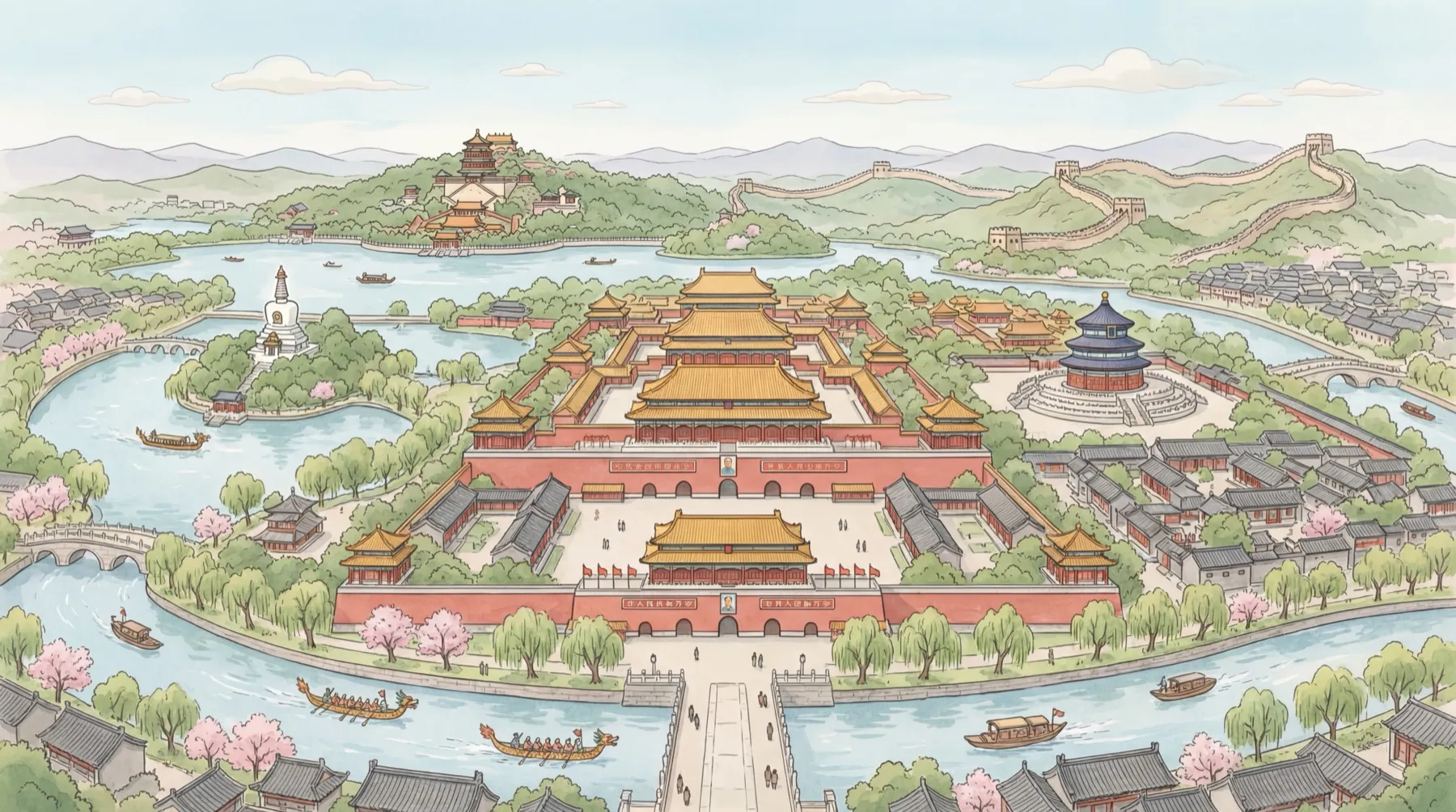
China's capital for over 800 years, center of Chinese political and cultural power. The Forbidden City and Great Wall represent imperial grandeur and ancient defensive engineering.
Destination Stats
Know something locals know? Share your insider tip.
+ Share a Tip