Tokyo
🇯🇵 Japan
Transport Tips for Tokyo
Getting around, public transit, taxis, and airport transfers
As someone who navigates Shibuya Station's 13 exits daily, let me share the insider knowledge that'll save you from becoming another confused tourist spinning in circles.
Essential exits by destination:
• Famous Shibuya Crossing + Hachiko statue: Hachiko Exit (West side)
• Shibuya Sky observation deck: East Exit 19 or 20 (elevator access)
• Center Gai shopping street: Central East Exit
• Shibuya 109, Tokyu stores: East exits 6-8
• Meiji Shrine: JR West Exit, then 15-minute walk
Critical rush hour timing:
Absolutely avoid 7:30-9:00am and 17:30-19:00 on weekdays. The crossing becomes genuinely dangerous with 3,000+ people per light cycle. Weekend afternoons (14:00-17:00) bring tourist crowds but move slower than commuter chaos.
Underground passage mastery:
Never exit to street level for JR-to-Metro transfers. The underground Ginza/Hanzomon connections save 10+ minutes and your sanity. Follow yellow signs for Tokyo Metro, blue for JR lines. The Toyoko line underground entrance (B3 level) connects directly to Fukutoshin line - this route bypasses 90% of surface crowds.
Pro tip from 5 years of daily use:
Download the Hyperdia app and set Shibuya as your home station. It shows real-time platform numbers and the fastest underground routes between any two lines.
 kento92
Cost analysis (2024 pricing):
Tokyo Metro 24-hour pass: ¥800
Individual fares: ¥170 (adjacent stations) to ¥320 (cross-city)
Break-even point: exactly 3 rides if all long-distance, 4-5 rides for mixed distances
High-value tourist routes:
• Ginza Line: Asakusa (temple district) → Shibuya (¥200)
• Hibiya Line: Tsukiji (fish market) → Roppongi (nightlife) (¥200)
• Marunouchi Line: Tokyo Station → Shinjuku (¥200)
• Chiyoda Line: Meiji-jingu-mae (Harajuku) → Otemachi (¥200)
Purchase timing strategy:
Worth it for itineraries hitting 4+ metro stations in 24 hours. Skip if staying in single neighborhoods (Shibuya, Shinjuku) or primarily using JR Yamanote Line for major stops.
Critical limitation understanding:
Pass only covers Tokyo Metro's 9 lines, NOT JR lines (Yamanote, Chuo, Keihin-Tohoku) or Toei Subway's 4 lines. Check station signs carefully - different operators, different pricing.
Advanced optimization:
Purchase at any Tokyo Metro station after first paid ride to maximize 24-hour window. The official Tokyo Metro app shows real-time delays and optimal transfer routes. For JR + Metro coverage, Greater Tokyo Pass costs ¥1,590 but only worthwhile for suburban day trips to Kamakura or Nikko.
 metromarc
Keisei Skyliner vs Narita Express breakdown:
Everyone books the jr narita express because it's 'official' but the keisei skyliner is faster, cheaper, and connects better. Nex costs ¥3070 to tokyo station (plus transfer time), while skyliner is ¥2570 direct to ueno and ¥2520 to nippori.
best routing by destination:
• shibuya/shinjuku: skyliner to nippori → jr yamanote line
• asakusa/sumida: skyliner to ueno → walk or short taxi
• ginza/marunouchi: either works, but skyliner saves ¥500
budget option: regular keisei main line takes 70 minutes but only costs ¥1050. Perfect if you're not in a rush and want to save serious money.
Book skyliner tickets at the airport or online - no reservation needed for regular keisei trains.
Tested everything over multiple trips to tokyo. Heres what delivers reliable connectivity:
tourist sim cards: iijmio at narita airport counters ¥1500/7 days with 6gb data. Works perfectly on docomo network across yamanote line and metro
pocket wifi rental: narita/haneda airport counters ¥500/day unlimited data multiple devices. Heavy to carry but reliable coverage in tokyo subway tunnels
free wifi reality: starbucks shibuya and mcdonalds harajuku have decent free wifi. Konbini 7-eleven wifi needs japanese phone number verification - useless for tourists
recommendation: tourist sim for google maps navigation plus jr east station wifi spots. Download tokyo offline maps before arriving. Skip softbank international roaming ¥1000+/day for worse service
The 'free wifi everywhere in tokyo' reputation is outdated. Most combini wifi requires japanese phone verification now. Here's what actually works for tourists:
7-eleven still offers 30-minute sessions without verification across shibuya and shinjuku locations. Starbucks harajuku and mcdonald's shibuya crossing have decent free wifi with email signup.
Jr east tokyo metro stations have free wifi but it's slow and cuts out between stations on yamanote line. Don't rely on it for google maps navigation in tokyo.
Better solution: rent pocket wifi at narita airport for ¥500-800/day or get tourist sim. Iij mio sells 7-day data sims at bic camera shinjuku for ¥1500 with 6gb. Way more reliable than hunting for free connections around tokyo station.
Tokyo station layout basics:
Tokyo station is actually multiple stations in one complex. The jr lines (yamanote, tokaido, etc.) are on different levels from the subway lines (marunouchi, tozai). Download the station map app before arriving.
key navigation tips:
• marunouchi exits lead to business district, imperial palace
• yaesu exits connect to subway and bus terminals
• shinkansen gates are separate from regular jr - follow bullet train signs
• allow 15-20 minutes for transfers between different train companies
meeting points: use the numbered exits (marunouchi north, yaesu south, etc.) rather than vague landmarks. The central concourse gets impossibly crowded during rush hours.
Compare to penn station in nyc - similar confusion level but better signage once you learn the system.
 passportpages
Recently visited tokyo as wheelchair user. Heres the real accessibility situation without sugar coating:
excellent: all major jr stations have elevator access. Newer developments like tokyo station and shibuya redevelopment completely accessible. Major museums have ramps and proper accessible bathrooms.
challenging: older subway stations still lack elevators. Asakusa area has many stairs and uneven surfaces. Traditional areas prioritize historic preservation over accessibility updates.
mixed results: department stores accessible but crowded navigation difficult. Restaurants wildly inconsistent - chains usually good, traditional places often have steps at entrance.
helpful resources: tokyo metro publishes accessibility maps showing exact elevator locations. Station staff incredibly helpful with directions and assistance when asked.
Overall much better than expected but requires advance planning. Stick to newer areas and major transport hubs for smoothest experience.
 accessible_jen
Jr pass gets all the attention but most tokyo travel is on subway lines where jr pass doesn't work. Here's the math:
Tokyo metro 24-hour pass: ¥800
Tokyo metro + toei 48-hour pass: ¥1200
Jr tokyo wide pass (3 days): ¥10,180
For city-only travel, subway passes win. Jr pass only makes sense if you're doing day trips to nikko, kamakura, or mount fuji.
Most efficient: use ic card (suica/pasmo) and load ¥2000-3000. Daily subway costs rarely exceed ¥600-800 unless you're constantly moving between distant neighborhoods.
 rodrigo_sp
Flight arrival times matter more than distance. Haneda is closer (30 min vs 60 min to central Tokyo) but Narita often has better international flight schedules and cheaper fares.
Haneda advantages: Monorail to Hamamatsucho connects to JR Yamanote Line easily. Last trains run until midnight. Domestic terminal has better food options.
Narita advantages: Skyliner to Ueno is comfortable and has reserved seats. More international carriers. Immigration lines move faster. Better duty-free shopping.
If you're arriving after 11pm, Haneda is your only option for trains. Otherwise, compare total door-to-door time including your final destination.
Tokyo's accessibility is inconsistent at best. Here's the reality for wheelchair users:
good stations: tokyo, shinjuku, shibuya all have elevators and accessible platforms. Signage in english and staff will help if needed.
avoid: older subway stations like asakusa on ginza line. Steep ramps, narrow platforms, elevators that break down constantly. The traditional areas are beautiful but physically challenging.
temples/attractions: sensoji has ramp access but gravel paths. Meiji shrine is mostly accessible via paved routes. Tokyo skytree and modern attractions are fully accessible.
Sidewalks vary wildly - main streets are fine but side streets often have steps or narrow passages. Plan routes carefully and have backup options.
 wheelsfirst
Tokyo station accessibility is surprisingly good - elevators to every platform and clear signage. Shibuya station is a nightmare with crowds and narrow elevator access. Most temples have steps with no ramps so they're basically inaccessible.
Newer areas like odaiba and tokyo skytree area are fully accessible. Older neighborhoods like asakusa are hit or miss. Department stores all have wheelchair accessible bathrooms and elevators but traditional restaurants often have steps up from street level with no alternative access.
About Tokyo
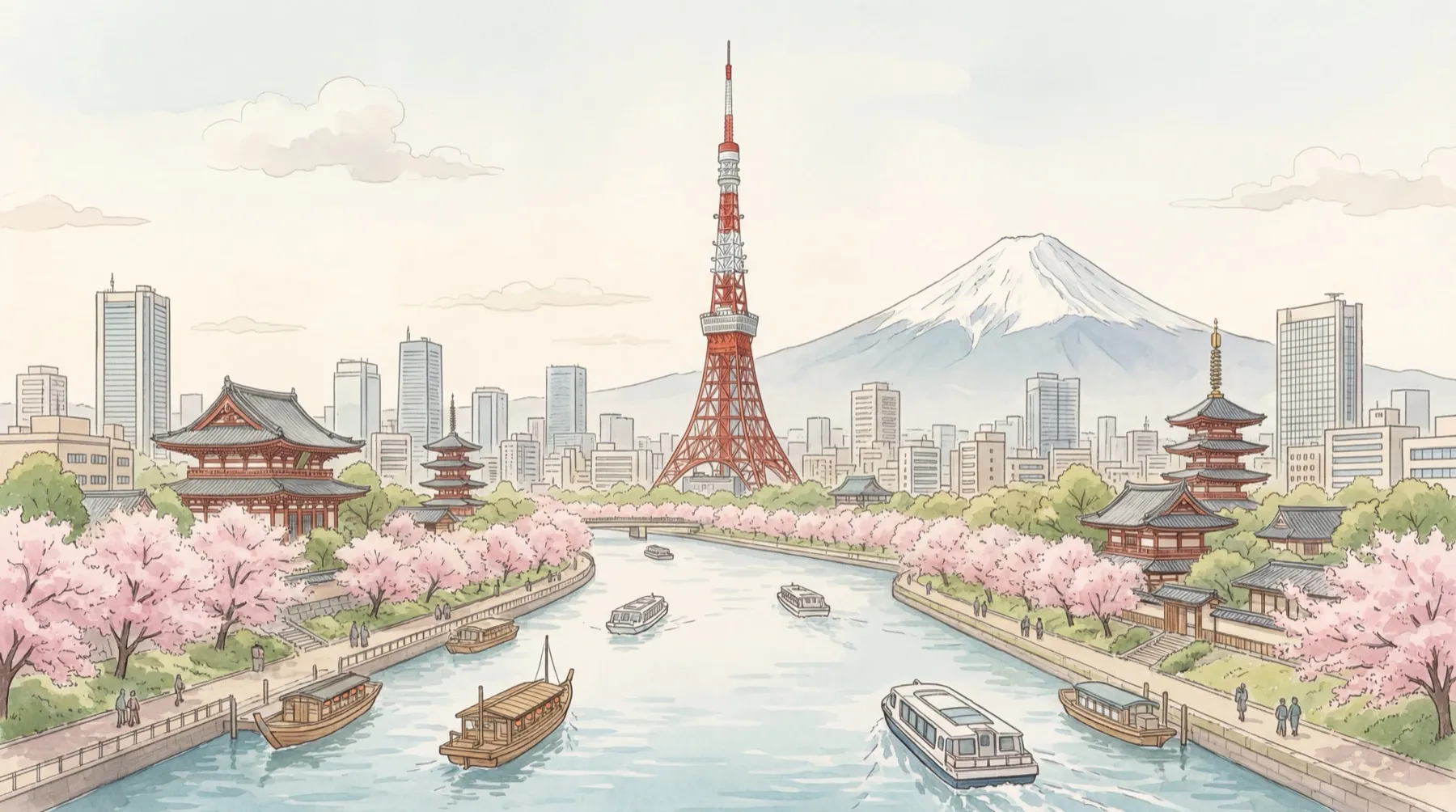
Japan's capital and the world's largest metropolitan area, blending ancient traditions with cutting-edge technology. Sensoji Temple in Asakusa contrasts with Shibuya's neon-lit crossings and skyscrapers.
Destination Stats
Know something locals know? Share your insider tip.
+ Share a Tip