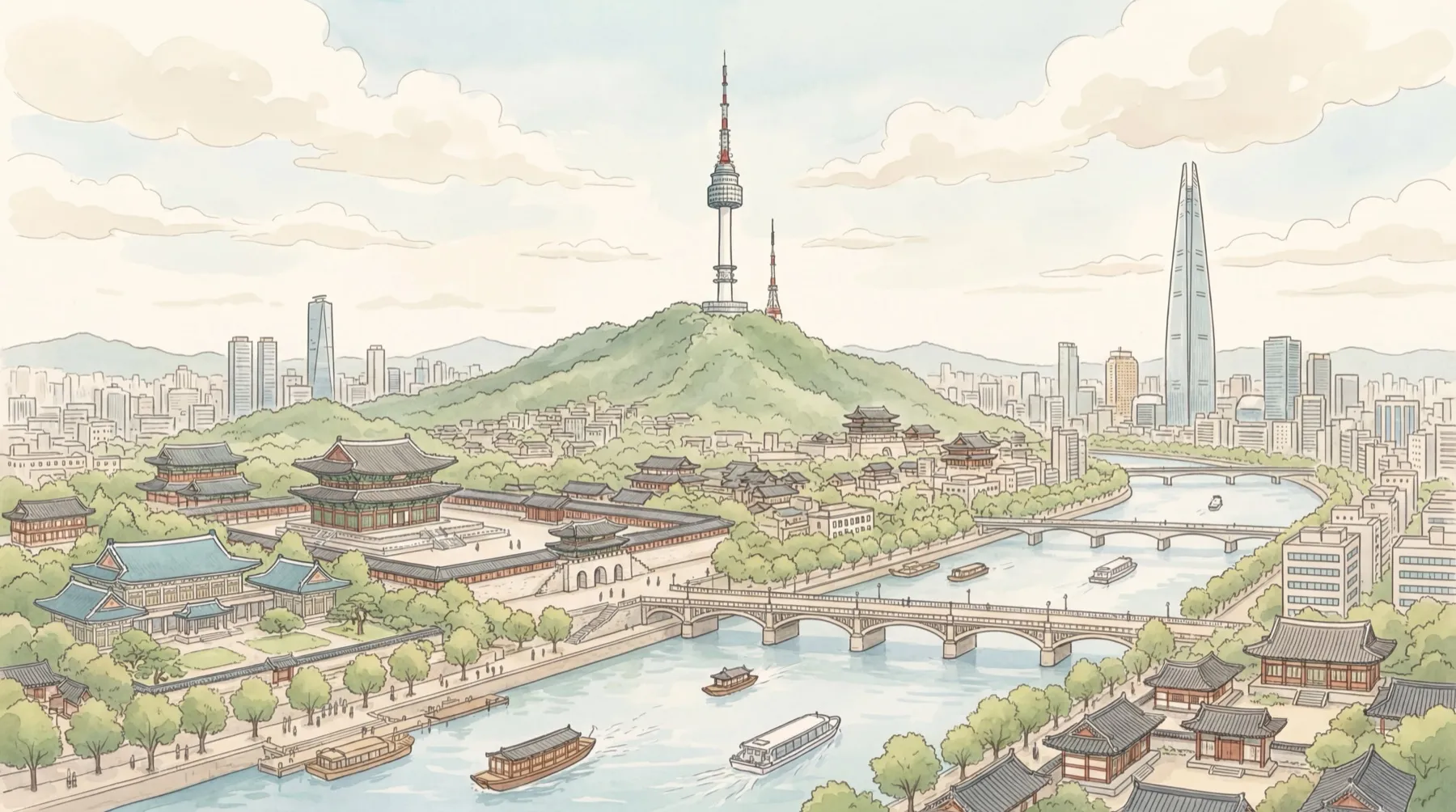
Seoul
🇰🇷 South Korea
Food Tips for Seoul
Restaurants, street food, cafes, and local dishes to try
Honestly everyone goes to gwangjang during the day and its a complete tourist nightmare. Wall to wall people taking instagram photos of bindaetteok while the ajummas are trying to cook. The real magic happens after 9pm when locals come for dinner and drinks and the energy completely transforms.
Take line 1 to jongno 5-ga station exit 8 and enter from the main entrance on jongno. Everything is fresh off the griddle at night - those mung bean pancakes are crispy perfection when theyre hot instead of sitting around getting soggy. Get some makgeolli to wash it down and try the sundae blood sausage if youre brave enough. Trust me the prices drop too - bindaetteok goes from 7000 to 5000 won after tourist hours.
Stick to the left side stalls near the entrance - theyve been there for 30+ years and honestly know what theyre doing. Dont be scared to point and smile once you break the ice with the ajummas theyre actually really sweet and will pile extra banchan on your plate. The mayak gimbap lady near the back corner makes the best drunk snacks at 1000 won per plate trust me on this.
Pro tip honestly bring cash only and dont leave before trying the nokdu jeon pancakes with a shot of soju. The whole vibe changes after dark way more authentic and less performative than the daytime tourist theater.
 renobird
Those fancy gangnam spots charging 50,000 won per person? Complete tourist scams. Real koreans hit family joints in residential areas. Better meat quality, half the cost, zero pretense.
Mapo-gu district has seoul's highest concentration of legit neighborhood spots. Look for plastic stools, old tile floors, zero english signage. Gop chang jeongol near hongik university station exit 9 does incredible pork galbi - 15,000 won total with unlimited banchan refills until you surrender.
Ajumma grills everything perfectly. Keeps kimchi and lettuce coming. Cuts meat with kitchen shears between your bites. If construction workers line up at lunch, you found gold. Try the neighborhood spot at 47 wausan-ro 29-gil - been there 25 years, same family, same recipes.
Skip the marbled hanwoo unless you're celebrating something major. Pork galbi tastes better anyway. Real test: kimchi jjigae quality. Tourist joints serve watery garbage. Family spots serve deep fermented fire that clears sinuses and builds character.
 marco_93
After wandering through Gyeongdong Market's overwhelming ginseng aromas and traditional medicine chaos, ducking into Cha no Hana provides the most delightful respite. Their ceremonial matcha service (18,000 won) includes proper whisking demonstration and seasonal wagashi.
Located just 15 minutes walk from Jegi-dong station, this traditional tea house occupies a beautifully restored hanok with floor seating overlooking a zen garden. The matcha comes from Uji prefecture - such lovely quality compared to the chain coffee nonsense flooding Seoul.
Their afternoon tea set pairs organic Korean green teas with delicate rice cakes for 25,000 won. The sencha selection changes seasonally and the staff actually understands brewing temperatures unlike most cafes. Perfect transition from the sensory assault of medicinal markets to proper tea meditation.
Open daily except Mondays 10am-7pm. Reserve ahead for weekend traditional tea ceremony experiences - quite popular with locals seeking authentic moments between Seoul's relentless modernization.
This unassuming spot near Myeongdong shopping district has been hand-pulling noodles and wrapping dumplings since 1966, earning a Michelin Bib Gourmand while keeping prices ridiculously low. Yes, you're in tourist central, but this place proves authentic food exists even in heavily touristed areas.
Order the signature chicken kalguksu (knife-cut noodle soup) with extra mandu dumplings - the combo runs just 8,000-12,000 won ($6-9 USD). The hand-cut noodles are gorgeously thick and chewy, swimming in a deceptively simple but deeply savory broth that takes hours to achieve. Each dumpling is palm-sized, stuffed with seasoned pork and vegetables.
The line of office workers and food-obsessed locals outside tells you everything - this isn't tourist theater, it's the real deal surviving in tourist territory. From Myeongdong Station Exit 8, walk 200 meters toward the cathedral and look for the crowd. The handwritten Korean-only menu keeps things authentic despite the location.
 rodrigo_sp
Seoul's vegan scene goes way beyond quinoa bowls and impossible burgers - this city has centuries-old Buddhist temple cuisine traditions that are naturally plant-based and absolutely spectacular. Skip the obvious Western-style cafés and dive into Korea's most mindful food culture.
Sanchon in Insadong cultural district serves traditional Buddhist temple meals with 20+ different banchan (side dishes) - every single one vegan and bursting with umami. The 35,000-45,000 won ($26-34) lunch set includes seasonal vegetables prepared using techniques monks have refined for centuries. It's meditative eating at its finest, with flavors that prove you don't need meat for satisfying Korean food.
For casual plant-based Korean comfort food, Plant in multicultural Itaewon serves mind-blowingly convincing vegan Korean fried 'chicken' and bulgogi made with seasoned soy protein. The texture and flavor are so spot-on that omnivore friends won't believe it's plants. You get the full Korean BBQ experience - grilling at your table, traditional banchan, ssam lettuce wraps, the works.
Both spots prove Seoul's plant-based food isn't about substitutes or compromises - it's about incredible Korean flavors that happen to be vegan. The temple cuisine especially offers something you literally cannot find anywhere else in the world.
Sanchon in insadong serves traditional buddhist temple cuisine completely vegetarian but incredibly satisfying. Set menu (45000 krw) includes 20+ small dishes using techniques that make vegetables taste like meat. Kimchi here made without fish sauce they serve mock fish made from tofu honestly better than actual fish. Reservations essential especially for weekend temple food experience where they explain each dish. Expensive for korean standards but unesco-level cultural heritage cooking. Even hardcore carnivores leave impressed
Skip touristy Hongdae main strip. Real student goldmine is Ewha back gate area where broke uni students actually eat. Tteokbokki cart outside gate 3 serves massive portions for 2,000 won that'll feed you properly.
Ajumma adds extra fishcake and ramyeon noodles if you ask nicely in korean. Open until 2am serving students pulling all-nighters at nearby PC bangs. Way better than overpriced Sinchon commercial stuff.
Plus you see real Seoul student culture not tourist performance. Living that broke life but eating like royalty for pocket change lol
 jessnight
While you should generally avoid myeongdong's overpriced tourist food, real Seoulites hit Sindang dong for tteokbokki that will actually destroy you. Tiny alley near Sindang station, Seoul's tteokbokki capital since 1970s. They don't tone down heat for tourists.
Ma Bok-rim halmeoni tteokbokki is legendary - red sauce so spicy it's basically rite of passage. Order full combo with soondae and twigim for complete pain experience. Bring tissues and milk money.
Honestly this place separates tourists from people who actually want authentic Korean spice levels - the real deal that even locals respect.
 tuk2go
Gwangjang Market vendors don't adjust spice for foreigners like Itaewon tourist restaurants do honestly. Their mild tteokbokki uses same gochugaru concentration as local customers - this will absolutely destroy most western palates trust me.
Asked for medium at the famous bindaetteok stall thinking convenience store training prepared me. Wrong choice completely - spent 20 minutes gulping makgeolli trying to survive. Korean restaurant spice builds differently than packaged ramyeon heat.
Start with tourist-friendly Myeongdong night market versions first, then work up to real market vendors. Or ask specifically for foreigner portion with less gochugaru - they understand but you have to request it directly. The ajummas think were all babies anyway so no shame in admitting defeat.
Most galbi places close 11pm but drunk Seoul needs feeding. 24시간 갈비탕 near Mapo Station serves galbitang and grilled meat until dawn for office workers and club refugees.
Underground shopping areas in Gangnam business district hide late-night BBQ joints serving the 14-hour workday crowd. Cheaper than street level and actually better quality since they cater to locals not tourists.
Also try the 24-hour spots in Yeouido financial district where investment bankers decompress after market close. Real Seoul never sleeps so why should you
 lauraexpat
Skip tourist tea houses and try omija (five-flavor berry tea) at traditional spots in bukchon. Tastes sweet, sour, bitter, spicy and salty simultaneously - completely wild experience.
Proper korean tea ceremony involves multiple small cups and specific pouring technique. Don't gulp it like coffee. Sit on floor cushions, sip slowly. Many places serve traditional sweets alongside.
 skibumtom
Korean hot dogs stuffed with mozzarella instead of just sausage. Coated in potato cubes, ramen noodles, rice puffs before frying. Chains like myungrang have dozens of varieties. Nothing like american style.
Potato-coated ones are best - crispy exterior with cheese that stretches forever. Around 3900-4000 won each.
 chefpaco
Gwangjang Market vendors in Jongno don't tone down kimchi jjigae spice like Itaewon tourist restaurants. Their mild uses full korean gochugaru concentration that'll send you running to nearby GS25 for milk.
Made this mistake ordering medium thinking convenience store ramyeon prepared me. Spent 20 minutes crying over soup while ajumma watched confused. Start tourist-friendly Myeongdong spots first or specifically ask for foreigner portion.
 spicyway
Gwangjang market opens 6am and breakfast there hits different! While the market gets touristy at night, morning hours are still authentic local territory. Mayak gimbap (drug gimbap) called that because it's addictive - tiny rice rolls you can't stop eating. 1000 won for 10 pieces.
Sit at counter, watch ajummas make them fresh. Mustard sauce makes it perfect. Combine with bindaetteok (mung bean pancakes) for proper korean breakfast. Best experience is 6-8am before the day crowds arrive - beats hotel buffets and you get real market experience while it's still calm.
Seoul restaurant spice beyond convenience store level is BRUTAL by western standards. Even mild at Gwangjang Market bindaetteok stalls uses full korean gochugaru concentration that builds heat differently than ramyeon packets.
Context: ordered medium tteokbokki at famous Jongno market stall thinking 7-Eleven training prepared me. Immediately regretted existence while ajumma watched confused. Always have milk ready not water for real Seoul market food - learned this crying over soup.
 familyof5
Temple food restaurants in Seoul serve centuries-old Buddhist cuisine without meat, garlic, onions. Sanchon in Insadong near Anguk Station offers full temple food experience showcasing refined Korean vegetarian tradition.
Dishes use seasonal vegetables, mountain mushrooms, fermented sauces creating complex flavors completely different from typical Seoul restaurant food. Usually expensive around 40,000-60,000 won but experiencing authentic temple cuisine tradition worth the Seoul splurge.
Sindang-dong near sindang station has whole neighborhood dedicated to spicy rice cakes. Historic tteokbokki shops serving authentic versions - will absolutely destroy tourists but as real as it gets.
Try various shops for different spice levels and styles. All serve with fried sides like sundae and twigim. Expect to sweat and mouth on fire.
Skip obvious tea houses on main insadong street, but also venture beyond the well-known hidden gems. Walk into smaller alleys past the first tier of 'secret' places, look for hanok buildings with minimal signage. Family-run places serve proper traditional korean teas in ceramic sets.
Try nokcha or omija tea with small traditional sweets. Quieter atmosphere than even famous hidden spots, often just 3-4 tables. 8-12k won but completely different experience from both tourist spots and the more famous 'hidden' places. Some run by same family for generations without any guidebook mentions.
 teahunter
Korean tea culture runs much deeper than the green tea most people expect. Omija tea is remarkable - five distinct flavours arrive in sequence across your palate: sweet, sour, bitter, spicy, then salty. Quite meditative when you pay attention to each note.
Yuja citron tea becomes essential during seoul winters, warming you from within with its fragrant citrus warmth. The traditional tea houses tucked into samcheong-dong offer proper korean tea service with small banchan accompaniments. Less ceremonial than japanese traditions but equally grounding.
Most restaurants dial down spice for tourists but gopchang spots in jongno 3-ga don't adjust anything. Try fire chicken or kimchi jjigae here if you want to test your limits.
Ask for 'real korean spicy' and they'll warn you first. Gopchang itself is grilled intestines - acquired taste but incredible with soju. These places run until 3am.
About Seoul
South Korea's capital blends ancient palaces with cutting-edge technology and K-pop culture. Gyeongbokgung Palace stands near Gangnam's skyscrapers and traditional markets like Dongdaemun.
Destination Stats
Know something locals know? Share your insider tip.
+ Share a Tip