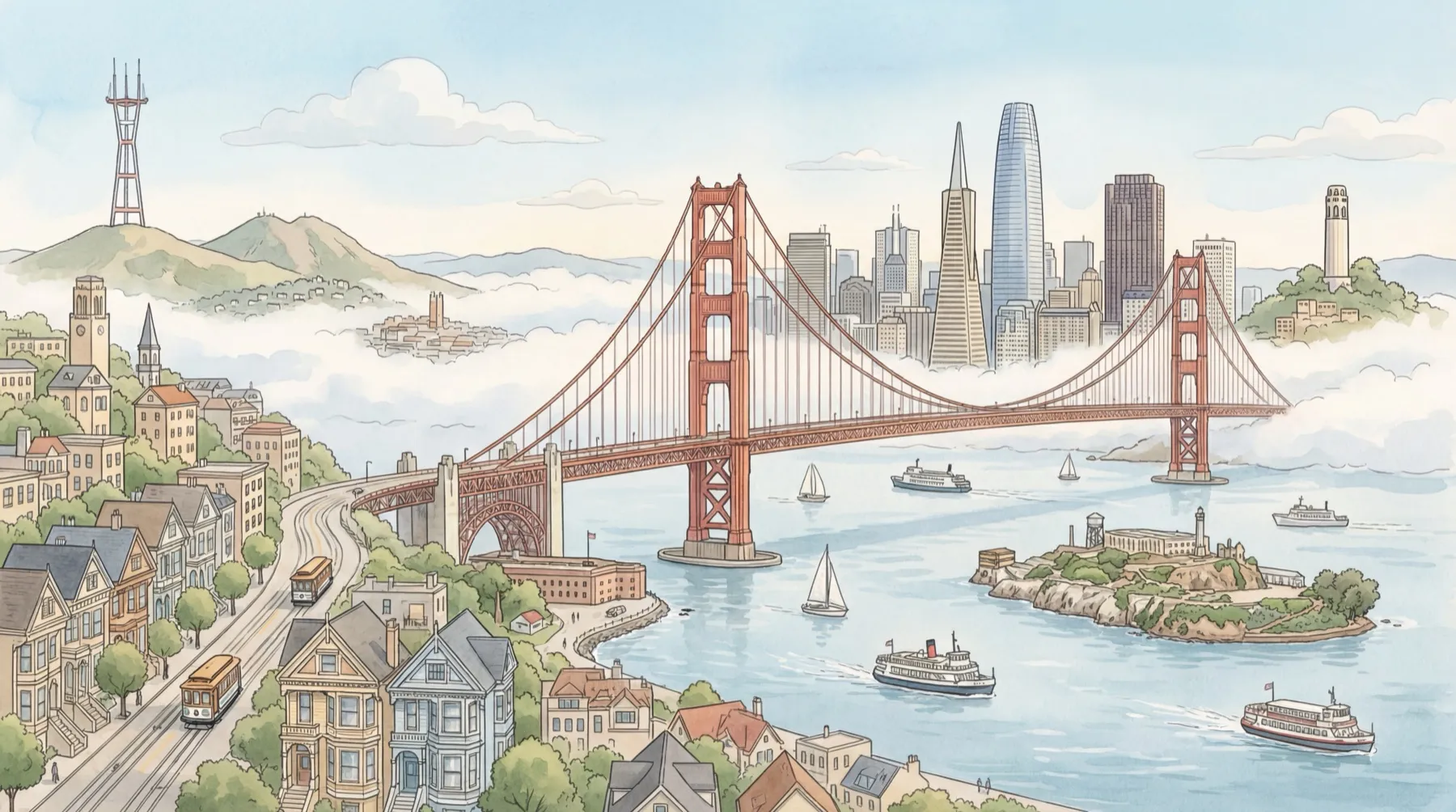
San Francisco
🇺🇸 USA
Travel tips for San Francisco
26 tips from 25 contributors
Honestly the smartest thing you can do is ditch the car rental counter completely. Bart blue line from sfo straight to powell street (downtown) takes 34 minutes for $9.65. Trains run every 15 minutes during rush (4:30-8:30am, 4-7pm weekdays) and 20-30 minutes otherwise. Pro tip: avoid the first car, it's always packed with airport luggage chaos.
Grab a clipper card at the sfo bart station before you board - loads cash value and works on literally everything: muni buses, cable cars, ferries, caltrain. The mobile app exists but the physical card is way more reliable for tourists who don't want to deal with dead phone battery disasters.
Why no car? Parking downtown runs $35-60 per day minimum. Sf's hills will destroy rental car transmissions (seriously, i've seen tourists smoking their clutch on lombard street). Street parking requires a phd in deciphering 47 different signs that contradict each other. Plus traffic makes a 2-mile trip take 45 minutes on a good day.
Muni day pass is $13 digital and covers everything. The f-market streetcar hits all the tourist spots along the embarcadero. 38-geary runs straight to ocean beach if you want to escape the crowds. Cable cars are included but expect 20+ minute waits - they're basically slow-moving instagram props at this point.
Everyone walks on the golden gate bridge for photos but that's where the worst shots happen. Fog, brutal wind, crowds taking selfies directly in your frame. While the bridge crossing itself can be enjoyable for runners and cyclists, photography-wise you end up with the same mediocre shot as a million other tourists.
Battery spencer gives you the classic postcard angle everyone thinks they got on the bridge itself. Drive or rideshare to the marin side (conzelman road, free parking), then a 5-minute uphill walk from the lot. Best light is sunrise around 6:30am - though summer fog often persists until noon, especially june through august mornings.
Crissy field works for golden hour shots with the city backdrop, but honestly most bridge photos look identical at this point. Try the tide pools at land's end (geary boulevard to the ocean, sutro baths area) for something different. Fewer tourists, dramatic coastline, and you can catch the bridge from a totally unique angle.
Photography nerds: bring a heavy tripod for battery spencer - the wind up there destroys lightweight gear. For film shooters, the contrast between the orange bridge and blue bay water is perfect for velvia or ektar. Digital shooters should bracket exposures since the dynamic range can be brutal on bright days.
 emmashots
Forget everything else honestly. Fisherman's wharf food is overpriced garbage that locals avoid completely. The real sf food culture lives in the mission district along 24th street between mission and potrero.
La taqueria at 2889 mission street has been doing it right since 1973. No rice in their burritos like it should be - lets you actually taste the carnitas technique instead of filler. Carnitas burrito with extra salsa verde runs about $11.50 and easily feeds two people if you're not massive eaters. This is what actual sf food culture looks like, not some tourist trap clam chowder bowl.
El farolito (2779 mission) stays open until 3am for post-drinking fuel. Papalote (3409 24th street) does the fancy version with organic ingredients but honestly la taq's execution is better. Anywhere on that 24th street strip between mission and potrero is a safe bet. Take bart to 16th street mission station, walk south on mission to 24th, then explore until you find a line of actual latinos - that's your quality indicator right there.
Insider move: order in spanish if you can manage it, even broken spanish gets you better treatment and sometimes extra meat. Carnitas, al pastor, or carne asada are the standards. Avoid anything with fish unless you're at a proper mariscos truck.
Alcatraz sells out summer weekends 2-3 weeks in advance. If you're reading this within 10 days of travel, you're probably screwed unless you want to pay $80+ to scalpers on craigslist. Official site only: alcatrazcruises.com - avoid third-party booking sites that add fees.
Morning tours (first departure 8:45am) cost the same as afternoon but beat both fog and crowds. The audio tour happens during your 2-2.5 hour island visit plus 30 minutes ferry time each way. Total commitment is about 4 hours including waiting/boarding time at pier 33.
Math check for budget planning: $49.50 ticket + $40 pier 33 parking (or $25 nearby lots) + lunch = $105+ per person minimum. That's before you factor in the 2-hour round trip just to get to/from pier 33 if you're staying downtown.
Alternative: angel island state park uses the same ferry company, adult round-trip $31 ($19.50 with clipper card), way better hiking trails, incredible 360-degree bay views, and tickets available day-of. Less famous = fewer crowds but honestly better scenery than alcatraz. Plus you can bring food and make it a proper picnic day instead of rushing through a predetermined audio tour.
Here's what accessibility advocates need to know: September and October are San Francisco's golden months. While everyone crowds here in summer and complains about 58°F fog, fall delivers the California sunshine you actually came for. Clear skies, 70-75°F temps, and significantly fewer tour groups creating bottleneck situations at popular attractions.
For travelers who get overwhelmed by crowds or need extra time navigating spaces, these months are essential. Hotel prices drop 20-30% after Labor Day but before holiday season kicks in. Popular spots like Alcatraz, Lombard Street, and Fisherman's Wharf become manageable again — You can actually enjoy them without fighting through tourist masses or waiting in endless accessibility queue bypasses.
Pro accessibility tip: Hardly Strictly Bluegrass in Golden Gate Park (free, early October) offers excellent accessible viewing areas and step-free pathways throughout the park. The festival organizers genuinely prioritize accessibility — Rare for outdoor events. Multiple accessible restroom locations, designated seating areas, and shuttle service from nearby accessible parking.
Golden Gate Park itself transforms in fall weather. The Japanese Tea Garden, de Young Museum, and California Academy of Sciences all have excellent accessibility features and are infinitely more enjoyable when you're not bundled up against summer wind chill. This timing isn't just about weather — It's about dignity and comfort while traveling.
 accessible_jen
Financial district shuts down hard at 6pm... Like everyone just vanishes into the mist. North beach is where locals actually drink, especially the columbus avenue strip between broadway and filbert.
Specs' twelve adler museum (12 adler place) - cash only dive with the most random collection of maritime junk you've ever seen. Vesuvio cafe (255 columbus) for tourist kerouac vibes but the drinks are actually decent. Comstock saloon (155 columbus) if you want proper pre-prohibition cocktails with bartenders who know the difference between rye and bourbon.
The real gem is 15 romolo (15 romolo place) - tiny alley bar with no sign, just a red door. Gets packed friday/saturday so hit it tuesday-thursday when you can actually breathe. Tony nik's (1534 stockton) stays open late for the after-hours crowd... Most north beach spots close at 2am unlike downtown places that shut down at midnight like it's 1955.
Crawl strategy: start at specs' for character, move to vesuvio for the scene, end at 15 romolo for serious drinks. Grant & green (1371 grant) usually has live jazz if you need a palate cleanser between bars. Uber between neighborhoods but walk within north beach - everything's within 3 blocks anyway.
The Financial Reality
Cable cars cost $8 per ride (cash, Clipper card, or mobile payment accepted). Peak season waits at Powell Street turnaround reach 45-60 minutes. Two rides equals $16 versus $13 for all-day Muni pass covering buses, metro, and light rail throughout the city. Unlike Prague or Lisbon where trams serve as practical city transport, SF cable cars are purely experiential — Plan accordingly.
Strategic Approach
Ride once for the authentic experience, use buses for actual transportation. Powell-Hyde line offers superior views (Russian Hill, Alcatraz, bay vistas) compared to Powell-Mason. California Street line attracts fewer tourists but costs identical $8 — Consider it for shorter waits while experiencing the same historic cable system.
Practical Alternatives
The 1 California bus runs nearly identical route as California cable car for standard $3.25 Muni fare. Save your $8 cable car ride for Powell-Hyde's scenic descent to Fisherman's Wharf. Board mid-route at Nob Hill or Russian Hill to avoid Powell Street crowds — Same price, fraction of wait time.
Cultural context: Cable cars represent living history (1873 technology still functioning), not efficient transport. Appreciate them as mobile museums rather than practical city navigation. Most locals ride maybe once yearly, if that.
 kento92
Tour buses dump 500+ people into Muir Woods between 10am-3pm daily. Go 8am opening or after 4pm for the cathedral quiet these ancient redwoods deserve. Parking reservations mandatory through gomuirwoods.com — $8.50 vehicle fee, book weeks ahead for weekends.
Transit option: Golden Gate Transit Route 66 from San Rafael Transit Center. Take BART to San Rafael, connect to Route 66 weekends/holidays only. Main trail is paved boardwalk, wheelchair accessible, 1-mile loop. Ben Johnson Trail adds 3-mile elevation gain if you want actual hiking instead of tourist shuffling.
Smart combo: Muir Woods early morning, Sausalito lunch, then Golden Gate Ferry back to SF Embarcadero for skyline views. Ferry runs every 30-60 minutes, $13.50 adult fare. Total day trip cost around $35-40 per person including transport. Ferry route offers best Golden Gate Bridge photos without hiking to Crissy Field.
Local insight: Parking lot fills by 9am weekends year-round. If you miss early window, try after 4:30pm when tour buses clear out. Light filters through redwoods differently in late afternoon — Actually better for photography than harsh midday sun.
 rodrigo_sp
The Brutal Truth About SF Hills
Tourism marketing rarely mentions this: Russian Hill and Nob Hill feature 25-31% grades that challenge any mobility device, while Telegraph Hill maxes around 22-24%. These aren't "slightly steep" European cobblestones — They're legitimately difficult terrain requiring planning and alternative routes.
Accessible Transportation Options
BART stations provide elevator access with ongoing ADA upgrades, level boarding throughout system. Muni buses feature wheelchair ramps, priority seating, audio/visual announcements. Unfortunately, cable cars and historic F-line streetcars remain inaccessible due to heritage vehicle constraints — Beautiful to photograph, impossible to board with mobility aids.
Flat Areas for Easy Navigation
Fisherman's Wharf, Pier 39, and Union Square core maintain mostly level terrain. Golden Gate Park offers completely flat pathways throughout 1,000+ acres. Embarcadero waterfront provides step-free bay access from AT&T Park to Fisherman's Wharf — Perfect for sunrise walks or evening dining without elevation challenges.
Strategic Route Planning
California Academy of Sciences in Golden Gate Park delivers world-class exhibits with full accessibility. Ferry Building Marketplace offers gourmet food scene at bay level. Avoid Lombard Street, Coit Tower, and Twin Peaks unless you enjoy extreme challenges. Focus energy on accessible gems rather than fighting impossible geography.
 passportpages
Golden Gate Park sprawls across 1,017 acres of San Francisco — Larger than Central Park — And trying to see everything in one day will leave you exhausted and overwhelmed. The park's energy flows differently in each section, but for first-time visitors, the eastern and central areas near the Haight-Ashbury neighborhood hold the most concentrated magic.
The Music Concourse area becomes your anchor point, where the Japanese Tea Garden's meditative pathways, the de Young Museum's world-class art collection, and the California Academy of Sciences' living roof all exist within a peaceful 10-minute walk. The Conservatory of Flowers, with its Victorian greenhouse energy, sits just north. This clustering allows you to move mindfully between attractions instead of rushing across vast distances.
Park at the Music Concourse Underground Garage ($3/hour, entrance on 10th Avenue) or take the N-Judah Muni line to 9th Avenue & Irving Street — Both put you steps from the main attractions. While the buffalo paddock and Dutch Windmill in the western section have their own serene appeal, they'll consume your entire day with walking. Save those for a return visit when you can fully appreciate the park's slower rhythms.
Pro tip that locals know: The area around the AIDS Memorial Grove offers some of the park's most contemplative moments, perfect for centering yourself between the busier cultural sites.
 yogamat_
Skip the Golden Gate Bridge traffic nightmare and take the ferry from Pier 41 to Sausalito — $15.75 adults, $11.75 kids one-way with Blue & Gold Fleet. Runs every 30-45 minutes during peak season (daily 10am-7:30pm summer, reduced winter schedule), 25-30 minutes each way depending on conditions.
Driving across the bridge gives you exactly zero views — You're stuck watching brake lights and dodging tour buses. Ferry puts the entire San Francisco skyline in front of you, plus Alcatraz, Angel Island, and the bridge itself from the perfect angle for photography. No parking stress, no $8 bridge tolls, no fighting for bathroom stops.
Both Sausalito and Tiburon work as destinations. Sausalito has better waterfront dining (Scoma's, Fish.) and more tourist amenities. Tiburon feels more residential but has killer views from Sam's Anchor Café. Either way, you're looking at $15-25 parking vs. Relaxing with a beer on deck.
Advanced move: Bike across the Golden Gate (Blazing Saddles rentals at Pier 41, $32/day), then ferry back with your bike ($1 extra). This gives you both the bridge crossing experience and the superior ferry views — Plus you actually get to stop for photos mid-span.
While Mission District burritos deservedly dominate the SF food scene, seafood lovers shouldn't miss Swan Oyster Depot at 1517 Polk Street for the authentic San Francisco seafood experience tourists think they're getting at Pier 39. Operating since 1912, this narrow counter serves Dungeness crab cocktails and local oysters at honest market prices that change with seasonal availability. Cash only, no reservations, usually a 15-30 minute line that moves efficiently.
The magic happens behind the marble counter where third-generation staff know exactly which oysters arrived fresh that morning and how long today's crab has been out of Monterey Bay. Ask for the Crab Louis with extra spicy cocktail sauce if you appreciate heat — Their house blend balances horseradish and Tabasco perfectly. No Instagram plating, just impeccable technique and respect for quality ingredients.
Alternative quiet option: Hog Island Oyster Company at Ferry Building offers similar commitment to freshness with bay views and slightly less chaotic atmosphere. Both establishments prioritize seafood integrity over tourist volume — A rare exception to the general rule about avoiding touristy seafood spots.
Timing wisdom: Swan opens at 10:30am Tuesday-Saturday. Arrive by 11am for minimal wait, or visit after 2pm when lunch rush subsides. The counter seats maybe 18 people maximum, creating an intimate experience where conversations with fellow diners happen naturally. Consider this your one worthy splurge beyond the Mission's incredible burrito scene.
Bombing through Chinatown for dim sum, I nearly blew past these incredible traditional tea shops tucked behind Grant Avenue's tourist circus. Talking legit family-run places doing informal tastings that transport you straight to old Hong Kong — Zero tourist BS, pure authenticity.
Hit Red Blossom Tea Company (831 Grant Avenue) or Imperial Tea Court (1411 Powell Street) where third-generation owners walk you through premium oolongs and aged pu-erhs like they're showing off powder conditions. These aren't quick samples — They'll steep multiple rounds, explain terroir differences, show you proper brewing techniques. Totally meditative after dodging selfie sticks on the main drag.
Expect to spend $20-60 on quality loose-leaf teas (bring cash), but the education alone justifies it. Shop owners spot serious tea interest immediately and will break out their reserve stuff. Imperial Tea Court's owner literally studied in Fujian Province — His iron goddess oolong knowledge rivals any sommelier.
Pro move: Ask about gongfu brewing demonstrations. Takes 15-20 minutes but you'll learn techniques that blow away basic tea bag steeping. Skip the tourist shops selling $5 tea sets — These places deal in serious leaf that'll spoil you for anything else.
 skibumtom
We learned this lesson the hard way during our first San Francisco visit — Union Square delivers the same Macy's, Gap, and Sephora you'll find in any American city, just with inflated prices and shoulder-to-shoulder tourists. The real shopping magic happens on Valencia Street in the Mission District, where we discovered incredible independent boutiques and vintage treasures without fighting crowds.
Valencia Street between 16th and 24th Streets became our go-to for unique finds — Aggregate Supply vintage clothing, Dog Eared Books' carefully curated selection, and Paxton Gate's wonderfully weird taxidermy and natural history curiosities. We found a 1970s leather jacket at Community Thrift (623 Valencia Street) for $45 that would've cost $300 downtown. Take BART to 16th Street Mission station and walk five minutes east.
Castro Street offers fantastic LGBTQ+ culture shopping, while Haight Street delivers classic San Francisco counterculture vibes with record stores, head shops, and vintage clothing that actually represents the city's hippie character. Upper Fillmore in Japantown surprised us with beautiful ceramics and authentic Japanese goods at Soko Hardware (1698 Post Street) — Stuff you can't find anywhere else in the city.
We loved how each neighborhood shopping trip became a cultural experience — Grabbing cortados at Saint Frank Coffee (2340 Polk Street), stopping for exceptional Mission-style burritos or dim sum in Chinatown, people-watching in Dolores Park. Plus, many local shop owners offered insider tips about their neighborhoods that no guidebook mentions. The whole experience felt authentically San Francisco rather than Generic American City.
While most San Francisco neighborhoods roll up their sidewalks by 11pm, the Mission District pulses with late-night energy that rivals Napa's harvest season celebrations. This vibrant Latino neighborhood serves as the city's after-hours playground, with Valencia Street leading the charge for extended evening revelry.
The late-night taqueria scene here deserves its own wine pairing guide — El Farolito (2779 Mission Street, open until 3am weekends) and La Taqueria (2889 Mission Street, midnight close) craft post-bar burritos that pair beautifully with the neighborhood's festive atmosphere. Zeitgeist Beer Garden (199 Valencia Street) keeps its massive outdoor space buzzing until 2am, perfect for savoring their impressive beer selection under the stars.
Valencia Street between 16th and 24th Streets concentrates the best late-night spots: Elbo Room (647 Valencia, live music until 2am), The Chapel (777 Valencia, concerts and DJ sets), and numerous wine bars that understand the art of the late evening pour. The energy here feels more European than typical American cities — People actually linger over drinks and conversation.
Safety note: Exercise normal urban awareness around 16th Street and Mission BART station after 1am, but the Valencia corridor stays well-populated and safe. The neighborhood's late-night culture creates a natural community watch that most visitors find reassuring.
 zoeberry
Ocean Beach is perfect for sunset walks and beach hangs but comes with serious wind year-round. The beach stretches for miles with plenty of space to spread out.
Areas near different street entrances have varying wind protection. Bring layers — Gets cold fast after sunset even in summer. Watch tide schedule for best walking conditions. Wind can be brutal so bring windbreak or find shelter behind the dunes.
Look, I watch tourists make the same SF mistakes every trip. Don't rent a car unless you enjoy hunting for $20/hour parking and navigating 31% grade hills on 22nd Street. Don't eat at most Pier 39 restaurants unless you enjoy overpriced mediocrity — Though Swan Oyster Depot (1517 Polk Street) and Ferry Building vendors exist for those seeking quality seafood at reasonable prices.
Here's the thing: don't pack light clothes because 'it's California' — SF summer brings thick fog that rolls over the Golden Gate Bridge by 11 AM daily, making it feel like Seattle. Don't plan Napa Valley as a day trip unless you want to spend 4 hours stuck on Highway 101 during rush hour. Don't expect everything to be walking distance — Those hills between Fisherman's Wharf and Union Square will destroy your ankles.
Don't assume BART runs late — Last trains leave downtown around 12:30 AM weekdays, later weekends. Don't visit Lombard Street expecting a peaceful photo — Tour buses jam the Russian Hill curves all day. Hit it before 9 AM or skip it for better views from Coit Tower ($11, Telegraph Hill).
While Lombard Street certainly has its charm as the 'most crooked street,' the experience has become frustrating rather than fun. 8 turns, steep walk, crowds taking identical photos. You can't even drive it weekends anymore because of overtourism. If you're seeking memorable San Francisco views and photo opportunities, Coit Tower offers superior alternatives.
Coit Tower delivers 360 degree views with fewer crowds and is actually worth the climb. $10 to go up the tower, or free views from the base. Plus you learn about the fascinating 1930s murals inside — Real San Francisco history beyond the postcard shots.
Don't skip Lombard Street entirely if you're doing a comprehensive SF tour, but manage expectations and prioritize Coit Tower for the views you're actually seeking.
 kimchiquest
Golden Gate Park has great paved paths for running loops. Multiple eastern entrances available, head west past windmills to ocean, loop back via chain of lakes drive for approximately 6 miles total.
Early morning best for avoiding crowds and cyclists. Park drive closed to cars on sundays which opens up more route options. Gentle rolling hills, nothing too steep.
Public restrooms and water fountains every mile or so. Perfect for visiting runners who want a long route without navigating SF traffic.
 runroutes
Start at Marina Green near Crissy Field, run west along the water to the Golden Gate Bridge. About 2 miles one way, mostly flat until you hit the bridge approach. Perfect for morning runs when the fog is lifting.
Go before 7am to avoid crowds and get better visibility through the marine layer. Path is well-marked and you'll see other runners. Bring layers — It can be 20 degrees colder near the water. Water fountains available along the route.
About San Francisco
Northern California's tech capital spreads across 43 hills between San Francisco Bay and Pacific Ocean. The Golden Gate Bridge and Alcatraz Island define this compact city's dramatic geography and cultural innovation.
Destination Stats
Know something locals know? Share your insider tip.
+ Share a Tip