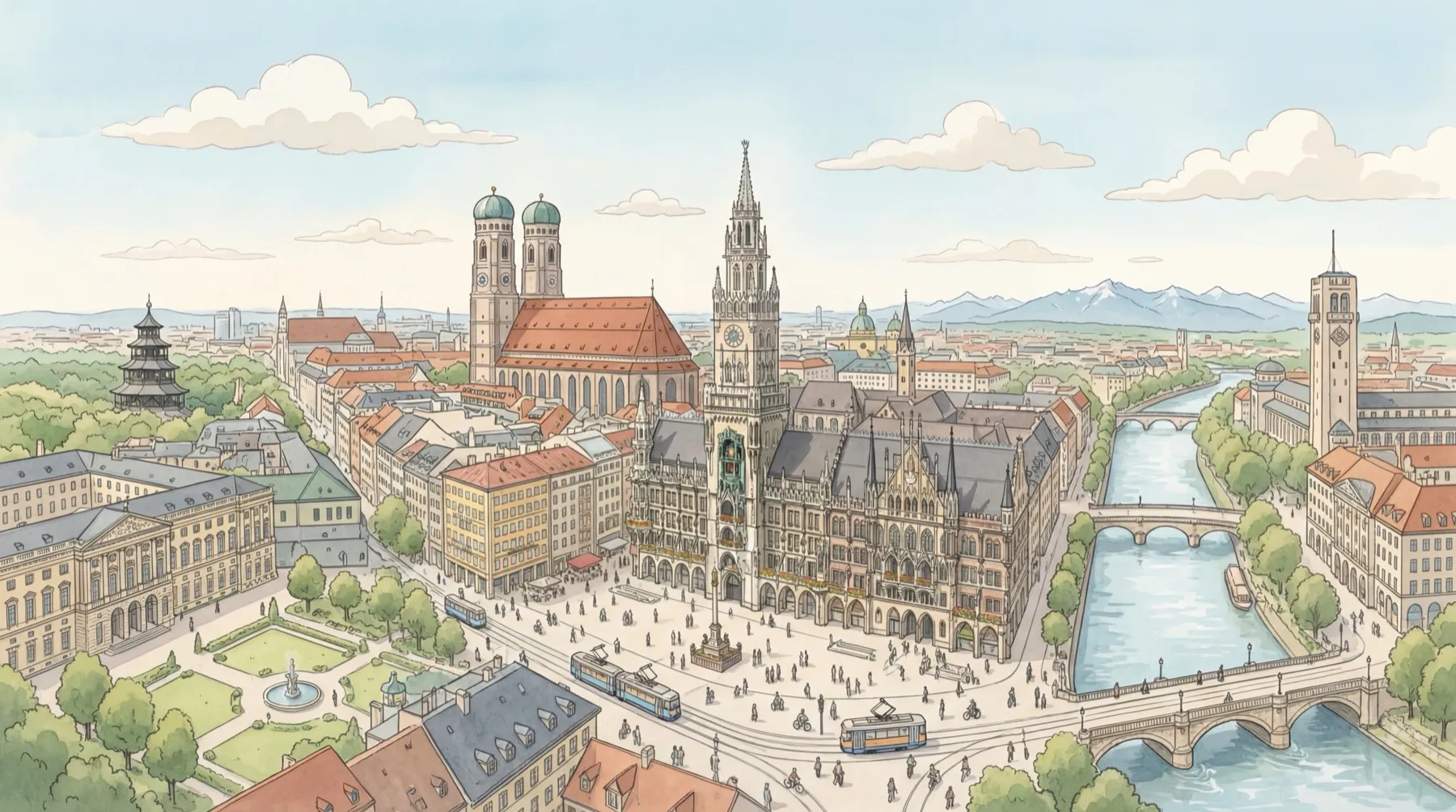
Munich
🇩🇪 Germany
Travel tips for Munich
33 tips from 22 contributors
Look, every guidebook will tell you to visit Hofbräuhaus, but it's honestly a tourist circus. €11 for watery beer while getting crushed at communal tables with obnoxious oompah music blasting — It's everything wrong with Munich tourism in one overpriced room.
Head to Augustiner-Keller instead (Arnulfstraße 52) — This is where actual Munich residents go after work. The beer garden sits under century-old chestnut trees, the beer costs €8.50 versus €11 at Hofbräuhaus, and you can actually have conversations without some performer in lederhosen yelling at you. Augustiner has been brewing since 1328 and you can genuinely taste the difference — Crisp, clean lager that doesn't need tourist markup.
Take U1 or U2 to Hauptbahnhof, then walk 10 minutes west past Hackerbrücke. Arrive between 5-7pm when locals stop by after work for the authentic experience. You're allowed to bring your own food (classic Munich tradition), which saves another €15 compared to tourist spots. The atmosphere is relaxed, conversations flow naturally, and you'll feel like you're experiencing real Munich culture instead of performing in a beer-themed amusement park.
Pro tip: Try their Edelstoff lager — It's only available at Augustiner locations and considered by many locals to be Munich's best beer. The naturally vegan pretzels here are also exceptional if you need something to soak up the alcohol.
This glacial lake delivers water clarity that rivals the best tropical dive sites I've explored — You can see 30+ feet down to the rocky bottom through emerald-green water surrounded by dramatic limestone peaks rising 1,800 meters directly from the shoreline. The water temperature stays around 15°C year-round, perfect for a refreshing swim if you're brave enough.
Getting there: Take Deutsche Bahn from München Hauptbahnhof to Berchtesgaden (2.5-3 hours, €25-35 depending on advance booking, change at Freilassing). From Berchtesgaden station, catch Bus 841 to Königssee-Seelände (35 minutes, €6.70). Total journey time: 3.5-4 hours each way.
The boat experience: Electric boats depart every 15-30 minutes from Seelände pier (8am-5pm May-October, €18.50 round-trip to St. Bartholomä). The boats are whisper-quiet to preserve the pristine environment, and halfway across, your captain will play trumpet echoes off the mountain walls — Sounds touristy but genuinely magical when those notes bounce between 2,000-meter peaks.
What to do: Swim near St. Bartholomä church (shallow areas perfect for cooling off), hike the easy shoreline trail for constant mountain reflections, or continue by boat to Salet for the short walk to Obersee — An even more secluded alpine lake. Pack lunch or eat at the historic restaurant by St. Bartholomä. Best photography happens early morning when alpine glow hits the water around 7am.
Munich gets labeled as sleepy but the city absolutely comes alive after 10pm if you know the right neighborhoods. Forget touristy beer halls that close early.
Glockenbachviertel and Gärtnerplatz transform after dark. Wine bars spill onto cobblestone streets. Cocktail spots fill with locals who actually live here. Rote Sonne (Maximiliansstraße 5) doesn't even open until midnight — Proper techno club that goes till 6am, €8-15 entry depending on DJ. Sound system that'll ruin you for other clubs.
Harry Klein hosts legitimate electronic music. Not commercial garbage. Crowd knows their BPMs. Atomic Café switches from daytime café to live music venue after 9pm — Completely different energy, locals only.
Late night hunger? Istanbul Döner on Goethestraße stays open till 4am. Guy working the 3am shift makes perfect post-club döner and somehow stays cheerful despite dealing with drunk people all night. Life-saving after proper Munich nights out.
Start around 11pm. Don't dress like a tourist. These places have actual dress codes and door policies. Worth the effort though.
 jessnight
Route: S8 from any city center station (Marienplatz, Hauptbahnhof, Karlsplatz) directly to Flughafen München. Journey time: 41 minutes from Marienplatz, 38 minutes from Hauptbahnhof. Service frequency: every 10 minutes during peak hours (6am-10pm), every 20 minutes evenings/weekends, every 30-60 minutes overnight.
Tickets: €12.80 for Zone 1-5 day ticket on MVV system. Purchase at red Deutsche Bahn machines (English menu available) or MVV app. Critical: validate your ticket before boarding — Ticket inspectors check frequently and fines are €60. Day ticket also covers all Munich public transport if you're staying overnight.
Airport logistics: S8 stops at both terminals. For Terminal 1: stay toward front of train, exit at first airport stop. For Terminal 2: remain on train to final stop. Clear announcements in German and English. Trains have dedicated luggage racks and comfortable seating — Much better than cramming into city buses.
Cost comparison: Taxi costs €65-85 and takes 45-60 minutes in traffic. Airport taxi queue during peak arrival times (8-10am, 4-7pm) often exceeds 45 minutes. S-Bahn runs on schedule regardless of traffic conditions and connects directly to city center without transfers.
 metromarc
The Devil's Footprint at Frauenkirche creates the most atmospheric shots in Munich's Altstadt, but you need specific timing to nail it. Get there by 7am when morning light streams through those tall Gothic windows and hits the mysterious dark mark in the floor where legend says Satan stood. The contrast between sacred space and devil folklore makes for incredible storytelling shots.
Position yourself low near the footprint with the onion domes visible through the windows behind. That morning light creates perfect rim lighting on the cathedral's interior columns. The key is shooting wide to capture both the footprint detail and those iconic twin towers framing your composition.
Walk to nearby Marienplatz afterward while that golden hour light still hits the Glockenspiel tower. The cobblestones around Frauenkirche catch that early light beautifully - way better texture than the polished stones at Karlsplatz. Film shooters, this is pure gold for that authentic grain. Digital never quite captures how that medieval atmosphere feels on Kodak Portra.
 cammie_k
At 910 acres, Englischer Garten dwarfs Central Park and offers perfect refuge when Munich's crowds become overwhelming. This is where I retreat to recharge between intense sightseeing days — Endless walking paths, quiet meadows, and surprisingly few tourists once you venture beyond the main attractions.
The Eisbach wave near Haus der Kunst creates Munich's most surreal sight: year-round urban surfing in the middle of the city. Water stays around 12°C even in summer, so only experienced surfers attempt it, but watching skilled locals ride this standing wave is mesmerizing. Access via U3/U6 to Universität station, then 5-minute walk to Prinzregentenstraße.
Chinese Tower beer garden (Chinesischer Turm) delivers classic Munich atmosphere under chestnut canopies. €10-12 for a proper Maß, and you can bring your own food — Essential Munich tradition that saves €15+ compared to restaurant prices. The energy here feels authentic and relaxed, perfect for solo travelers who want social interaction without pressure.
For complete solitude, explore the northern section near Aumeister (U6 to Münchner Freiheit, then 15-minute walk). Fewer crowds, more wildlife, same beautiful landscape. The park transforms with seasons — Spring brings beer garden reopenings, summer offers late sunsets until 9pm, autumn delivers spectacular foliage, winter creates peaceful snow-covered paths perfect for contemplative walks.
 kiki_adventures
Salzburg, Austria (Mozart's birthplace): Regional trains from München Hauptbahnhof take 1h 45min, €20-50 depending on advance booking through DB app. The UNESCO Old Town is compact perfection. Passport required - they actually check at the border. Book window seats on the right side for Alpine views approaching the city.
Neuschwanstein Castle (the Disney inspiration): 2 hours to Füssen station with one change, around €20-30 one-way. The castle everyone recognizes from Disney. Timed entry tickets €18-20 must be booked weeks ahead online - they genuinely sell out, especially May-September. Take bus 73 from Füssen station directly to castle entrance.
Nuremberg (medieval old town): 1 hour by ICE high-speed train, advance booking from €19. The old town survived WWII bombing and the Christmas market (November-December) is Germany's most famous. The Documentation Centre at former Nazi Party Rally Grounds provides sobering historical context.
I've done all three dozens of times and train beats driving every time - no autobahn stress, no parking nightmares, and you can actually enjoy those Alpine countryside views instead of watching for speed cameras. All three need full days but connections are reliable.
Look, Hofbräuhaus charges €10.80 for a liter while cramming you in with drunk tourists taking selfies with lederhosen. It's Disneyland with beer. Augustiner-Keller on Arnulfstraße serves the same excellent beer for €9, you'll sit with actual Germans under proper chestnut trees, and the schweinebraten doesn't taste like cafeteria slop. Save yourself the misery.
This absolute gem on Brienner Straße 11 has been serving coffee since 1888, and their sachertorte is perfection itself - dense chocolate sponge layered with apricot preserve and dark chocolate glaze that melts beautifully on your tongue. €7.50 per slice and worth every cent.
The interior transports you to old Vienna with original crystal chandeliers, marble-topped tables, and that hushed atmosphere proper coffee houses should have. Coffee runs €4-5, their breakfast spreads (served until 11:30am) are magnificent if you're there early. Skip the tourist traps around Marienplatz - this is where Munich locals bring their grandparents for special occasions.
The afternoon tea service (2-6pm daily) includes delicate finger sandwiches and seasonal pastries that change with traditional Austrian recipes. Take U3/U6 to Odeonsplatz, then a 5-minute walk west. This place offers complete escape from modern Munich into something timelessly elegant - perfect refuge between sightseeing marathons.
 teahunter
This place is MASSIVE like seriously the largest city palace complex in Germany and most people dont realize how incredible the interiors are. The treasury room contains actual crowns and jeweled artifacts while the court chapel is baroque overload that'll make your eyes water. €9 entry but honestly one of europe's best palace values.
Avoid 10am-2pm when tour groups completely take over every room. I went at 8:30am right when doors opened and had entire royal chambers to myself which was absolutely surreal. Download Rick Steves audio app instead of paying €4 for their basic audio guide - way better commentary.
Take U3/U6 to Odeonsplatz station, use Residenzstraße exit and you're literally right there. Budget minimum 2-3 hours because this complex is enormous - 130 rooms open to public. The antiquarium hall is the largest renaissance hall north of the alps but most people rush through. Skip the hofgarten unless you have extra time - pretty but nothing compared to those insane baroque interiors. Pro tip the treasury closes 30 minutes before main palace so hit that first.
This historic market (established 1807) near Marienplatz is Munich's culinary heart, and surprisingly vegan-friendly once you know what to look for. Beyond the obvious Leberkäse stalls, you'll find incredible fresh produce and several vendors with plant-based options that locals have been perfecting for generations.
Best early morning strategy: Hit the market 8-9am before tourist crowds descend. The bread vendors (especially Brotzeit Bachmeier) have amazing dark German breads - their Vollkornbrot and Pumpernickel are naturally vegan powerhouses. The organic section (look for 'Bio' signs) rotates with seasonal local vegetables from small Bavarian farms, and vendors genuinely know their growers' methods.
Accidentally vegan Bavarian gems: Traditional pretzels (Brezn), sauerkraut preparations, many vegetable soups, and seasonal fruit compotes. Most vendors speak decent English and are genuinely helpful when you ask about ingredients - they appreciate customers who care about what they're eating rather than just grabbing tourist snacks.
Yes, it's pricier than Edeka or Rewe supermarkets, but the quality difference is remarkable. Perfect for assembling an epic picnic lunch for Englischer Garten. The authentic market atmosphere - locals doing their weekly shopping, seasonal produce conversations, real human connections with vendors - is what European food culture should be.
After all the beer gardens and tourist crowds, your soul needs this restorative sanctuary. Westpark (Munich's lesser-known park) contains these incredible authentic meditation spaces designed as gifts from Asian partner cities - a Japanese tea garden, Chinese pagoda area, and Nepalese peace pagoda that feel like secret temples hidden in plain sight.
The magic happens early morning around 7am or late afternoon when golden light filters through the bamboo and pine trees. The Japanese section has an actual tea house (Teehaus im Japanischen Garten) where you can sit in complete silence on tatami mats, surrounded by carefully raked gravel and bonsai. The energy shift is profound - from Munich's bustling intensity to this still, grounding presence that restores your nervous system.
Take U4 or U5 to Westpark station (use the Hansastraße exit for quickest access). The Asian gardens are in the southeastern section - follow signs for 'Asiatische Gärten'. Bring a small mat if you want to do gentle stretching by the lake or practice meditation under the pagodas. Entry is completely free and the park is open 24/7.
Perfect sanctuary for introverts who need to recharge between activities, or anyone seeking those mindful moments that transform a city break into something deeper. Most tourists never venture here - their loss, your gain.
 yogamat_
This magnificent baroque palace complex (begun 1664) west of central Munich offers massive formal gardens perfect for a peaceful afternoon away from Marienplatz chaos. While the palace itself showcases Bavarian royal history beautifully, the real treasure is the expansive grounds - geometric formal gardens, tree-lined canals, and countless secluded benches ideal for quiet reading or gentle contemplation.
The Marstallmuseum inside houses an unexpectedly fascinating collection of ornate royal carriages and sleighs, including Ludwig II's elaborate golden coaches - perfect if you enjoy transport history and craftsmanship details. Palace and museum entry costs €8-15 depending on seasonal pricing, but the gardens themselves are completely free to explore year-round.
Take tram 17 from Karlsplatz directly to Schloss Nymphenburg stop - a pleasant 25-30 minute ride through quiet residential neighborhoods that feels like a gentle transition from urban energy to pastoral calm. The journey itself becomes part of the restorative experience.
Significantly less crowded than central tourist sites, especially on weekday afternoons. Makes an excellent rainy day backup plan since the palace interiors are extensive, well-heated, and filled with interesting rooms to explore slowly without feeling rushed. The kind of place where you can actually hear yourself think.
There's this legendary standing wave in the English Garden where hardcore locals surf year-round - yes, even when it's snowing and there's ice on the banks. Completely mind-blowing watching someone carve perfect turns while snow falls around them and classical architecture frames the backdrop.
The wave is created by concrete structures channeling the Eisbach stream, producing a consistent surf break right in the city center. Best viewing spot is from Prinzregentenstraße bridge above - you can watch the entire lineup and see surfers' skills up close. These aren't beginners; many have been riding this wave for 10-15 years and are genuinely talented, pulling off aerials and long rides that would impress at any beach break.
Peak sessions happen after work hours (5-7pm) and weekend mornings, but someone's usually riding it throughout the day. Water temperature stays around 8-12°C even in summer, so surfers wear full 4/3mm wetsuits year-round. The dedication is incredible - I've seen people suiting up in sub-zero temperatures just to get a few waves.
Free entertainment that perfectly captures Munich's unexpected side - where Alpine culture meets urban innovation. Grab a coffee from nearby Rischart bakery and settle in for the show. Golden hour sessions around sunset create absolutely magical photo opportunities with the city skyline reflecting in the water.
Munich locals swim in the Isar river year-round, and once you experience this alpine-fed clarity, you'll understand why. The water is surprisingly clean glacial runoff from the Bavarian Alps with designated swimming zones that are monitored and genuinely safe - not some sketchy urban river situation.
Prime swimming locations: Flaucher area (south of city center, tram 15 to Schäftlarnstraße) has the most developed facilities with changing areas and shallow entry points. Near Wittelsbacher Brücke offers deeper water and stronger current for confident swimmers. Both spots have lifeguard supervision during peak season (May-September).
Water conditions: Temperature ranges 15-20°C in summer - refreshing without being shock-inducing. Current can be genuinely strong in spring snowmelt, so absolutely stick to designated slower-water zones marked with buoys. For warmer alternatives, Feldmochinger See (S1 to Feldmoching) and Fasanerie lake reach 22-24°C but require 30-minute S-Bahn journey.
Essential gear: water shoes for rocky riverbed navigation. Swimming is completely free and feels incredible after walking hot pavement all day. Way better than crowded public pools like Müllersches Volksbad, plus you're literally swimming in crystal-clear alpine water that was snow on Zugspitze weeks earlier.
This literary café on Salvatorplatz is absolute paradise for book lovers. Ground floor has curated bookstore focusing on German literature with some English translations, upstairs café serves excellent coffee and light meals in villa setting
The back garden is magical - quiet courtyard with tables under old trees where you can read for hours undisturbed. They host literary events and readings regularly. Coffee €3.50, simple lunch dishes €9-14. Very civilized atmosphere, feels like someone's private library
It's the kind of place you stumble upon and immediately want to spend entire afternoons. Perfect refuge from tourist chaos with intellectual atmosphere and peaceful energy
BMW World is completely free and has all the latest models you can sit in and check out. Building itself is architectural eye candy and worth visiting just for that. Interactive displays let you configure cars and explore tech without any pressure to buy
Actual BMW Museum costs €12 and covers company history - decent but not essential unless you're really into automotive development. Coolest part is photographing the clover-shaped headquarters building from outside angles
Take U3 to Olympiazentrum, 5-minute walk through Olympic Park area. Combine with Olympiapark for full area experience. Skip Olympic Tower though - €11 for views mostly blocked by trees, total ripoff
 skibumtom
Skip those overpriced würst stalls at Viktualienmarkt charging €8 for tourist curry sauce. Steinheil 16 on Steinheilstraße in Maxvorstadt serves the best currywurst in Munich for €6.50. Small local spot near U2 Hohenzollernplatz where students and locals actually eat. They're not trying to be fancy - just perfect spiced sauce and proper bratwurst.
Open until 1am so you can grab one after the beer halls close around midnight. The owner knows regulars by name and they do proper crispy fries that actually complement the curry sauce instead of drowning in it. Reserve ahead if you're going during evening rush - only about 8 seats total but worth the wait.
 nadia_m
Hofbräuhaus serves instant coffee that's somehow worse than gas station brew - pure tourist trap garbage. Gratitude on Türkenstraße in Maxvorstadt does proper single-origin beans with actual barista skills. €3.50 cortados with those little leaf foam patterns, not burnt swill in plastic cups.
They roast their own beans and understand proper extraction timing unlike those beer hall places serving Nescafé to hungover tourists. Located near U3/U6 Universität stop so you can get decent caffeine before hitting the Altstadt tourist trail. Open early at 7am when most traditional Bavarian spots are still closed. Much better than that bitter liquid sadness they serve at Augustiner breakfast tables.
Before hitting Zugspitze or any Bavarian Alps day trips from Munich, rent proper gear at Sport Schuster right on Marienplatz. €10/day for hiking boots, €6/day for backpacks, €5-10/day for walking poles. They carry quality German brands that actually fit and won't leave you with blisters on those rocky Alpine trails.
For serious via ferrata routes near Garmisch-Partenkirchen, Globetrotter at Isartorplatz has helmets, harnesses, and crampons. Staff gives real advice about current conditions on Partnach Gorge trails and weather forecasts for the Wetterstein range. They'll warn you about afternoon thunderstorms that roll in fast above tree line.
Most importantly - don't underestimate Bavarian Alpine weather even in summer. Zugspitze can drop 20 degrees from base to summit. Rent proper waterproofs and layers. Much cheaper than getting caught in a sudden storm at 2962 meters and needing mountain rescue from Garmisch base station.
 denalidave
About Munich
Bavaria's capital, blending traditional German culture with modern innovation and world-famous beer heritage. Oktoberfest and the historic Marienplatz draw millions of visitors annually.
Destination Stats
Know something locals know? Share your insider tip.
+ Share a Tip