Lisbon
🇵🇹 Portugal
Things to see Tips for Lisbon
Must-visit landmarks, hidden gems, and sightseeing
Beneath the imposing shadows of the 25 de Abril Bridge lies a testament to Lisbon's creative renaissance — LX Factory, where abandoned industrial spaces have been transformed into galleries, studios, and cafés. There's something deeply literary about this place, as if António Lobo Antunes had imagined a setting where Portuguese creativity could flourish among the ruins of the old economy.
The crown jewel remains Ler Devagar bookstore (Rua Rodrigues de Faria 103), housed in a former printing press where books now cascade from floor to ceiling like literary waterfalls. The suspended white bicycle installation overhead has become iconic, but don't let that distract from the remarkable collection below. Their Portuguese literature section introduced me to writers like Lídia Jorge and Mário de Carvalho — Voices that capture modern Portugal's complexity in ways no guidebook could.
Open Tuesday-Sunday from noon (11am weekends), the bookstore feels most magical during weekday afternoons when natural light streams through industrial windows and you can browse without dodging selfie sticks. The building's history permeates everything — You're literally standing where Lisbon's stories were once mechanically reproduced, now surrounded by contemporary narratives waiting to be discovered.
Take Bus 728 from Cais do Sodré or the short walk from Alcântara-Mar station reveals how this neighborhood transitions between working port and artistic enclave. The street art rotates regularly, but the literary soul of LX Factory remains constant — A place where Lisbon's industrial past converses with its cultural future through the medium of books and coffee.
Forget the absolute zoo at Portas do Sol. Senhora do Monte in Graça delivers the full city panorama without fighting for elbow room like some Black Friday sale. This is the viewpoint locals actually use — Zero entrance fees, zero queues, just pure 360-degree madness over the Tagus and those terracotta rooftops that make Lisbon famous.
Bus 737 from Rossio drops you 2 minutes walk away (€1.60, runs every 15 mins). Or if you're feeling the burn, it's a brutal 20-minute uphill grind from Alfama through the Graça neighborhood — Your calves will hate you but the payoff is unreal. The final stretch up Calçada do Monte is basically a wall but that's what makes it epic.
Golden hour hits around 7-8pm in summer and the light goes absolutely mental. But honestly, this spot works any time for photos — Even midday when the contrast is sharp as hell. Just bring water because there's literally nothing up there except you, the views, and whatever energy you packed.
Pro move: The tiny chapel at the top (Senhora do Monte) has benches if you want to sit and soak it in. Most people snap and leave, but the real magic happens when you just park yourself and watch the city shift colors as the light changes.
 skibumtom
Most visitors see Monsanto as just another hiking spot, but this urban forest holds some of the most restorative meditation spaces I've found in any European city. The energy here feels completely different from the bustling neighborhoods below — Ancient oaks and eucalyptus groves create these natural cathedral spaces that just invite stillness and reflection.
Follow the blue trail markers about 15 minutes from the main entrance to reach the old chapel ruins (Capela de Montes Claros). This spot has become my go-to for morning yoga practice — Flat stone platforms naturally positioned for sun salutations as the light filters through the canopy. The acoustics here are incredible too; even whispered mantras seem to resonate in the space.
Bus 50 from Sete Rios station gets you to the park entrance in just 6 minutes (€1.60). The trails are well-marked but bring a yoga mat if you practice — The stone surfaces can be rough on bare skin. I always pack extra water and usually some fresh fruit from the market for a mindful snack afterwards.
The most magical experiences happen during sunrise sessions around 7am when the morning mist creates these ethereal moments through the eucalyptus. Even if meditation isn't your thing, just sitting quietly in one of the natural clearings for 10-15 minutes creates this beautiful reset from city overwhelm. There's something about being surrounded by 1000-year-old trees that puts daily stress into perspective.
 yogamat_
Coming from years chasing breaks across Indo, Portugal's coast is seriously slept on. For raw, jaw-dropping beauty that'll make your Insta followers lose their minds, Praia da Ursa and Adraga absolutely smoke those crowded Algarve tourist traps. The water clarity here rivals spots I've surfed in the Azores — On good days you're looking at 15+ meter visibility.
Take the train from Cais do Sodré to Cascais (€2.25, 40 mins, runs every 20 mins), then catch bus 405 to Adraga (another €2.25, 30 mins). Fair warning: Adraga is wild and remote — No beach vendors, no facilities, just you and some of the most dramatic limestone cliffs in Europe. Pack lunch, water, and sunscreen because you're basically committed once you're there.
If you want surf vibes with actual convenience, Cascais is your spot. Multiple beaches right off the train platform, decent surf shops like Cascais Surf School for board rentals (€25/day), and way less scene than those zoo beaches down south. Praia de Banha and Praia do Guincho both work for intermediate surfers when there's swell.
The secret spot: Praia da Ursa requires a sketchy 30-minute scramble down unmarked trails from the Cabo da Roca parking area. It's basically hidden between massive rock formations and feels like your own private slice of paradise. Just respect the ocean here — No lifeguards, serious rip currents when it's big.
Príncipe Real possesses that rare quality of feeling like a village tucked within a capital city, where the art of slow coffee appreciation thrives away from tourist thoroughfares. The tree-lined streets create natural shade for a proper café crawl, something impossible in Lisbon's sun-baked lower districts.
Fábula Coffee on Rua de São Marçal serves what I consider the city's finest 3 EUR latte — Their beans sourced from small Portuguese roasters who understand terroir extends beyond wine. The baristas actually steam milk to proper temperature rather than scalding it, a detail that separates serious coffee culture from mere caffeine delivery.
Sundays transform the neighborhood when Jardim do Príncipe Real hosts its antiques market (9am-7pm). This isn't aggressive tourist shopping but thoughtful browsing among vendors who know their pieces intimately. I've discovered 18th-century Coimbra ceramics and vintage tea services that would cost triple in London's Portobello Road.
Take Tram 24 from Rossio station directly to the heart of the neighborhood — The yellow carriages somehow suit the area's gentle pace. Morning visits work best when vendors are freshest and before the afternoon heat makes browsing uncomfortable. Locals consider this Lisbon's most charming neighborhood for slow mornings, and after countless Portuguese coffee experiences, I wholeheartedly agree.
 teahunter
The Museu Nacional do Azulejo offers a contemplative journey through Portugal's tile tradition in beautifully quiet galleries. Even midday visits feel serene compared to crowded main attractions.
The collection spans centuries from Moorish geometric patterns to elaborate religious scenes. The building itself - a former 16th-century convent - adds to the peaceful atmosphere. Perfect for understanding the cultural significance of azulejos throughout the city.
Audio guide provides excellent historical context for different periods and styles.
Monsanto is Lisbon's massive green lung with actual hiking trails and zero tourists. Bus 50 from Sete Rios to Alto da Serafina, then yellow trail markers for a 2-hour loop with killer city views.
Bring water - nothing up there. While city center miradouros like Senhora do Monte give you the classic Lisbon sunset experience, Panorâmico viewpoint at the top offers something completely different - the light here during golden hour is incredible for film photography, with way better texture and atmosphere than the crowded spots. Perfect if you're after landscape shots with the city as backdrop rather than intimate sunset viewing.
 cammie_k
When all the major museums feel overwhelming and crowded, this place is a peaceful refuge. Small but excellent collection spanning ancient art to Art Nouveau.
Go right when they open at 10am on weekdays. You'll practically have the place to yourself for the first hour. The gardens outside are perfect for sitting quietly between galleries.
Entry is 10 euros and includes both the main collection and modern art building. Much more manageable than spending a full day fighting crowds at bigger museums.
 kiki_adventures
The cobblestone street leading down from Bica funicular creates perfect leading lines for film photography. Best light is around 4pm when the shadows create dramatic contrast against the pastel buildings.
Bring fast film (400 ISO minimum) because the lighting changes quickly between the narrow streets and bright plazas. The old Kodak shop on Rua do Carmo still develops film if you need it done locally.
Perfect flat running route following the river from Cais do Sodré to Belém Tower and back. About 8km total with water fountains every 2km and public toilets at Museu do Oriente.
Best early morning before 8am when it's cooler and fewer pedestrians. The riverside path is well-lit if you prefer evening runs.
 runroutes
About Lisbon
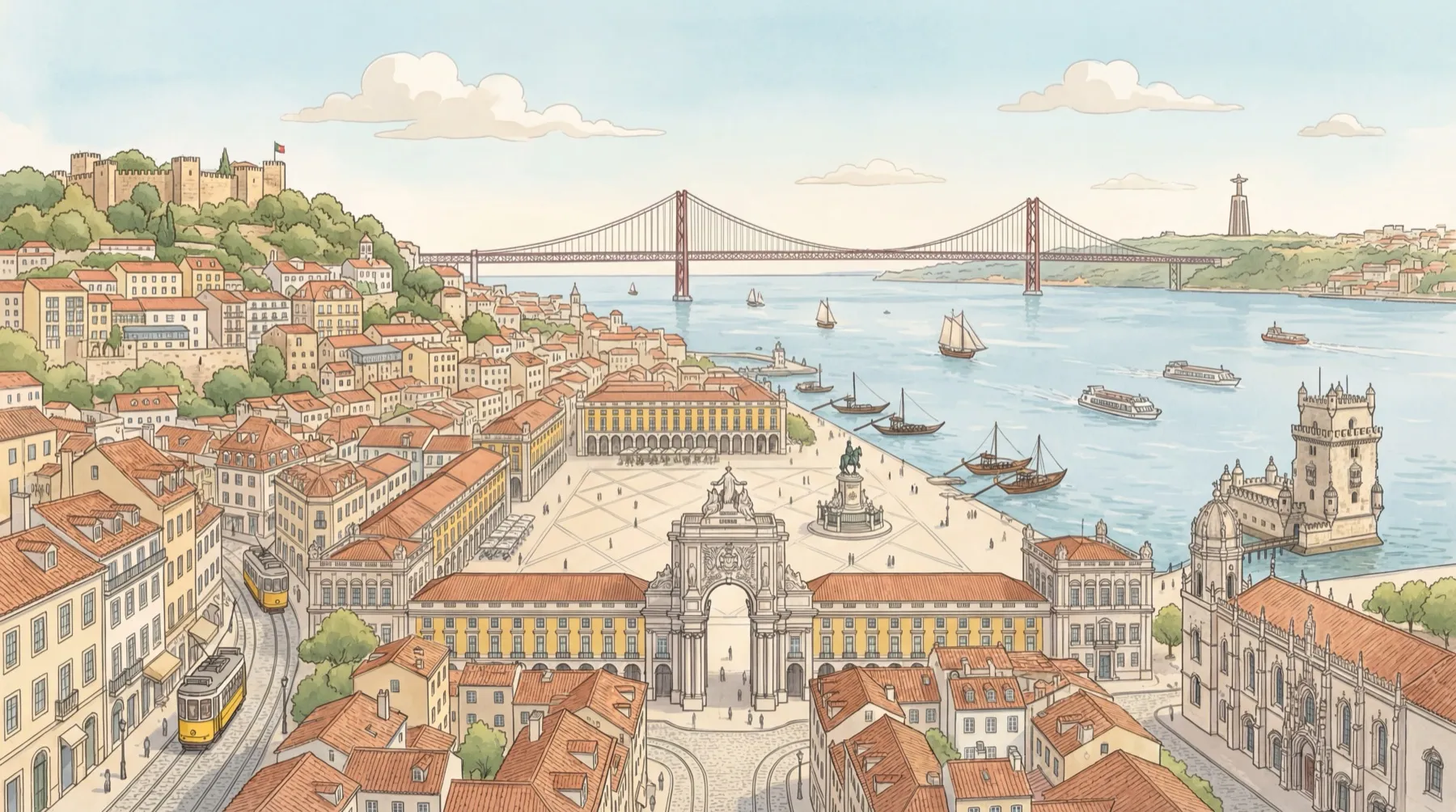
Portugal's capital, built across seven hills overlooking the Atlantic. Tram 28 winds through historic neighborhoods while Belém Tower stands as a monument to maritime exploration.
Destination Stats
Know something locals know? Share your insider tip.
+ Share a Tip