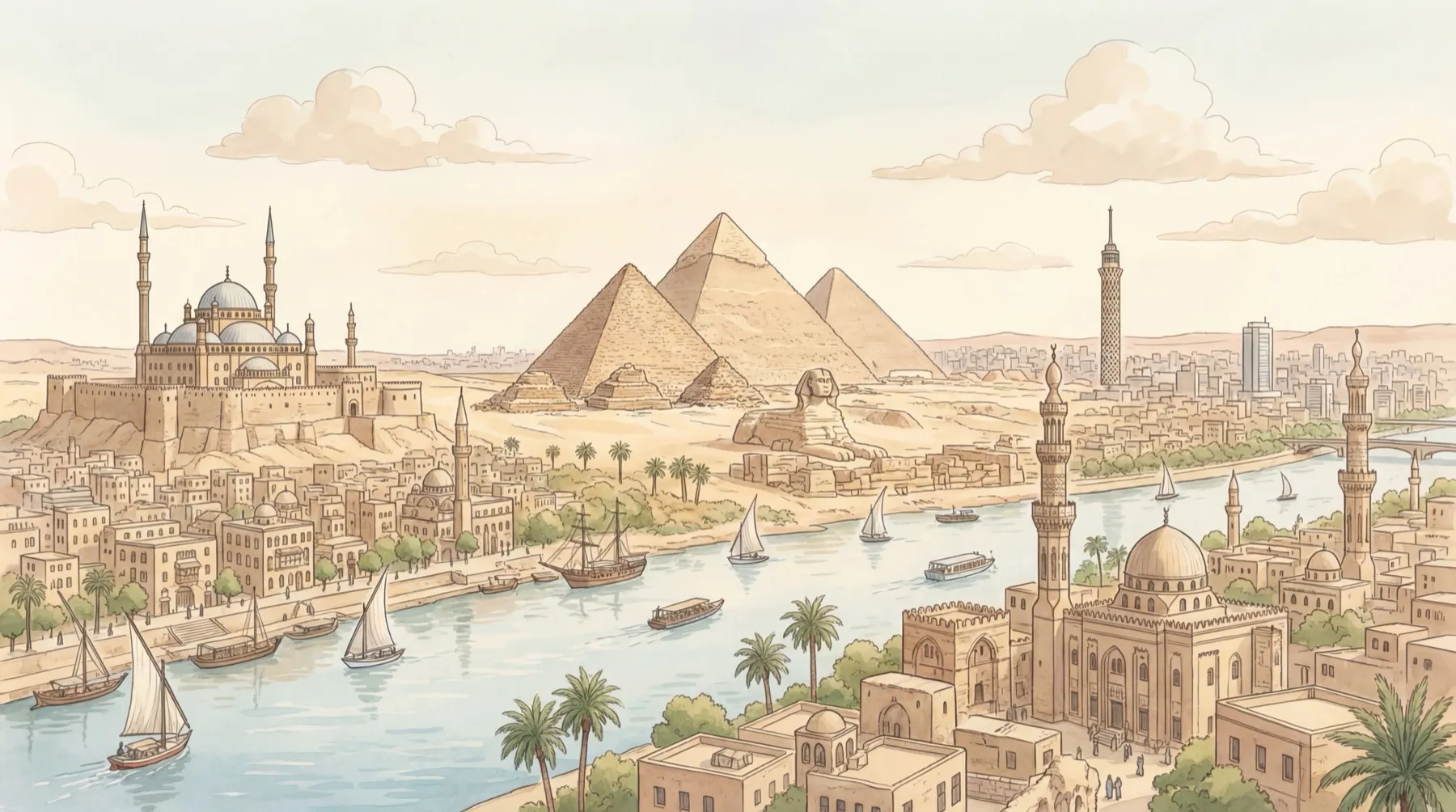
Cairo
🇪🇬 Egypt
Travel tips for Cairo
43 tips from 27 contributors
After three months in Cairo and countless pyramid visits, I've cracked the code on avoiding the relentless scams that drain tourist wallets. The key is understanding that everything has an official price, but nobody will tell you what it actually is. Early morning visits (7:30-9:30am) offer the best combination of cool weather, golden light, and fewer aggressive touts — Though if you can handle 40°C heat, summer mornings can be magical with the complex nearly empty.
Camel ride reality check: The official price is 130 EGP for 30 minutes, period. Those guys selling 'special tickets' outside the main gate? Complete fraudsters — Walk straight past them to the actual entrance. Inside the complex, legitimate camel operators will still try quoting 400-600 EGP and demand extra for photos. Negotiate the total price including unlimited photos before mounting anything, and don't budge from 130 EGP.
Transportation that won't fleece you: Uber from downtown Cairo costs 80-120 EGP and saves you from taxi drivers who see tourists as walking ATMs. The metro to Giza station plus microbus works too, but for 80 EGP, why bother with the hassle? Book your ride from inside a cafe to avoid street negotiations.
Inside the Great Pyramid experience: The 600 EGP entry fee is worth every piaster if you can handle claustrophobic spaces. It's swelteringly hot, physically demanding with the narrow ascending passage, and absolutely incredible. Hire a licensed guide (300 EGP for the full day) to handle the army of 'helpful' guys who demand tips for pointing at obvious hieroglyphs. The guides know which tomb guards actually control access and can save you hours of frustration.
Honestly the bazaar itself is incredible for shopping and soaking up medieval cairo vibes but eating here will absolutely ruin your day and destroy your wallet. No restaurant has printed menus anywhere and they completely exploit tourists who dont know local prices. Watched multiple people pay 800 egp for basic grilled chicken that costs 200 egp literally anywhere else in downtown cairo
Trust me the restaurants inside have figured out that tourists have zero clue about egyptian food prices and they ruthlessly exploit it. For actual good egyptian food that wont bankrupt you walk five minutes to naguib mahfouz cafe on midaq alley which has real printed menus and decent traditional dishes for 150-250 egp. Or just treat khan el khalili as pure shopping therapy and eat at proper restaurants in downtown after
Go early morning sunday through thursday to avoid the absolute worst tourist crowds and definitely watch your valuables because pickpocketing is a real thing in the narrow alleys. Haggle aggressively on everything and use a currency app to check current gold prices if youre buying jewelry since they quote completely made up numbers to tourists. The back sections past the main tourist drag have genuine antiques and amazing spice vendors who actually know their stuff
Uber rides cost almost nothing compared to western cities and eliminate all the exhausting price negotiations. Airport to downtown runs 120-200 EGP depending on traffic, while pyramids from city center costs around 80-120 EGP. The apps show fixed transparent pricing so zero haggling or rigged meter tricks that plague street taxis.
Street taxis quote completely insane 'tourist rates' that are 5x normal price and deliberately take longer routes to jack up costs. The metro works great too — Line 1 hits Sadat station near Tahrir Square, Line 2 goes toward Giza, and the new Line 3 connects directly to the airport. Single rides cost just 7 EGP regardless of distance.
But honestly, Uber is so stupidly cheap here you might as well use it for convenience. Drivers are generally helpful with directions and many speak decent English. Book from inside cafes or hotels to avoid street touts who'll try selling you 'special taxi deals' that cost more than Uber anyway.
Koshari is Egypt's beloved national dish and Koshari Abou Tarek near Tahrir Square (16 Maarouf St) is the absolute legendary spot for it. This cafeteria-style institution serves massive portions of perfectly layered lentils, rice, macaroni, and spicy tomato sauce for just 60-200 EGP. The local atmosphere is incredible — Packed with office workers, students, and families who've been coming here for decades.
For breakfast, hunt down a ful cart — These fava bean stalls are scattered throughout downtown Cairo. Waheed Ful Falafel Cart on Qasr al-Nil Street does the most authentic versions with fresh ta'meya (Egyptian falafel), creamy ful with olive oil and lemon, or Alexandria-style with butter and tomatoes. Pair with warm baladi bread straight from the oven for maybe 30-50 EGP total — It's filling, nutritious, and exactly what locals eat.
Skip hotel restaurants completely for authentic Egyptian flavors — They water everything down for tourist palates. The street food scene is phenomenal if you follow the local crowd rule: stick to busy places with high turnover where you see Cairenes actually eating. Empty restaurants targeting tourists are red flags. Look for places where the owner is actively cooking and locals are lined up during meal times.
Pro tip from my Korean perspective: Egyptian cuisine shares surprising similarities with Korean temple food — Lots of legumes, fermented flavors, and communal eating styles. The spice levels can be intense, so start mild and work your way up to the proper Egyptian heat levels.
 kimchiquest
The weather during these shoulder months is absolutely perfect for both photography and comfortable sightseeing. October brings daytime highs around 28-30°C with November cooling to 25-28°C, while tourist crowds thin out significantly compared to peak winter season. You get excellent conditions without the overwhelming bustle.
Winter delivers perfect temperatures but also brings peak crowds and inflated prices at major sites. Summer is brutally hot but offers a different kind of magic — You'll have the pyramids almost entirely to yourself some mornings, and accommodation costs drop dramatically. The contrast is stark: hostel beds that cost 300 EGP in winter can be found for 50-80 EGP in July.
March through April offers the other sweet spot with similar mild conditions and manageable crowds. The light quality during shoulder seasons is exceptional for film photography — Much more forgiving than the harsh summer sun or the crowded golden hours of winter peak season. Those soft morning shadows on ancient limestone create textures that digital cameras struggle to capture properly.
 cammie_k
The current Egyptian Museum at Tahrir Square (downtown Cairo) remains absolutely essential viewing, housing Tutankhamun's complete burial treasure and the Royal Mummies Collection in a fascinating 1902 neo-classical building. While the infrastructure feels dated, this is where you'll encounter the actual golden mask of the boy king — A moment that genuinely takes your breath away. Plan 3-4 hours minimum and absolutely pay the extra 300 EGP for the mummy rooms, where you'll stand face-to-face with Ramesses II and Hatshepsut in climate-controlled chambers.
The Grand Egyptian Museum near the Giza pyramids represents the future of Egyptian archaeology with state-of-the-art climate control and stunning modern galleries. However, check current exhibitions before visiting — The full collection rollout has been gradual, and some anticipated displays may still be in preparation phases. The building itself is an architectural marvel, with the grand staircase offering pyramid views that create an overlooked photographic opportunity.
For the discerning visitor, I recommend the older museum first for its unparalleled collection density and historical atmosphere, then the Grand Egyptian Museum for its superior artifact presentation and technological innovations. Both museums can overwhelm even seasoned travelers — Consider focusing on specific dynasties or hiring a guide who can navigate the highlights while sharing fascinating context about burial practices and royal succession that most visitors miss entirely.
Saqqara Complex: Home to the world's first pyramid, the 4,700-year-old Step Pyramid of Djoser stands 62 meters tall in pristine desert surroundings. The mastaba tombs here contain the most vivid hieroglyphic artwork you'll see in Egypt — The Tomb of Ti shows detailed daily life scenes with original colors intact. Entry fee: 450 EGP. Open 8 AM-4 PM daily.
Dahshur Pyramid Fields: The Red Pyramid offers an unparalleled interior climbing experience with minimal queuing (unlike Giza's Great Pyramid). The 43-meter descent through narrow passages leads to three chambers with perfect acoustics. The nearby Bent Pyramid showcases fascinating construction angle changes that reveal ancient engineering problem-solving. Combined entry: 100 EGP.
Transportation & Logistics: Hire a private driver for 800-1200 EGP total (negotiate the night before) or book through EMO Tours for organized transport. The route passes through rural farmland offering authentic Egyptian countryside views. Pack 2+ liters of water per person, snacks, and sun protection — Facilities are minimal. Plan 6-8 hours total including Memphis ruins (colossal Ramesses II statue) for the complete ancient capital experience.
Pro Tips: Visit Tuesday-Thursday for smallest crowds. Early morning entry (8-9 AM) provides the best lighting for photography and comfortable climbing temperatures. The sites close at 4 PM sharp.
 parkhopper
This Nile island district showcases Cairo's finest Art Deco architecture from the 1930s-40s, featuring tree-lined streets with actual functioning sidewalks — A rarity in Cairo. The architectural details are extraordinary: look for the geometric limestone patterns on the Villa Abd El-Latif Saleh (26th July Street), the original brass elevator fixtures in residential buildings along Hassan Sabry Street, and the curved corner balconies with intricate metalwork that remain perfectly preserved after 90 years.
Road 9 (26th July Street) offers the district's café culture with unobstructed Nile views — Try Café Riche's terrace for sunset drinks overlooking feluccas. The Aquarium Grotto Garden (entry 20 EGP, open 9 AM-5 PM) provides an unexpected escape with underground caves and tropical fish displays, creating a completely different energy from chaotic downtown areas. The Japanese garden section offers Instagram-worthy spots most tourists never discover.
Al-Azhar Park (15-minute taxi ride, entry 25 EGP) provides the essential elevated perspective of how Zamalek's Art Deco grid fits into Cairo's sprawling urban fabric. The sunset view from the park's upper terrace reveals the geometric precision of the island's layout against the organic chaos of surrounding neighborhoods — A fascinating study in urban planning contrasts that architecture enthusiasts will find absolutely compelling.
 siennna
The Coptic Quarter (Old Cairo) preserves Egypt's ancient Christian heritage within Roman fortress walls, featuring remarkable churches dating to the 4th century. The Hanging Church (Saint Virgin Mary's Coptic Orthodox Church) literally suspends above Roman gate ruins, while Saint Sergius and Bacchus Church marks the traditional Holy Family shelter spot. The Coptic Museum (entry 100 EGP, open 9 AM-5 PM) houses the world's largest collection of Coptic artifacts with minimal crowds compared to Islamic Cairo.
The Cave Church (Monastery of Saint Simon the Tanner) represents one of the most remarkable religious architectural achievements globally — Worship halls carved directly into Mokattam Mountain accommodating 20,000 worshippers. The journey through Zabbaleen (Garbage City) reveals Cairo's Coptic waste management community, while the church itself demonstrates extraordinary acoustics and lighting engineering carved from solid rock. Free entry, open daily 9 AM-4 PM.
Dress respectfully at both locations: long pants, covered shoulders, and modest necklines for all visitors. Remove shoes when entering certain church sections. The religious architecture diversity here is profound — Walking from Coptic churches to nearby Islamic monuments and the historic Jewish synagogue (Ben Ezra Synagogue) within one district showcases Cairo's remarkable interfaith heritage spanning 2,000 years.
Transportation tip: Take Cairo Metro Line 1 to Mari Girgis station for Coptic Quarter (5-minute walk). For Cave Church, arrange taxi transport (45 minutes from downtown) or join organized tours that include both sites in one respectful, informative day.
Traditional felucca sailboat rides at sunset transform Cairo completely, but smart travelers launch from Dokki's quieter embankment areas rather than touristy Corniche locations. Negotiate prices firmly beforehand — Expect 200-400 EGP for 1-2 hours depending on boat size and season. The Dokki Shooting Club area offers excellent access points with fair pricing and less aggressive touts than central locations.
Evening light on the Nile creates magical photography opportunities as the city's minarets and modern towers reflect in calm water. Many experienced captains offer complimentary tea service using traditional equipment, adding authentic atmosphere. Request specific routes: upstream toward the Sofitel provides dramatic downtown skyline views, while downstream offers quieter residential areas and better sunset angles.
The water perspective reveals architectural details invisible from street level — Islamic Cairo's skyline, Zamalek's Art Deco buildings, and modern towers create layered urban views that ferry enthusiasts will appreciate far more than any bridge crossing. Book through local contacts near Kit Kat Club in Agouza for authentic operators who know optimal wind conditions and scenic routes.
Skip the overpriced tour buses and hop on a microbus from Turgoman station (15 EGP) for the adventure to Fayoum! These battered blue-and-white beauties leave every 30 minutes and turn the 2-hour journey into proper Egyptian transport theater. Negotiate hard - drivers always quote tourists 50 EGP first.
Once there, grab a tuk-tuk to Lake Qarun's western shore near Sanhur village (20-25 EGP, never pay more than 30). The lake views are mental - like stumbling into ancient Egypt meets Switzerland. Perfect for escaping Cairo's madness completely.
Tunis village pottery workshops are the real deal - master craftsmen who've never heard of Instagram but create mind-blowing ceramics using techniques from pharaonic times. Tuk-tuk between spots costs 10-15 EGP each hop. Some cheeky drivers offer "special price" desert trips to Wadi el Hitan fossil sites in beat-up 4x4s (negotiate around 200-300 EGP for half-day). Just remember - if they're not haggling, you're paying tourist prices!
 tuk2go
Forget the tourist-trap main Khan el-Khalili bazaar and dive into Souk al-Attarin, tucked behind the flashy jewelry stalls where actual Cairenes buy their daily spices. Open 6 AM to 8 PM except Fridays, this narrow alleyway buzzes with grandmothers haggling over cardamom and shop owners grinding fresh baharat blends.
What to buy: Hibiscus tea (karkade) for 15-25 EGP per 100g, sumac for 20 EGP, and the most fragrant cinnamon bark you'll ever smell. Ask for "tawabel baladi" (local spices) and they'll know you're serious. Watch them grind everything fresh - no dusty pre-packaged tourist nonsense here.
Secret bonus: Follow the copper-banging sounds to adjacent Souk al-Nahhasin where third-generation craftsmen still hammer traditional water jugs and coffee pots using medieval techniques. It's like a living museum except nobody's performing for tourists - just Egyptians doing what their families have done for centuries.
Pro tip: Bring small bills and your own cloth bags (plastic costs extra). Thursday mornings are quietest if you want to chat with vendors without the crowds.
 marketsunday
While tour groups cram into Muhammad Ali Mosque, Ibn Tulun stands majestically empty in Sayyida Zeinab district - arguably Egypt's most perfectly preserved medieval mosque. Built in 876-879 CE, this architectural marvel showcases pure Abbasid design with massive stone arches and the only spiral minaret in Egypt you can actually climb.
Visiting details: Open daily 9 AM-5 PM, free entry with suggested 60 EGP donation for preservation. Take Metro Line 1 to Sayyida Zeinab station, then 10-minute walk through authentic neighborhood streets. Dress code strictly enforced - long pants, covered shoulders, women must bring head covering (guards provide emergency scarves if needed).
The experience: The vast courtyard feels frozen in time - 1,200 years of history under your feet. Climb the unique spiral minaret for panoramic views over Islamic Cairo's ancient rooftops. Late afternoon (3-5 PM) offers magical golden light streaming through the arcade arches - perfect for contemplative photography.
Hidden gem: Adjacent Gayer-Anderson Museum (separate 100 EGP entry) showcases how wealthy Cairenes lived, but the mosque alone justifies the journey. This neighborhood remains refreshingly untouristy - expect curious local children and genuine warmth from residents proud to show their heritage.
Everyone rushes uphill to the Citadel's Muhammad Ali Mosque, completely missing Al-Rifai's magnificent facade below. This late 19th-century architectural masterpiece was deliberately designed to match medieval Mamluk style so perfectly that most visitors assume it's genuinely medieval. It houses Egypt's royal family tombs, including the last King Farouk.
Architectural highlights: The interior dazzles with massive marble columns, intricate geometric patterns, and polychromatic marble work that rivals any European cathedral. The royal burial chamber features ornate sarcophagi in a setting that feels appropriately majestic for Egypt's final monarchs.
Practical information: Open daily 9 AM-4 PM, free entry with conservative dress required. Women need head covering (security provides scarves if necessary). Located at Citadel entrance - combine with fortress visit for historical continuity. Guards often offer informal tours of royal tombs if you show genuine interest and speak some Arabic courtesy phrases.
Photography tip: Visit late afternoon when western light illuminates both Al-Rifai and the Citadel above, creating stunning architectural contrast shots. From the Citadel's plaza, you can capture both structures together - medieval fortress crowning modern royal mosque in one frame. This perspective reveals Cairo's layered Islamic architectural heritage beautifully.
Skip the overpriced tea places in Khan el-Khalili's main tourist strip and find authentic neighborhood ahwa where Egyptian men have gathered for generations. The difference between tourist spots charging 50 EGP and real local places charging 10 EGP is dramatic.
Qahwet El-Fishawy (the Mirror Café) behind Khan el-Khalili has served ahwa sada (unsweetened coffee) and shai koshary (heavy sweet tea) for over 200 years without closing once. Look for cracked marble tables, antique mirrors, and zero English signage. Order 'shai ziada sukkar' (extra sweet tea) served in small glasses - the traditional way.
Best spots around Bab Zuweila and Al-Moez Street where plastic chairs spill onto cobblestones between medieval buildings. The ritual is sacred: dominoes clicking, water pipes bubbling, intense discussions about football and politics. These places open before dawn prayer and stay busy until after midnight prayer.
Expect absolutely no English, no WiFi, and no concessions to tourists - just authentic Cairo social life that's existed since Mamluk times.
 teahunter
The real magic of Al-Hussein district doesn't begin until the last tourist leaves Khan el-Khalili around 11 PM. This ancient quarter transforms into Cairo's living room, where centuries-old coffee house traditions play out under starlight in narrow medieval streets.
Fishawi's Café (the 'Mirror Café') has been serving tea continuously for over 200 years - literally never closing, not even during Ramadan. After midnight, it becomes a theatrical stage where local poets recite, backgammon tournaments stretch until dawn, and the strongest ahwa sada (unsweetened coffee) in Cairo flows freely. The marble tables and antique mirrors reflect conversations in Arabic that feel unchanged since Ottoman times.
El-Moez Street vendors appear after dark with specialties you won't find during tourist hours: fresh baladi bread from wood ovens, slow-cooked ful medames served with tahina and pickled turnips, and the sweetest mint tea in the city. Prices drop to local rates - 15 EGP for tea that costs tourists 40 EGP during the day.
Navigation tips: Take Uber to Al-Azhar Mosque entrance and walk through the medieval gates. The labyrinth of streets can be confusing, but follow the sound of dominoes clicking and shisha bubbling. Solo female travelers report feeling comfortable until 2 AM in the main coffee house areas, but stick to well-lit streets near the mosques. The ultimate night owl experience is watching the 4 AM bread delivery to Fishawi's - bakers arrive on donkey carts just as they have for generations.
 nightowl_k
Egyptian museums and archaeological sites offer 50% student discounts that most tourists don't know about. The key is knowing which sites are strictest and which guards barely check credentials.
Grand Egyptian Museum: drops from 500 EGP to 250 EGP with any student ID. Guards here are trained and check dates carefully, but international student cards work 100% of the time.
Giza Pyramids complex: ticket drops from 200 EGP to 100 EGP. The guards at the main entrance (near the Sphinx) barely glance at IDs - I've seen expired university library cards work. But the Great Pyramid interior ticket (400 EGP → 200 EGP) requires showing ID twice and they're stricter.
Islamic Art Museum and Coptic Museum: Both usually wave through any ID that looks official. Saved me 300 EGP across three days just by asking 'student discount?' at every ticket counter.
Pro tip: National holidays like Revolution Day (July 23) often mean free entry for everyone, student ID or not.
Hidden deep in Khan el-Khalili bazaar, El Fishawy has operated since the 19th century. The mint tea here is legendary - fresh mint leaves, strong black tea, perfect sugar balance. They also do excellent Turkish coffee.
Tiny café with mirrored walls, old brass tables. Touristy but authentic - locals still drink here. Mint tea about 25 EGP, but Turkish coffee runs around 65 EGP due to tourist pricing. Ask for directions inside bazaar, easy to miss but everyone knows it.
After staying in different cairo neighborhoods for weeks, maadi is hands down most liveable for visitors. Tree-lined streets, actual sidewalks, reliable uber, restaurants that won't destroy your stomach.
Road 9 has proper cafés, international food, even bars. Metro connects downtown in 20 minutes but you return each night to functioning infrastructure. Lacks the chaos of islamic cairo but when you're exhausted from tourist battles all day, having quiet neighborhood is worth everything.
Hotels here are mid-range but the peace of mind is priceless. This is where diplomats and long-term expats choose to live, which tells you everything.
Egyptian heat levels follow a specific hierarchy that locals understand but tourists discover painfully. Start with harissa (red, tomato-based, manageable) then work up to shatta baladi (green chilies, serious fire). Shatta sudaniya is the nuclear option that locals use to test each other's Cairo street cred.
Best testing ground: Any traditional grill place in Sayida Zeinab or around Al-Azhar. Ask for 'shatta harr' (hot sauce) and they'll bring a sampler platter. The green stuff is shatta baladi - made with fresh green chilies that hit different than anything outside Egypt.
Koshari Abu Tarek near Tahrir Square makes legendary house sauces. Their shatta baladi will make you sweat, but their shatta sudaniya (Sudanese-style with African bird's eye chilies) will end your day. They keep yogurt and bread ready because they know what they're serving.
Warning: This isn't tourist-friendly spice. Egyptian heat builds and lingers for hours. Keep plenty of mahlab (rice pudding) nearby for emergency cooling.
 spicyway
About Cairo
Egypt's sprawling capital, home to ancient pyramids and Islamic monuments. The Giza pyramid complex and Khan el-Khalili bazaar span 4,000 years of history.
Destination Stats
Top Contributors
View all contributors →Know something locals know? Share your insider tip.
+ Share a Tip