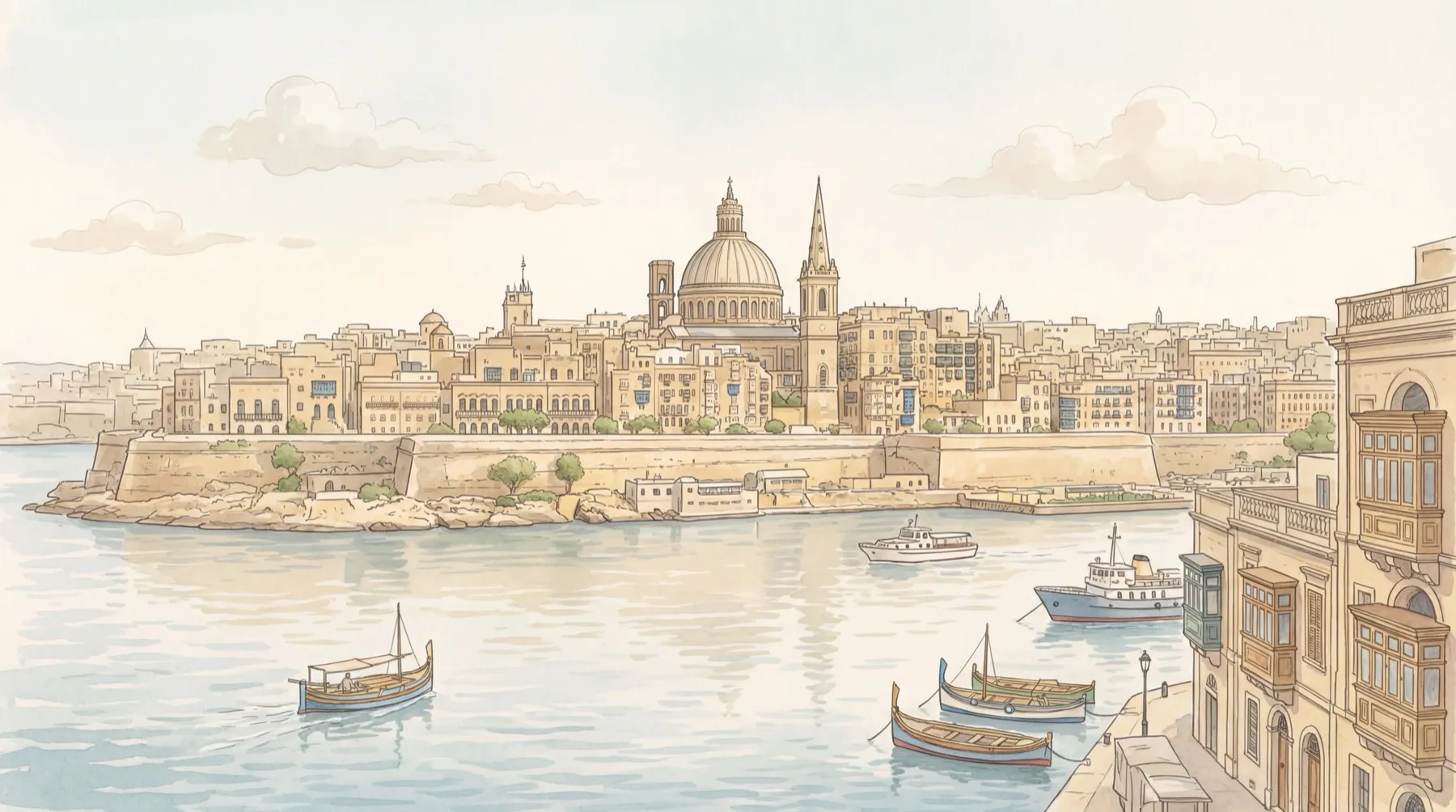
Valletta
🇲🇹 Malta
Things to see Tips for Valletta
Must-visit landmarks, hidden gems, and sightseeing
Upper Barrakka Gardens provides Valletta's most spectacular sunset viewpoint, overlooking Grand Harbour and the historic Three Cities across the water. The gardens occupy the site of former Italian auberge fortifications and remain free to access year-round. The famous Saluting Battery ceremony occurs daily at noon and 4pm if you want to catch the cannon firing tradition.
Arrive 45 minutes before sunset to secure prime positioning along the limestone balustrades — Weekends see cruise ship crowds arrive en masse around golden hour. Access the gardens via the Upper Barrakka Lift (€1 each way, runs every 15 minutes) from Grand Harbour level, or take the stepped approach from Republic Street through the city center. The lift saves significant walking but stairs provide better photo opportunities of the fortification walls.
For photography, position yourself at the southern end arches which perfectly frame the Three Cities' honey-colored limestone buildings. The late afternoon light transforms the harbor into molten gold, particularly beautiful during Malta's clear winter months (December-March). Use the historic cannons as foreground elements for dramatic compositions.
Avoid Saturday afternoons when Mediterranean cruise ships dock simultaneously — The viewing areas become uncomfortably crowded. Early morning visits (7-9am) offer identical harbor views with peaceful solitude and excellent lighting for photographing the fortified cities.
Essential Context: St. John's Co-Cathedral houses two original Caravaggio paintings including 'The Beheading of Saint John the Baptist' — The only signed work by the master. Located at Triq San Gwann, this 16th-century baroque cathedral serves as Malta's most significant cultural attraction, comparable to viewing Michelangelo's Sistine Chapel or da Vinci's Last Supper in Milan.
Strategic Timing: Book tickets online at stjohnscocathedral.com for €15 adults (€10 students/seniors). Morning slots between 9:30-11am offer optimal lighting for artwork viewing and smaller crowds. Avoid 11am-2pm when cruise ships dock — The cathedral can become uncomfortably packed, diminishing the experience significantly.
Hidden Details Most Visitors Miss: The floor consists entirely of marble tombstones commemorating 375 Knights of Malta, each intricately inlaid with coat of arms and personal symbols. The audio guide (€2.50 additional) reveals stories behind individual knights' graves and explains the baroque ceiling frescoes by Mattia Preti. Side chapels dedicated to different European 'langues' (languages/nationalities) showcase distinct artistic styles.
Practical Logistics: Allow 90-120 minutes for thorough exploration. Entry includes access to the oratory housing both Caravaggios and the cathedral museum. Photography permitted without flash. Similar to visiting St. Mark's Basilica in Venice — Advance planning prevents disappointment during peak season.
 passportpages
Valletta has the most incredible street art and architectural details hiding in plain sight but you actually have to look up from your phone to spot them think ornate geometric paving stones ancient mosaic inlays weathered limestone window frames with baroque carvings colorful traditional maltese balconies and doors painted in every shade imaginable
The real treasures are tucked away in the narrow side streets and quiet alleys branching off republic street dont just follow the tourist crowds wandering down towards the grand harbour instead duck into passages like old mint street or south street where youll find stunning doorway details that date back centuries
This is honestly my favorite type of sightseeing because theres no admission fees no opening hours to worry about and no crowds blocking your view just pure lazy afternoon exploration perfect for when youre too tired for another formal museum but still want to discover cool stuff
Peek into doorways courtyards and residential staircases most locals dont mind tourists admiring the architecture and youll spot details like original maltese door knockers hand painted house numbers and tiny shrine niches that everyone else walks right past (which is basically my entire travel strategy anyway wandering aimlessly and stumbling onto the best discoveries)
The National Museum of Fine Arts is completely overlooked by tourists but it's free entry and has a solid collection of Maltese and European art. Located in South Street, easy walking distance from the main attractions.
They have rotating exhibitions and some interesting local contemporary work alongside the historical pieces. Perfect rainy day activity or when you need a break from the crowds at St. John's Co-Cathedral.
Student discounts available for special exhibitions when they charge entry fees. The building itself is worth seeing - beautiful 18th century architecture.
 artwalkamy
The fortifications around Valletta offer amazing walking with harbor and countryside views. Most tourists stick to Upper Barrakka Gardens but you can walk much further along the walls.
The Spur trail starts near the gardens and takes you around the southern fortifications. About 2km total with several viewpoints looking across to the Three Cities and out to sea. Minimal elevation change despite being on the walls.
Bring water and sun protection - very little shade along the route. Early morning or late afternoon timing is best for both light and temperature. Free activity with arguably better views than any paid attraction.
 coastalhike
Casa Rocca Piccola offers something genuinely unique in Valletta - it's a 16th-century palace where the 9th Marquis and Marchioness de Piro still live and personally offer tours of their family home. Located at 74 Republic Street, it's one of the few working aristocratic residences open to visitors in Europe, though unlike the street's overpriced wine bars and restaurants, this cultural attraction delivers exceptional value.
We took the guided tour (€9 adults, €5 children) which covers the main state rooms, private family gardens, and the original WWII air raid shelter used during the siege of Malta. The Marquis himself sometimes leads tours and shares fascinating family stories spanning 450 years of Maltese history. It's incredibly personal compared to typical museum experiences and worlds apart from Republic Street's commercial tourist traps.
The palace showcases how Maltese nobility lived and adapted through different periods - from Knights of Malta rule through British colonial times to modern independence. We found the private chapel particularly beautiful, and the gardens offer a peaceful escape from Republic Street's touristy atmosphere.
Self-guided tours are available if you prefer exploring at your own pace, though we highly recommend the guided option for the personal anecdotes. Open Monday-Saturday 10am-5pm, with the last tour at 4:30pm. The afternoon light in the gardens around 3pm is particularly lovely for photos.
About Valletta
Malta's fortified capital, built by Knights of St. John in the 16th century. St. John's Co-Cathedral and Upper Barrakka Gardens showcase this UNESCO World Heritage city's baroque splendor.
Destination Stats
Know something locals know? Share your insider tip.
+ Share a Tip