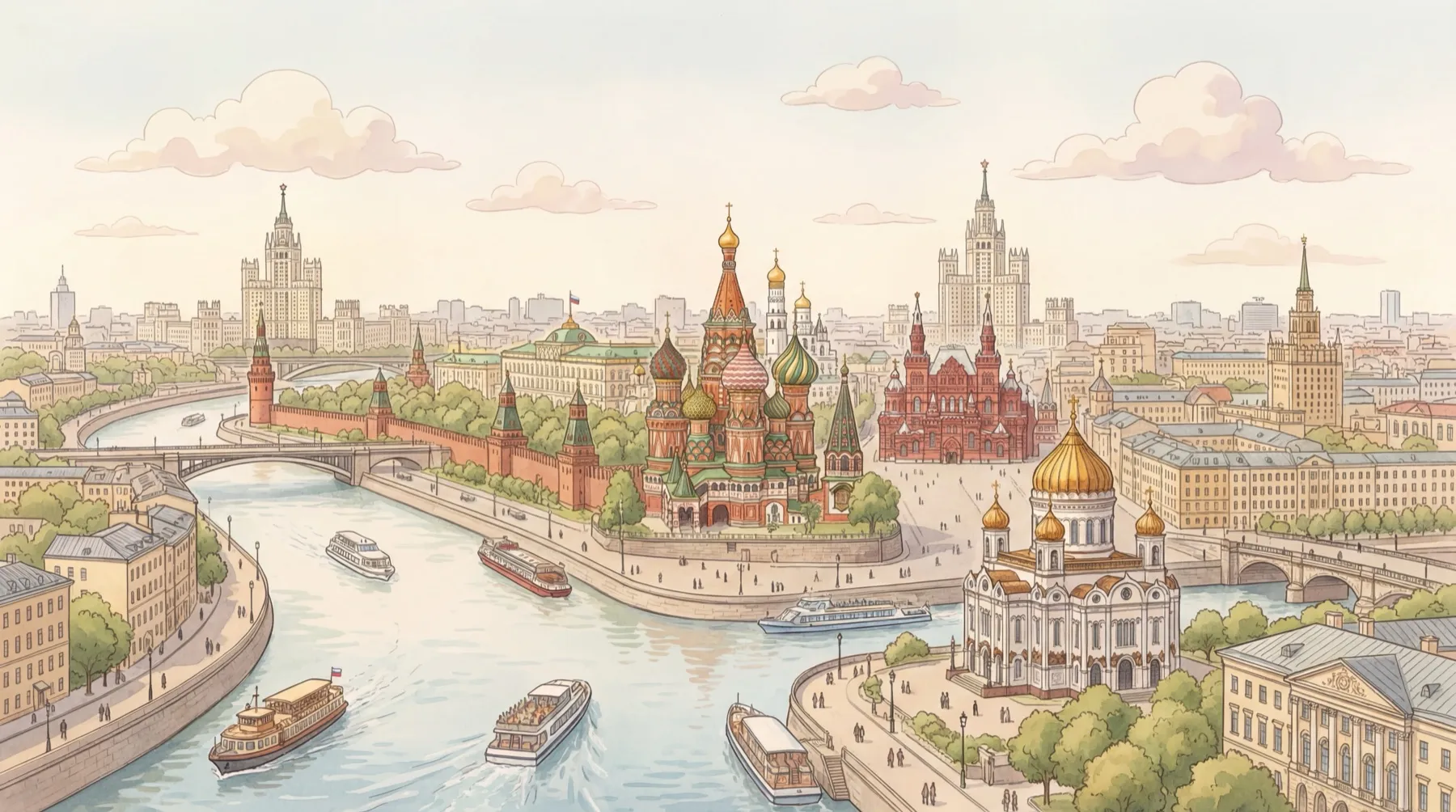
Moscow
🇷🇺 Russia
Travel tips for Moscow
28 tips from 27 contributors
Payment Systems That Actually Work - Skip the tourist confusion and get a Troika card immediately at any metro station (look for the Тройка signs). Sure, you can pay 90 RUB per single ride, but load cash and it drops to 63 RUB. The real hack: 90-minute transfer tickets (94 RUB) work across metro, buses, trams, and the Moscow Central Circle - basically the entire city transport network. Daily unlimited passes cost 365 RUB and break even after 6 rides, perfect for serious exploration days.
Navigation Like a Pro - Download the official Moscow Metro app before you even land - it works completely offline and shows real-time arrivals in English. For complex transfers involving multiple lines, Yandex Maps beats Google Maps every time. Station signs are bilingual, but transfer corridors (especially the nightmare that is Kitay-Gorod interchange) are poorly marked. Trust your app religiously or you'll end up wandering underground tunnels like a lost mole.
Rush Hour Survival Strategy - Peak hours 7-9am and 5-7pm turn the metro into a sardine can, especially the brown Circle Line 5. Travel between 10am-4pm for actual breathing room and personal space. Trains arrive every 90 seconds during peak times, 2-3 minutes off-peak - this system moves 9 million people daily, so it's genuinely efficient once you crack the code.
Payment Reality Check - International cards stopped working at turnstiles after 2022 sanctions. Russian bank cards with SberPay or Tinkoff still work contactless. Stick to cash loading your Troika card - every station has machines with English interfaces.
 coastalhike
Red Square cocktail bars? Tourist tax central. 800 RUB for a basic Moscow Mule that tastes like disappointment.
Propaganda. Turgenevskaya metro, exit 4. Tiny basement. Techno til dawn, Russian indie rock, bartenders who actually know what they're doing. Cash only. Strong drinks. Open til 6am weekends. Gets packed after 1am but worth the squeeze.
Summer boat bars. Kropotkinskaya bridge area. May-September only. Half the price of Ritz Carlton rooftop nonsense. Actually fun people, not investment bankers on expense accounts.
Chistye Prudy area. Real scene. Basement bars, warehouse spaces in Red October district. Warning: Red October got trendy. Try Solyanka district instead. Grittier. Better cocktails. Less Instagram poses.
 jessnight
Honestly skip the main GUM cafes completely. Coffee costs 500 RUB, basic blini 800 RUB, quality screams tourist trap. The secret? Stolovaya 57 in GUM's basement level. Entrance at Vasilevsky Spusk 1, open 10am-10pm daily.
Their pelmeni costs 300 RUB and actually tastes like proper Russian comfort food, not the sanitized tourist version. Full meals 600-800 RUB. This cafeteria-style spot is where GUM employees eat lunch - always a good sign. The beef stroganoff technique is spot-on, borsch has that deep flavor you can't fake.
Pro tip: avoid any restaurant within direct eyeline of Red Square. Walk literally 10 minutes toward Tretyakov Gallery area and prices drop 50%. Most local spots near the gallery are cash-only but worth hunting down. The neighborhood has that authentic Moscow energy without the Red Square markup.
Trust me on this - I've spent weeks in this city testing every tourist trap so you don't have to.
 zoeberry
Route Specifications and Costs - Sheremetyevo (SVO): 550 RUB from Belorusskaya station, 35 minutes direct. Domodedovo: 500 RUB from Paveletskaya station, 40 minutes. Vnukovo: 500 RUB from Kievskaya station, 35 minutes. All three routes connect seamlessly to the metro system at their respective stations, making onward travel simple.
Schedule and Frequency - Trains operate every 30 minutes from 6:00am to midnight daily. Purchase tickets at automated machines (English interface available) or at ticket counters. Express trains make no intermediate stops, ensuring consistent timing regardless of Moscow traffic conditions.
Cost Analysis - Aeroexpress costs approximately $6-7 USD total (including metro connection to city center) versus $30+ for taxis during normal hours, $50+ during peak traffic or late night. Even with luggage management, the savings are substantial - typically 80% less than taxi alternatives.
Practical Considerations - Services end at midnight, so late arrivals require taxi alternatives. Moderate walking required with heavy luggage, though all stations have elevators and clear signage. For most travelers, especially those arriving during daytime hours, the time savings and cost efficiency make this the optimal airport transfer choice.
Moscow airport taxi scams at Sheremetyevo, Domodedovo, and Vnukovo (how to avoid getting ripped off)
Look, I've spent a month in Moscow and seen this scam destroy travelers' first impressions daily. Unlicensed drivers swarm all three airports offering rides for 5000+ RUB when legitimate transport costs 2000 RUB maximum to city center. These guys target tired tourists in arrivals, speaking just enough English to seem helpful.
Here's what actually works: Yandex Go app. Download before landing. Costs around 1500 RUB to city center, tracks your driver, gives you a license plate. No negotiations, no cash demanded upfront, no getting abandoned halfway. The app works in English and shows exact pickup points at each airport.
If apps fail or you prefer trains, Aeroexpress connects all airports to metro system. Foolproof backup plan. But seriously - those aggressive guys approaching in arrivals? They're counting on your jet lag and confusion. Don't engage, don't negotiate, just walk to official taxi stands or use the app.
I learned this the expensive way my first week here. Now I watch tourists get scammed and want to shake them awake. Don't be that person paying 6000 RUB for a sketchy ride that ends after five minutes.
Late may is basically moscow's sweet spot if you're allergic to 5am wake-up calls and tourist stampedes. Consistent 15-20c temps, crystal clear skies, and the winter mud has finally dried up but summer's tourist invasion hasn't started yet. You can actually sleep until 9am and still have a full day.
June through august hits brutal 30c+ heat and everywhere becomes a human sardine can. September's nice but you're gambling with random downpours that'll ruin your outdoor plans. May gives you those glorious white nights (18+ hours of daylight) without needing to set an alarm for sunrise to beat the crowds because... There basically aren't any crowds yet.
Bonus perks: outdoor festival season kicks off in may with gorky park hosting free concerts almost daily, street art installations pop up around chistye prudy and solyanka districts, and hotel prices haven't hit summer robbery levels yet. You can actually get those clean instagram shots at red square without 500 people photobombing your selfie.
The lighting in may is honestly chef's kiss for photography - soft, even natural light that makes even the grittiest soviet architecture look magical. Plus cafe terraces open up but aren't packed yet, so you can actually snag a good table without planning your life around restaurant reservations.
Those Red Square vendors hawking 'authentic' matryoshkas for 3000 RUB? Pure tourist traps selling cheap factory imports from China. Real hand-carved dolls by actual Russian artisans cost 800-1500 RUB at Izmailovo Flea Market, and the quality difference is night and day - you can literally see the individual chisel marks.
Take the Sokolnicheskaya red line to Partizanskaya station, use exit #4 toward Izmailovskoe Shosse, then it's exactly 450 meters east along the main road. The market operates 10am-8pm Tuesday through Sunday, but weekend mornings (9-11am) give you first pick of the best pieces before tour groups arrive. It's located within the wooden Kremlin complex - yes, it's a 1990s replica, but built using authentic 17th-century Russian carpentry techniques with proper mortise-and-tenon joints.
Bargaining isn't just expected, it's practically mandatory. Start at 60% of asking price for anything over 1000 RUB, and don't be afraid to walk away - they'll call you back. The real treasures are in rows 15-22 where local babushkas sell genuine Soviet memorabilia: military medals (check for authenticity marks), hand-painted Palekh lacquer boxes, and vintage Zenit cameras that actually work.
Pro tip from a local: avoid the front entrance stalls completely. They're designed for tourists. The serious collectors and artisans set up in the back sections near the wooden cathedral where rent is cheaper and the atmosphere is more authentic. Look for vendors who speak minimal English - they're usually selling the real deal.
 gabby_sp
Danilovsky Market near Tulskaya metro station ranks as Moscow's premier working food market, but the front entrance is a tourist pricing trap. Front-facing vendors charge 400 RUB for basic blini while locals pay 200 RUB for identical items in the rear halls. It's the classic two-tier system designed to separate tourists from their rubles.
Navigate directly to the back sections via the Kozhevnicheskaya Street entrance where prices are clearly posted and non-negotiable - much fairer system. Market operates 8am-9pm daily, but hit it weekday afternoons (2-4pm) for optimal freshness and manageable crowds. Weekends turn into absolute mayhem unless you enjoy being trampled by babushkas wielding shopping carts like weapons.
This is Moscow's most authentic working market where actual families do their weekly shopping, not a sanitized tourist attraction. The pickle vendors in hall C let you taste every variety before buying and their product knowledge is encyclopedic - they'll recommend specific cucumber types based on your planned dishes and storage timeline.
Pro market hunting tips: bring cash (cards accepted but vendors prefer rubles), arrive with empty stomach for sampling, and pack reusable bags because plastic costs extra. The honey vendors in section D offer varieties you won't find anywhere else in the city - try the rare buckwheat honey that locals swear by for winter immunity. Conversations with vendors become half the experience if you speak even basic Russian - they love sharing cooking tips and family recipes.
 marketsunday
Novodevichy Convent represents the absolute pinnacle of Moscow Baroque architecture, yet it's criminally overshadowed by Red Square's tourist magnetism. The complex features pristine white limestone walls crowned with crimson onion domes, anchored by a spectacular bell tower that architectural historians consider the finest example of 17th-century Russian ecclesiastical design. The proportional harmony between the central cathedral and surrounding structures demonstrates masterful urban planning principles rarely seen in medieval Russian architecture.
Access via Sportivnaya metro station (Sokolnicheskaya red line), exit toward Luzhnetskaya Embankment, then 400 meters northwest along Novodevichy Drive toward the Moscow River bend. Entry costs 300 RUB for monastery grounds plus 200 RUB for museum access (worthwhile for the icon collection). Operating hours: 9am-5pm Monday-Sunday, closed first Monday of each month.
The adjacent Novodevichy Cemetery functions as Moscow's equivalent to Père Lachaise - Chekhov, Gogol, Stanislavski, and Prokofiev rest here among elaborate monuments showcasing Soviet-era sculptural artistry. Unlike tourist-heavy sites, you'll encounter genuine scholarly atmosphere and local pilgrims paying respects.
Optimal photography timing: late afternoon (4-6pm) when western light illuminates the white limestone facades and creates dramatic contrast with the red domes. The monastery reflects perfectly in the adjacent pond from the southeast viewing angle. The interplay of horizontal monastery lines against vertical bell tower creates exceptional compositional opportunities for architectural photography.
 siennna
Park Access & Navigation: VDNKh (Exhibition of Achievements of National Economy) offers free entry with wheelchair-accessible paved pathways throughout the 600-hectare complex. Take orange Sokolskaya metro line to VDNKh station, use north exit for shortest walk to main entrance. Most pavilions feature step-free access, though individual exhibits range 300-800 RUB depending on which Soviet-era building you explore.
Food Strategy - Critical Intel: On-site restaurants charge tourist prices (1,500+ RUB for basic meals that locals pay 400-600 RUB elsewhere). Walk 5 minutes north on Prospect Mira past the park gates - multiple affordable cafeterias and Georgian restaurants serve identical food at half the price. Stolovaya #1 at Prospect Mira 123 offers traditional Russian meals for 350-500 RUB with accessible seating.
Route Planning: Focus on outdoor Soviet architecture - the golden fountain complex and Space Pavilion offer the most reward for minimal walking effort. The main fountain area provides multiple rest spots and level surfaces ideal for mobility aids. Avoid cobblestone sections near the main entrance if using wheels.
 denalidave
Moscow preserves authentic Russian tea culture through several exquisite tea houses operating in magnificent 19th-century merchant buildings with period-appropriate interiors featuring hand-painted tiles, crystal chandeliers, and ornate woodwork. These establishments maintain traditional samovar service that's been refined over centuries of Russian hospitality traditions.
Expect complete ceremonial tea service featuring gleaming brass samovars, delicate glass holders (podstakanniks), traditional pryaniki spice cookies, and homemade varenya fruit preserves served alongside an impressive selection of Russian teas including rare varieties from the Caucasus region. The experience costs approximately 800-1200 RUB per person for full service, representing genuine cultural immersion rather than tourist theater.
Prime locations include the elegant tea salon near Lubyanka metro (5-minute walk toward Nikolskaya Street) and the historic merchant house venue near Kitay-Gorod station (exit toward Varvarka Street). Operating hours typically 10am-10pm daily with last seating at 9pm. Staff demonstrate genuine expertise in tea preparation and can recommend specific varieties based on your palate preferences - expect conversations about terroir, oxidation levels, and proper brewing temperatures.
The tea selections span Russian classics like Ivan Chai (fireweed tea) and Caucasian mountain blends rarely found outside Russia. Service includes proper instruction on traditional Russian tea etiquette: dissolving varenya in hot tea, timing your sips with conversations, and appreciating the ceremonial aspects that transform simple tea drinking into meditative cultural practice. Far superior to ubiquitous chain coffee shops that dominate modern Moscow.
 teahunter
Moscow's Georgian food scene destroys what you'll find in actual Georgia because of the massive established Georgian community here. Skip the khachapuri tourist trap - every place serves decent cheese bread. The real test is khinkali, Georgian soup dumplings that make xiaolongbao look like amateur hour.
Technique is everything: Bite small hole at the top, slurp the scalding broth first, then devour the dumpling. Most tourists bite from the side and lose all the soup like absolute beginners. Order 6-8 pieces minimum - they're addictive and the broth hits different when done right.
What to actually order: Mtsvadi (Georgian shashlik) with proper char, and if you spot chakapuli on the menu, order immediately - most places can't nail this herb-heavy stew. Pair with Georgian wine: saperavi (red) or rkatsiteli (white) varieties that put French wine to shame.
Restaurant reality: Khachapuri & Wine on Maroseyka Street serves the most authentic versions without the tourist markup. Expect 800-1200 RUB for a proper feast that'll wreck your spice tolerance for days.
 spicyway
Scalpers outside Bolshoi peddle fake tickets and overpriced garbage to tourists who don't know better. Don't be that person standing outside with worthless paper while the orchestra tunes up inside.
Book legitimate tickets months ahead through bolshoi.ru official website. Ticket prices vary wildly: 2,000-15,000 RUB depending on seats and whether it's Giselle or some modern piece nobody cares about. For last-minute options, hit the box office 2 hours before curtain - they sometimes release held seats.
Metro navigation: Teatralnaya station, any exit works. The theater's impossible to miss - it's the giant neoclassical building with columns that every Moscow postcard features.
Insider move: Standing room tickets (1,200-2,000 RUB) offer surprisingly decent sight lines from the back. Three hours on your feet, but worth it if you can handle standing through an entire ballet. Plus you're experiencing Bolshoi the way broke music students have for centuries.
Gorky Park Loop (고리키 공원): Multiple interconnected paths from Gorky Park entrance connect to Luzhnetskaya embankment for scenic 7-9km river routes. Start early (7-8am) before Korean tour groups and food bloggers crowd the paths after 6pm. Exit Sokolnicheskaya metro at Park Kultury, walk 3 minutes to main entrance.
Sokolniki Park Discovery: Take red line to Sokolniki station (exit #4) for Moscow's most authentic forest running experience. Multiple trail options wind through actual birch and pine forests - feels more like running in Jirisan National Park than central Moscow. Trail markings could be clearer, but the natural setting beats manicured city parks. Perfect for pre-meal runs before hitting nearby Korean restaurants.
Air Quality Reality Check: Skip main boulevards like Tverskaya completely - narrow sidewalks plus Russian traffic equals terrible air quality that'll ruin your post-run appetite. River embankments and park loops offer clean air essential for proper taste bud recovery before exploring Moscow's incredible Korean food scene in nearby neighborhoods.
Pro tip: Izmaylovsky Park (blue line to Izmaylovskaya) offers quieter trails with fewer selfie-dodging situations than touristy Gorky Park, especially weekend mornings.
 kimchiquest
One of europes largest mosques on olimpiysky prospekt. Originally built in 1904, demolished in 2011, then reconstructed and reopened in 2015 with traditional islamic geometric patterns mixed with modern russian elements. Really stunning
Free to visit but dress modestly - long pants covered shoulders women need head covering. Remove shoes before prayer areas. Visit between prayers for best experience avoid Friday afternoon unless participating
Metro to prospekt mira then short walk. Minaret views over the city worth seeing even from outside
Jagannath near Kuznetsky Most metro (Line 7) is fully vegetarian. Their thali plate costs 800 RUB and actually fills you up unlike most moscow portions
Georgian restaurants do excellent vegan khachapuri without cheese and vegetable khinkali. Say 'bez myasa bez moloka' - staff get it. Prices around 400-600 RUB per dish
Azbuka Vkusa and VkusVill chains clearly label vegan products with dedicated plant-based sections. Way better selection than most European cities and staff actually know what vegan means
Spent a month watching tour groups get herded through the Kremlin like cargo containers being loaded onto ferries. Overpriced, rushed, and you miss half the details while following some guide's umbrella through crowds.
Solo navigation strategy: Book tickets online in advance through the official Kremlin website - essential for Armory Chamber access. Basic territory admission runs 1,100 RUB, Armory Chamber separate ticket 1,400 RUB but absolutely worth it for the Faberge eggs and imperial carriages that tour groups rush past in 10 minutes.
Timing like a harbor schedule: Early morning (10am opening) or late afternoon (after 3pm) avoid the worst tourist ferry loads. Audio guides available on-site in multiple languages - you control the pace instead of being rushed past the Diamond Fund like you're late for the last ferry departure.
Economics: Group tours charge 3,000+ RUB for what you accomplish solo with better results and actual time to absorb the history. Plus you can revisit favorite spots instead of being shuttled to the next stop on someone else's schedule.
Train terminals like Yaroslavsky overwhelm fast. Skip platform madness - take metro Line 5 to Biblioteka imeni Lenina station. Exit toward Russian State Library reading room. Show passport at Mokhovaya entrance. Dead silent and free wifi
Patriarch Ponds (Patriarshiye Prudy metro Line 1) has benches behind main walking path. Where Bulgakov wrote Master and Margarita scenes. Literary pilgrimage spot that actually stays quiet unlike Gorky Park tourist circus
Orthodox churches like Elokhovskiy Cathedral near Baumanskaya station welcome silent visitors. Follow dress codes strictly - women cover heads men no shorts. Free peaceful refuge when Red Square makes you scream
 tuk2go
Better than those hop-on-hop-off tourist rip-offs honestly. 58 rubles with troika card and you see everything - christ the savior cathedral kremlin red square the works
Starts at arbatskaya metro runs every 15 mins during the day. Full loop takes about 90 minutes but hop off wherever and catch the next one. Sit on right side going clockwise for best kremlin views around the 8km mark
Moscow River cruises run May through September with city views you can't get from street level. Basic 1-hour sightseeing cruise costs 800 RUB from Gorky Park pier.
Best perspectives: Kremlin walls from water side and modern Moscow City skyscrapers. Skip expensive dinner cruises - overpriced mediocre food. Basic cruise gives you all the views for fraction of the cost.
About Moscow
Russia's capital and largest city, showcasing centuries of imperial and Soviet history. Red Square and the Kremlin stand as symbols of Russian power and architectural grandeur.
Destination Stats
Know something locals know? Share your insider tip.
+ Share a Tip