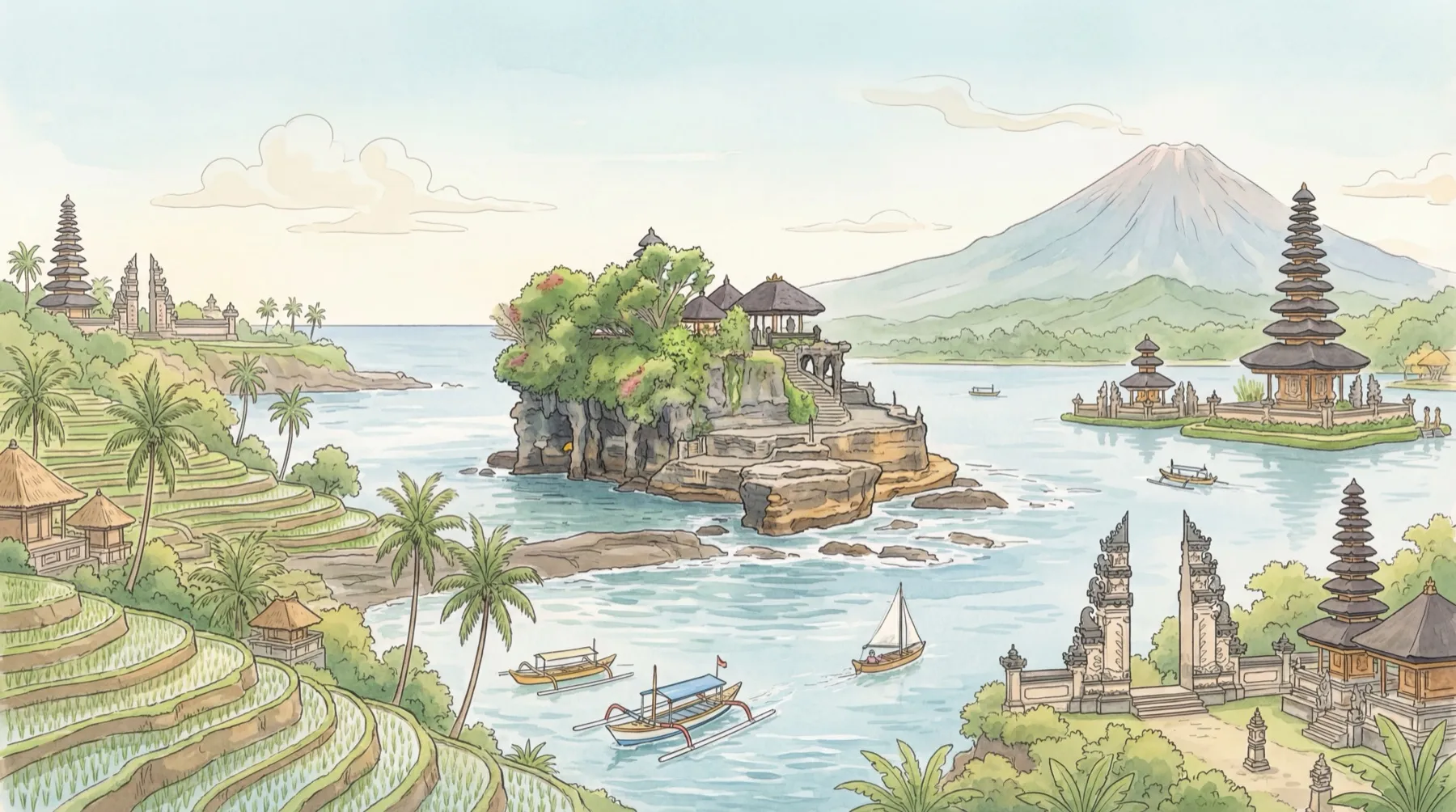
Bali
🇮🇩 Indonesia
Culture Tips for Bali
Local customs, traditions, museums, and art
Uluwatu Temple etiquette guide - respecting Bali's clifftop temple while avoiding aggressive monkeys
Uluwatu Temple (Pura Luhur Uluwatu) is one of Bali's six key spiritual pillars and an active place of worship, not merely a sunset Instagram backdrop. Entry costs 50,000 IDR including mandatory sarong rental, with strict dress codes rigorously enforced - shoulders and knees must be covered, and proper temple attire is required even over long pants. The temple staff take this seriously as they should; this is someone's sacred space deserving of reverence.
Arrive around 4:00pm to avoid the crush of tour buses while still catching magnificent light filtering through the temple's ancient stones. The timing also means the notorious long-tailed macaques are less aggressive, preferring to rest in shaded areas during afternoon heat rather than harassing visitors. These monkeys are legendary thieves - wear a secure hat, zip all bags completely, remove dangling jewelry, and keep phones firmly gripped. They're incredibly smart and wait for you to get distracted by the view before striking with lightning speed.
The famous Kecak fire dance performance runs from 7:00-9:00pm for 100,000 IDR - book tickets when you arrive if staying for sunset, as performances often sell out. The combination of ancient chanting, firelight dancing across temple walls, and waves crashing 70 meters below creates an unforgettable spiritual experience. Remember that hundreds of Balinese families consider this their ancestral temple; maintain quiet voices, dress respectfully, and participate mindfully in this living religious tradition.
Navigation tip: follow signs to 'Pura Uluwatu' from the main Uluwatu road. The temple sits dramatically on limestone cliffs at the southwestern tip of the Bukit Peninsula, about 25km south of central Denpasar. Parking costs 5,000 IDR for motorbikes, 10,000 IDR for cars.
Pura Besakih sits on Mount Agung slopes as Bali's most sacred Hindu complex. Entry 60k IDR plus 5k parking. Over 20 separate temples so plan 2-3 hours minimum.
Dress code strictly enforced - sarong and sash required (rent 10k at entrance). Women during menstruation cannot enter. Remove shoes before temple buildings, don't point feet toward altars, keep voices low during prayers.
Best visited 8-9am before tour buses. Morning light hitting Mount Agung through temple gates is spectacular.
Tirta Empul's holy springs come alive during morning prayers around 6-7am when locals perform melukat (spiritual cleansing) before work. Entry 50,000 IDR includes sarong rental - you'll witness actual purification rituals instead of Instagram photo ops.
The 30 spouting fountains represent different Hindu gods. Watch how Balinese move through each spout methodically - this isn't tourist theater but genuine spiritual practice their families have done for centuries. Morning incense and flower petal offerings create atmosphere impossible during crowded daytime visits.
Pura Ulun Danu Beratan at sunrise shows similar authentic temple life - locals making daily canang sari offerings while mist rises from Lake Beratan. The temple's dedication to Devi Danu (water goddess) feels profound when witnessed during actual worship rather than sunset tourist sessions.
About Bali
Indonesia's Hindu island province, renowned for rice terraces and spiritual culture. Ubud's temples and Seminyak's beaches offer both cultural immersion and tropical relaxation.
Destination Stats
Know something locals know? Share your insider tip.
+ Share a Tip