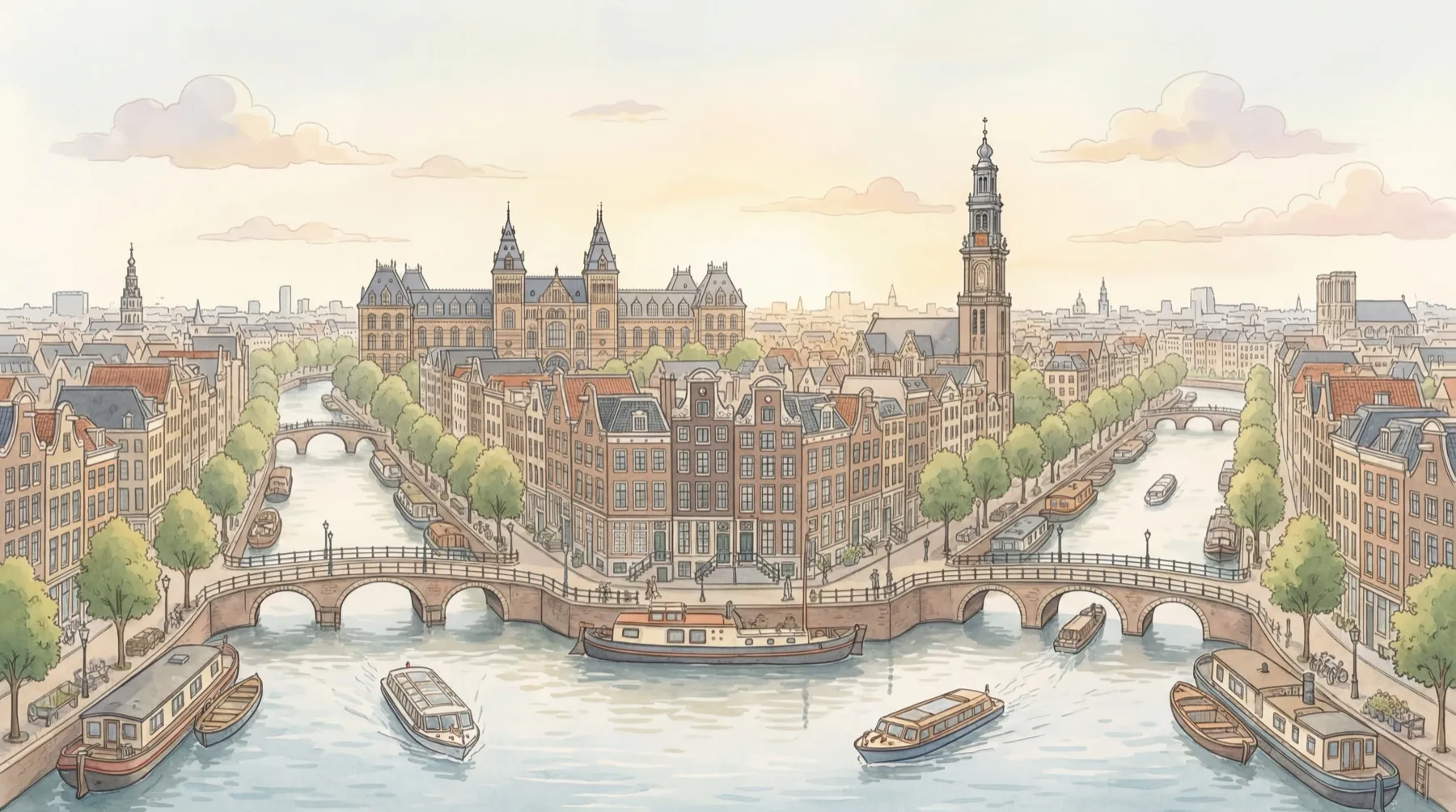
Amsterdam
🇳🇱 Netherlands
Things to see Tips for Amsterdam
Must-visit landmarks, hidden gems, and sightseeing
The Jordaan feels like stepping into the pages of a Dutch Golden Age painting, particularly in those hushed morning hours when the city hasn't quite stirred. Between 7-9am, you'll have Amsterdam's most photogenic canals virtually to yourself — A rare privilege in a city that welcomes 20 million visitors annually.
Begin your literary pilgrimage at Brouwersgracht, the canal that locals whisper is Amsterdam's most beautiful street. The morning light catches the 17th-century gables just so, casting reflections that ripple like watercolor across the water. Walk south along Prinsengracht — Where Anne Frank once gazed from her hidden window — Then meander to the quieter Lijnbaangracht via Elandsgracht.
Find a bench along Egelantiersgracht or Bloemgracht (the 'flower canal') and simply listen. You'll hear the gentle lapping of water against houseboats, the distant bell of a cyclist, the soft murmur of residents beginning their day. It's Amsterdam as the poets knew it.
Take tram 13 or 17 to Westermarkt (€3.20 with GVB day pass), then let your feet guide you through these narrow streets. Allow 2-3 hours for proper wandering — This isn't a neighborhood to rush through, but to savor like a well-worn novel.
The Nine Streets — 9 Straatjes in Dutch — Nestle between Amsterdam's three main canals like a hidden tea garden. These narrow connecting streets, dating from the 1600s, house the city's most charming boutiques in original canal houses with tilted facades and wooden beams. It's infinitely more peaceful than the chaotic Kalverstraat shopping strips.
For proper tea culture, seek out Toko Dun Yong at Staalstraat 4 — A tiny tea merchant selling loose-leaf oolongs and jasmines that locals have treasured since 1950. The owner will steep you samples of aged pu-erh that transport you straight to the mountains of Yunnan. For a full afternoon tea service, Het Grachtenhuis museum café at Herengracht 386 serves delicate finger sandwiches and Dutch honey cakes in their 17th-century canal house.
Between Berenstraat and Runstraat, you'll find Museum of the Canals (€15 entry) and Huis Marseille photography museum (€7) — Both housed in perfectly preserved Golden Age mansions. The afternoon light filtering through tall windows onto herringbone floors is pure magic around 3-4pm.
Access via tram 2, 11, or 12 to Spui, then wander north into the grid of streets. Allow a full afternoon for proper browsing — These canal house shops reward slow exploration, much like savoring a perfectly brewed second flush Darjeeling.
 teahunter
When Amsterdam sheds its daytime tourist skin and puts on its evening velvet, Magere Brug over the Amstel River becomes pure nocturnal poetry. This slender drawbridge — Locals call it Skinny Bridge — Transforms at dusk when its 1,200 light bulbs flicker on like stars reflected in dark water.
Arrive around 8:30pm in summer (7pm in winter) and claim one of the benches along Amstel's eastern bank near Keizersgracht. The magic happens in that liminal hour when day surrenders to night — The bridge's white wooden frame glows against deepening blue sky while 17th-century canal houses become golden silhouettes. Tour boats glide beneath the bridge every few minutes, their lights creating liquid trails in the water.
This is Amsterdam's most Instagrammed bridge for good reason — Those perfect proportions and evening reflections create shots that make people stop scrolling. But beyond the photos, it's genuinely peaceful here after dark. The usual daytime chaos of Rembrandtplein feels miles away, replaced by the gentle lapping of water and distant bicycle bells echoing off canal walls.
Pro tip from someone who knows Amsterdam's night rhythms: stay until 10pm when the bridge lights create their most dramatic reflection patterns. The late hour means you'll share this iconic view with locals heading home from dinner rather than selfie stick armies. Pure Amsterdam magic, exactly when the city shows its most seductive face.
 nightowl_k
Half the gawkers milling around Dam Square taking selfies have absolutely no clue that the Royal Palace behind them is actually worth visiting inside. Sure, the exterior looks suitably impressive for your Instagram stories, but the interior will knock you sideways — We're talking Empire State Hall with chandeliers the size of small cars, marble sculptures that cost more than your house, and actual functioning throne rooms where Dutch royalty still holds ceremonies.
Here's what the guidebooks won't tell you: buying tickets at the door is for suckers. The queue moves like continental drift, especially April through September when every tour bus in Europe dumps passengers here. Smart visitors buy online at paleisamsterdam.nl for €12.50 and march straight past the miserable masses waiting in line. Takes 90 minutes to see properly if you're not rushing like a maniac.
The palace operates Tuesday-Sunday 10am-5pm (closed Mondays because apparently even royal buildings need therapy). Audio guides cost extra €5 but they're actually decent — None of that boring monotone drivel you get at most tourist traps. The Citizens' Hall ceiling alone justifies the entrance fee, assuming you appreciate 17th-century craftsmanship and aren't just there for TikTok content.
Fair warning about Dam Square itself: those pigeons are basically flying plague rats with wings, and they're more aggressive than Amsterdam cyclists. Street vendors sell overpriced bird feed for €3 — Don't buy it unless you enjoy being dive-bombed by feathered terrorists. Also, those "historic" street performers are about as authentic as a plastic tulip, but tourists throw money at them anyway.
Behind the chaotic shopping frenzy of Kalverstraat lies Amsterdam's most peaceful secret: the Begijnhof, a perfectly preserved medieval courtyard where Catholic lay sisters once lived in quiet devotion. This 14th-century sanctuary feels like stepping through a portal — One moment you're dodging street performers and souvenir shops, the next you're surrounded by 700-year-old silence.
Enter through the narrow archway at Begijnensteeg (near Spui) or the equally discreet entrance at Gedempte Begijnensloot. Most tourists rush past these unmarked doorways, but once inside, you'll find cobblestones worn smooth by centuries of footsteps, original gabled houses from the 1400s, and Amsterdam's oldest wooden house (Het Houten Huis, dating to 1528). The hidden Catholic chapel still holds services — Look for the entrance marked 'Begijnhofkerk.'
The acoustic magic is extraordinary. Even when Spui Square buzzes with weekend markets just meters away, the Begijnhof maintains an almost cathedral-like hush. I've watched exhausted families collapse onto the central green with visible relief, finally finding space to breathe between museum marathons.
Visit between 9am-5pm daily (it's free), but respect the residents who still call these historic houses home. Early morning offers the deepest quiet, while late afternoon brings golden light filtering through the courtyard's ancient lime trees.
Oude Kerk is Amsterdam's oldest building and it's right in the middle of the Red Light District. They often host photography exhibitions like World Press Photo, which makes for a fascinating contrast with the surroundings.
Check if it's Open Tower Day when you can climb the bell tower for incredible views over the old city. The church is typically open 10am-6pm daily, though hours vary for events, and entry is around €10. It's a peaceful break from the chaos of the Red Light District.
Forget the tourist shops selling fake Dutch clogs. Waterlooplein has been a flea market since the 1880s and you can find actual vintage treasures if you dig around, though Albert Cuyp is the city's larger market.
Best finds are vintage leather jackets, old cameras, and genuine Delft pottery mixed in with the tourist junk. Haggling is expected and most vendors speak decent English. Open Monday to Saturday, best selection Saturday morning when fresh stock arrives.
The market is adjacent to the Jewish Cultural Quarter so combine it with a museum visit. Cash only and watch your belongings — Pickpockets work the crowds.
Everyone climbs the Westerkerk tower but Zuiderkerk is cheaper, less crowded, and has equally stunning views over the old city. This is the church where Rembrandt is buried and the tower climb is only €7.
The spiral staircase is narrow but manageable, and from the top you can see the entire historic center laid out below. The 17th century urban planning is incredible when viewed from above — You can really see how the canal ring was designed. Open Thursday to Saturday, tower tours at 2pm, 3pm, and 4pm. Book ahead in summer.
 siennna
The formal garden behind this canal house museum is one of Amsterdam's best-kept secrets. Most people rush through the house but the garden is where you want to spend time. Perfectly manicured hedges, old trees, and complete silence despite being in the middle of the city.
Entry is €15 but includes the house tour. Garden is open April through October. Best time is weekday mornings when you might have it completely to yourself. The coach house café serves excellent tea if you want to linger and enjoy the peaceful atmosphere.
 renobird
Most tourists miss this gorgeous 17th century church where Rembrandt painted and is now buried. The architecture is stunning Dutch Protestant style, all clean lines and light. Tower climbs available Monday and Thursday 2-4pm for €9.
Located on Zuiderkerkplein near Waterlooplein. Free entry to the church itself. Very peaceful atmosphere and the acoustics during evening prayer are incredible. Respectful dress required but not strict.
While Waterlooplein offers vintage treasures throughout the week, Wednesday morning is when serious collectors should visit. The weekend crowds mean picked-over stalls and inflated prices, but midweek is when dealers refresh their inventory with premium pieces.
Look for the stalls on the north side near the metro entrance — They have the best vintage clothing and accessories. I found a 1960s leather jacket there for €15 that would cost €150 in any vintage shop. The key is getting there right at 9am when they're still setting up.
Right in the middle of tourist chaos, there's this perfectly preserved medieval courtyard that most people walk past without noticing. Begijnhof is a 14th century beguinage where religious women lived - now it's a peaceful square surrounded by historic houses.
Enter through the wooden door on Spui (easy to miss) or Gedempte Begijnhof. It's free and open during daylight hours. There's also Amsterdam's oldest wooden house from 1420 and a hidden Catholic church. The contrast between the noise of Kalverstraat and this silent courtyard is incredible.
About Amsterdam
Netherlands' capital, famous for its 17th-century canal ring and liberal culture. The Anne Frank House and Rijksmuseum anchor a city built on tolerance and artistic heritage.
Destination Stats
Know something locals know? Share your insider tip.
+ Share a Tip