São Paulo
🇧🇷 Brazil
Things to see Tips for São Paulo
Must-visit landmarks, hidden gems, and sightseeing
The Main Loop: This park is absolutely massive — 158 hectares of pure green space in the middle of concrete jungle madness. The main perimeter loop clocks in at exactly 5.2km with minimal elevation change, perfectly maintained asphalt paths, and working water fountains every kilometer. It's the crown jewel of São Paulo running routes.
Best Times & Conditions: Sunday mornings are magical because nearby Avenida Paulista goes car-free from 7 AM-5 PM, creating this incredible peaceful bubble in the city. Optimal running window is 6:30-8:30 AM before crowds arrive and heat builds up. You'll pass three world-class museums, multiple lakes, and Oscar Niemeyer's stunning modernist architecture including the Ibirapuera Auditorium.
Route Highlights & Strategy: Start at Gate 10 (main entrance) and run clockwise. The Obelisk area at 2.6km makes a perfect halfway rest stop with shade and water. The section near MAM (Modern Art Museum) offers the best lake views and photo opportunities. If you're training for longer distances, connect to the 1.5km Sculpture Trail for extra mileage on softer dirt paths.
Logistics: Metro Linha Lilac to Moema station, then 12-minute walk to Gate 10 entrance (Avenida Pedro Álvares Cabral). Bike rental available at the gate for R$25/hour if your legs are shot. Bring your own water bottle — Fountains work but having your own supply is crucial for longer sessions. The park officially opens at 5 AM for early morning warriors like us.
 runroutes
The Mosteiro São Bento represents one of São Paulo's most remarkable examples of preserved colonial religious architecture, dating back to 1598 when the city was barely more than a mission settlement. Located at Largo de São Bento in Centro Histórico, this active Benedictine monastery houses some of the most exquisite hand-painted wooden ceilings and German-imported stained glass windows in Brazil.
Beyond the architectural significance, the monastery operates a unique bakery where the monks themselves prepare traditional Brazilian sweets and breads using recipes passed down through four centuries. The pão de mel (honey bread) and quindim are particularly exceptional, sold Tuesday through Saturday from 9am-5pm at modest prices (R$3-8 per item). These aren't tourist novelties — Local families have been buying from these same monks for generations.
The monastery's special monthly brunches, held on the second and last Sunday of each month, offer an extraordinary cultural experience where visiting chefs collaborate with the monastic community to create modern interpretations of historical recipes. Reservations are essential and open 30 days in advance via email (eventos@mosteiro.org.br) at R$85 per person. The experience includes access to normally restricted areas of the monastery.
When visiting, please observe appropriate dress codes: long pants for men, covered shoulders and knees for women, as this remains an active place of worship with daily prayer services. The monastery is directly accessible via São Bento station (Line 1 - Blue), using the Mosteiro exit. Morning visits (9-11am) offer the most peaceful experience when you can hear the monks' Gregorian chants echoing through the stone corridors.
We stumbled upon Casa Zalszupin during our third visit to São Paulo, and it instantly became our favorite architectural discovery in the city. This intimate house-museum, designed by Polish-Brazilian architect Jorge Zalszupin in 1960, showcases the golden age of Brazilian modernist residential design in a way that the larger museums simply can't match.
The house itself is a masterclass in tropical modernism — Low-slung concrete and glass that seamlessly integrates with the lush Atlantic Forest vegetation surrounding it. Inside, we found ourselves walking through perfectly preserved mid-century interiors filled with original L'Atelier furniture pieces that Zalszupin designed himself. The natural light filtering through the floor-to-ceiling windows creates these incredible geometric shadows that shift throughout the day.
What we loved most was having the space almost entirely to ourselves. Unlike the crowded Pinacoteca or MASP, you can actually spend time contemplating each room and understanding how São Paulo's elite lived during the city's modernist boom of the 1950s and 60s. The guided tours (R$15 per person) happen in Portuguese, but the architecture speaks for itself.
Located at Rua Barão de Jundiaí, 165 in the quiet Lapa neighborhood, it's easily accessible via Lapa station on Line 7 (Ruby). Check their website for current hours as they vary seasonally — Typically Tuesday through Sunday, 10am-5pm. We recommend visiting on weekday mornings when you'll have the most intimate experience with this architectural gem.
When Avenida Paulista gets overwhelming, duck into this small park directly across from MASP. It's like stepping into a mini rainforest with cobbled paths and shady trees. Perfect for a 20-30 minute break from the city chaos.
No entry fee, and it's surprisingly peaceful despite being in the middle of everything. Metro Linha Verde to Trianon-MASP station and you're right there.
Linha 1-Azul or Linha 3-Vermelha to Sé station. Exit towards Centro Histórico, walk 3 minutes on Rua Roberto Simonsen.
Free courtyard with benches. Museum costs R$20 if you want the full history lesson about 1554 founding. Good rest spot between other Centro sights.
 mikeNYC
When São Paulo's intensity gets overwhelming, this museum becomes my sanctuary. The permanent collection has these wonderful side galleries where you can spend an hour without encountering another soul.
Wednesday afternoons are especially peaceful. The Brazilian art from 1800s onwards tells the country's story beautifully, and the building itself - a converted train station - has gorgeous architecture.
R$15 entry, comfortable benches in every room. The sculpture garden courtyard is perfect for recharging between galleries. Skip the temporary exhibitions on weekends and stick to the permanent collection for maximum solitude.
 notjeff
About São Paulo
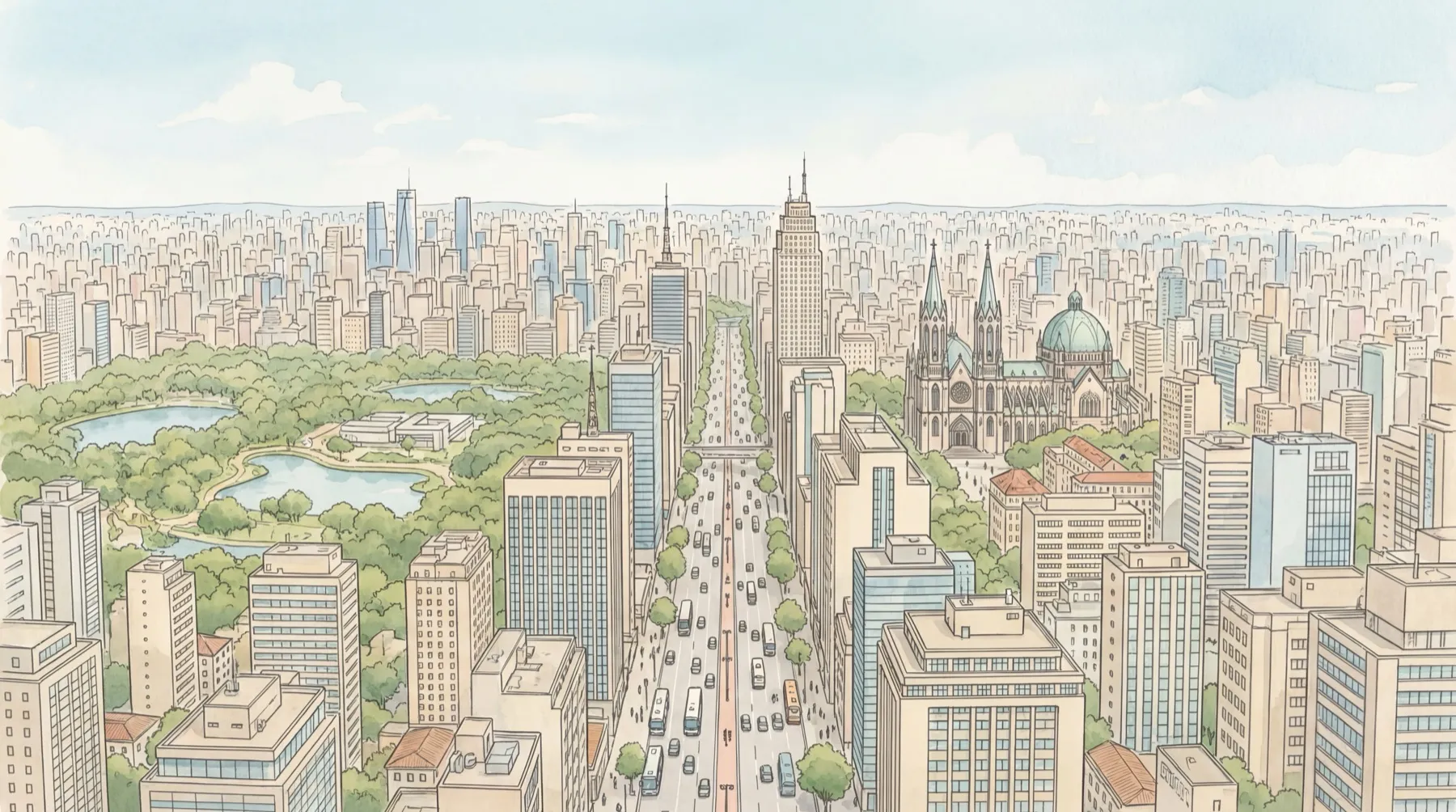
Brazil's largest city and South America's economic powerhouse with over 12 million residents. Art museums, rooftop bars, and diverse neighborhoods reflect its position as a global cultural center.
Destination Stats
Know something locals know? Share your insider tip.
+ Share a Tip